Showing posts with label destacados. Show all posts

Alex Anwandter - Amiga

Amiga, Alex Anwandter
Nacional Records, Chile
Rating: 90
By Zé Garcia


Club Fonograma first began transmitting communiques about the (nominal) pop insurrection sometime in October 2014. The term came attached to Fakuta’s Tormenta Solar, a record that sportively reflected Chile’s combatant youth with a mantra (as heard in “Fugitivos”), urging us to become outlaws rather than cogs in a machine. In recent memory, a growing number of artists in the Club Fonograma scene and beyond have gone on to make their own statements regarding an array of amalgamated global crises. From Beyoncé’s anti police publicity stunts, The Knife's conflictual Shaking The Habitual, Julieta Venegas’ plea for the 43 students of Ayotzinapa & against femicide, Lido Pimienta’s vocal repudiation of white supremacy & her celebration of water as an Indigenous womn, Destiny’s celebration of Taino & African ancestries through funky soul music, to the rapture that is felt every time Kendrick Lamar sings about hating the police & articulates Black resiliency in the face of social death. Systems of domination everywhere are trembling at present (& forthcoming) insurrections. We should continue celebrating our liberation, our uprisings. Our soundtrack is sounding pretty lit, too. Which brings us to the seminal record of the pop insurrection in the Club Fonograma scene: Amiga by our Prince of Pop, Alex Anwandter.

You will likely find many publications gushing over Amiga, claiming it is a progeny of this white man from New York, or that white band from Europe. Let us settle the score: disco, soul, funk, & Motown (the dominant music styles at work on Amiga) are mediums of the African diaspora. It isn’t surprising publications are more eager to name drop Phil Spector as an influence on Amiga but couldn’t even mention the Queen of Disco herself, Donna Summer. All shade aside, Amiga exists because of Grace Jones, Gloria Gaynor, Diana Ross & The Supremes, Ashford & Simpson, Chic, and Marvin Gaye well before any white person. I am reminded of the words Lido Pimiento recently shared with Club Fonograma: “there is this wrong impression that white people created “rock and roll”, Rock and Roll was pioneered by a Queer Black woman, her name was Sister Rosetta Tharpe.” Mentioning the liberation soul music of Chicago’s very own Curtis Mayfield seems compulsory when discussing Amiga, Chilean pop’s most explicitly political album thus far. Without resorting to cultural cannibalism, Alex Anwandter's magnum opus seems to derive its life source from Nina Simone’s “Baltimore,” a timeless protest record that has enjoyed a resurgence since the Black Uprisings following the police murder of Freddie Gray.

Amiga feels like a candidate for Album of the Year. For immediate reference to this claim see the elegiac “Cordillera” which finds Alex at his poetic peak. Lyrics like “El Mercurio miente y la verdad se tira desde un Puma al mar, a ese mar que todavía baña a los niños en el litoral” feel like post colonial parables, while indictments of electioneering and lines like “que esto no se acabe…yo quiero pelear” feel like voices from street battles against $tate forces. “Cordillera” is monumentally gorgeous: the lush string arrangements at the end of the track uplift the record from memorable to epic. This is true of every moment in Amiga that makes use of 1970s disco & soul era horn sections & orchestral strings (reaching one of many zeniths during the riveting, The Smiths / Elton John-esque "El Sonido De Los Corazones Que Se Quiebran"); such embellishments only add to the exquisite feeling of grandeur reminiscent of the album's aforementioned cultural predecessors. And since we are in the subject of Chilean pop, it should be noted that Dënver went on to create their best record yet using a similar formula, their "tribute to Motown," Fuera de Campo.

The album’s title track is a peculiar ode to Top 40 radio, although more effective and elating than its leading competitors in the charts. This foray into the 'top of the pops' allows us a glimpse into how EDM might sound if the calculated intentions of its maker were pure of heart. It comes with an incisive, no apologies breakup mantra (giving me Empress Of vibes), “y aunque no supe amarte, no pido perdon, si mi corazon cambio”. Slick and precise synth pop, “Mujer" contemplates centuries of patriarchy and rape culture- its staying power is accentuated by its sprite, orchestral panache. “Traición” is a disco showcase for Alex Anwandter's "future queer kingdom". All the wonders that Amiga has to offer are at a ten here: house keys, female backing vocals for added flare, & (again) orchestral opulence. "Caminando A La Fábrica" is pure melancholy, illustrating that it isn't necessarily life itself that is the source of our torment, but rather capitalism. Sufjan Stevens vibes aren't out of the question here. And I most definitely needed this song during my near suicide depression days of third shift factory work a few years ago. Did I mention “Caminando A La Fabrica” features backing vocals by Julieta Venegas?

Only time will tell if "Manifiesto" is our generation's "Imagine" although no other exemplars have emerged to date. Like John Lennon's ode to world peace, "Manifesto" is stripped to bare bones: only a piano complements Alex Anwandter's silvery vocals. Like "Imagine", "Manifiesto" rejects formal theology and traditional systems of social control. However, "Manifiesto" offers something "Imagine" doesn't; its protagonist betrays a privilege (or perhaps a hindrance) afforded to them since birth: an emotionally stunted, male subjectivity. As the protagonist rejects male subjectivity to instead embody womanhood, they offer a glimpse into the terror experienced by trans and gender non conforming people: "sere el maricón del pueblo, aunque me prendan fuego." “Manifiesto” isn’t just theory, it is also a praxis; advocating for armed self defense: "yo quiero ser un manifiesto, hecho cuerpo…que va a disparar / lo justo no es normal, defiéndete no más.” Alex Anwandter claims his "Manifiesto" stands on the shoulders of his compatriots Victor Jara and the "poor and queer" literary genius, Pedro Lemebel. "Manifiesto" deserves our full attention Such a bold record has the universal spirit to command awards ceremonies. Next year’s “Hasta La Raiz” at the Latin Grammy’s? Better than winning industry awards, "Manifiesto" has an alchemical quality to make hearts made of stone bleed.

"¿Qué Será De Ti Mañana?” is completely devoted to Chilean folk music, the Nueva Canción movement, and it's protagonists like Mercedes Sosa and Violeta Parra. After all, Alex Anwantder is beaming his 21st Century pop manifesto to us from a post-colonial, post-dictatorship social reality in the southern cone. As suicide pandemics, modern alienation, and our interpersonal relationships continue to suffer in this purgatory of capitalism- "¿Qué será de ti mañana?" (what will become of you tomorrow) seems like a perfectly poignant question. I'm not simply projecting my own alienation as I write this essay, Alex Anwandter literally talks about the failings of capitalism. Alex seems to be alluding to the inherent emptiness universally embodied when energy (power) transfers are articulated through the spell of capital. Alex appeals to populism, "si alguien queda atrás, nadie avanza," alludes to the ebb and flow of revolt, reminding us that rebellions are temporary, "la revolución en dónde quede?” and finally, aspires for a day that doesn't betray our personal and collective potential for happiness. This was a song we listened to in a squat at 4 in the morning, accepting our collective and personal depression, and pressed on with our resolve to do something dangerous about our current myopic horizons. Y empecé a chillar.

Like pulling a page from Juan Gabriel's diary, "Te Enamoraste" is perhaps Amiga's crowning achievement. It is a heart wrenching story of gracefully accepting the misery (& optimism) of falling in love with someone else. Alex accepts that there's nothing inherently wrong when love finds solace in the heart of another, "no tienes que pedir perdón". He accepts such jarring and traumatic developments with a profound sensibility, proclaiming that he understands that one doesn't discard a lover for another "eso lo entiendo yo / que no funciona así". The Orquesta de Camara de la Universidad Austral is simply exquisite on this album. Allow yourself to languish in the whimsical musical flourishes that complement these niceties. Grace gives way to an homage of shared, beautiful moments. And then Alex loses his elegant stride and begins to beg his former love to in turn bless his new love, begs her to be happy being just...a friend. "Te Enamoraste" displays a musical richness that speaks to the musical heritage of soul records. But we must firmly situate this number in the tradition of breakdown inducing Juan Gabriel epics. The strings reminisce "Querida", the final belt of "bendice mi amor, quiero que estés contenta, bendice mi amor" recalls the beautiful despondency of "Te Sigo Amando." Is it safe to say that "Te Enamoraste" is not unlike the cathartic urgency a queer boy might have felt in 1986, the year that birthed "Hasta Que Te Conocí"? But here Alex does something JuanGa could never do in his heyday (because of strict homophobic ethics in the Latino music industry), Alex seems to swap the pronoun from female to male as he delivers the devastating final moments of a career-defining album, from amiga to amigo. Where does one go after such a devastatingly tragic moment? Right back to the beginning of the record for the finest exemplar of our current pop insurrection: the anthemic disco house of "Siempre Es Viernes En Mi Corazón”. Alex Anwandter calls this track his wolf in sheep’s clothing, “a protest song disguised as a party anthem”. As I stated before, “Siempre Es Viernes En Mi Corazón” is "our eternal mutiny in the discotheque and in the streets". It urges our generation to attack the modalities that Church and $tate have created. WITH FIRE.

Amiga is a sophisticated pleasure that is by no means facile. It is neither strictly synth pop nor disco. It also isn't exclusively “suited for the dance floor” as some publications have suggested. The first half of Amiga is euphoric discotheque bangers. But “Manifiesto” marks the turning point towards the album’s dysphoric second half. This is where some of the finest moments in Amiga can be found, as Alex gently takes us by the hand to show us his political project with a splendor that matches Simon & Garfunkel’s “Bridge Over Troubled Water.” In other words, this is some of the saddest (& vitalizing) music Anwandter has ever created, reflecting a widespread societal malaise. Most of the moments Amiga generates are spaces of personal-political solace, a collection of melancholic melodies that allow broken spirits the ability to process, reflect, and yes, cry. Amiga could come with a trigger warning: it is a record full of confessional interpersonal & social miasma. Lines like “madre, tómame la mano / ya no tengo dudas, esto es el final" during the fascinating “Intentarlo Todo De Nuevo” function as double entendres. Clearly Alex is speaking to an end in a romantic relationship while simultaneously alluding to a broader eschatology; that we are living through a literal end of days.

Capitalism unquestionably shapes and molds our social realities, accomplishments & shortcomings. Amiga deconstructs and attacks various modalities of control and even though our total liberation might never materialize, we are already creating our moments & methods of liberation. But our fortitude comes in our ability to share & create our own stories, our own otherness, our own queerness, as part of a deprogramming that we must undergo (individually and collectively) if we are to reject capitalism, patriarchy, & colonialism. When we build under capitalism, our desires are subjugated. Our agony, however we feel it, is the birthing pains of a world surviving capitalism. As "Siempre Es Viernes En Mi Corazón" suggests, we can weaponize our desires to destroy this reality, even as we subsist under the domination monolith of Capital. Amiga plays like the current soundtrack of the ungovernable.



El Guincho - HiperAsia

HiperAsia, El Guincho
Canada/Nacional Records, Spain
Rating: 80
by Zé Garcia


If you’re not seeing the entertainment purpose of HiperAsia you might just legit be lacking the proper gear. Dollar store headphones wont give it to you. Smartphone speakers are never in etiquette for a proper musical experience. Not one for product placement, but the most enjoyable experiences I’ve had with HiperAsia have been on my Harman Kardons. Bass is key on HiperAsia, as is the capacity to fully capture El Guincho's polychromatic, schizophrenic pallet. Schizophrenic is ascribed here not in a clinical sense but in the album's fantastic fragmentation. HiperAsia is a hybrid: contradictory & visceral, conflictual & mechanic sonics constantly interrupting developing ideas & melodies. For immediate reference see the gratifying “Stena Drillmax” (breakdancers required for its 90s breakbeat leaning second half). It is followed by the banging (yet brief) “Abdi” (where El Guincho talks about feeling dead inside a bank listening to hardcore) and its continuation: the irresistible ("hey!") “Muchos Boys” which flirts with dancehall before its sonic boom apex. In fact, much of HiperAsia's bass laden eccentricities seem indebted to 21st Century dancehall.

HiperAsia is full of methylphenidate bangers with some minor miscalculations in its built-in hardware. The title track seems like the album’s least essential track, but rewards repeated listens. All of HiperAsia demands (& rewards) repeated listens, if you're into such thrills. And "Pelo Rapado” waxes where “HiperAsia” wanes. On “Pelo Rapado,” El Guincho also postures as a trans-human R&B icon: you can almost picture him lifting his Black leather jacket (onstage) to reveal his abs to a screaming pack of aroused die hards. “Mis Hits” is just as romantic and seductive. Picture Ciara doing her “Ride” routine. Superficially, much of HiperAsia seems cold and disjointed but, "Parte Virtual" is somehow balmy as is the vaporwave breeze of "Pizza." While "Pizza" concerns itself with the modern food staple, the winning "Parte Virtual" provides some particularly downcast (& personally relevant) revelations: "Son muy pocos los que no me fallan / esperaré a ver qué hacen cuando la tormenta pase."

"De Bugas" proves El Guincho is still harnessing the energy of the sun, even if it is 20,016 and he is channeling its power with solar panels. In recent memory Club Fonograma has systematized classifications of the current reggaetón landscape: future and ice age. "De Bugas" is rooted somewhere between bazaar dancehall and future reggaetón, with Shibuya-kei (as the connoisseur Giovanni Guillén points out) overtones. Easily the catchiest track on HiperAsia, "Cómix" is made complete with an appearance by the ever congenial Mala Rodríguez ("si no hay na' pa' cenar me da igual, te tengo a ti y a mi verdad / aunque sea sin pastillas yo quiero ir a bailar") and El Guincho's cheeky yet alluring self assurance: "Siempre me largo con la guapa de la fiesta [...] sé que te molesta ver como no me cuesta."

Sizable portions of HiperAsia seem spontaneous: El Guincho operating on automatic, crafting efficient (if incongruous) electronica indebted to yet another musical form of the African diaspora: R&B (however disfigured). Early releases like the sensuous "Mis Hits" and the autotune heavy "Rotu Seco" proved unmoving to most of Club Fonograma at first. Autotune can often be described as excessive but "Roto Seco" employs it as an integral aspect of its DNA. Remember when El Guincho drew comparisons to Animal Collective? Closing number “Zona Wifi” (subwoofer mandatory) recalls AnCo's energy. But whereas the glory of Animal Collective continues to fade, El Guincho continues to reinvent his brand towards favorable results.


Ibiza Pareo - Ibiza Pareo

Ibiza Pareo, Ibiza Pareo
Geiser Discos, Argentina
Rating: 80
by Zé Garcia


Sand, water, heat, jungle. These are the words that illustrated an emerging band from Argentina still in its demo phase. Ibiza Pareo "couldn't be more devoted to dance and the sun" the girls explained to me via email: "we are inspired by the sun, nature, travel, and the dance floor". All of these elements are present on the band's self titled debut. Ibiza Pareo sounds like 90s music: alt rock, lounging house, & a lethargic hi-NRG. Ani & Marina perform some compelling vocal performances (wailing in anguish but also rapture) yet the entire album is sung in the shadow of an alluring deadpan delivery. Ibiza Pareo is arid dance music. Ibiza Pareo is tropicgoth.

Second tracks on pop albums are generally a slot reserved for the album's top banger. It is interesting that Ibiza Pareo choose to devote this space to "Viva, Ahí Están los Chicos", a song that only begins to reveal its appeal after repeated listens. This is also true for the rest of Ibiza Pareo, an album that would undoubtedly fall under the "grower" adjective. Ibiza Pareo is a quiet hit with a promise that signals Ani & Marina's best work is still to come. The choice tracks on the record employ a flute that could be described as Andean (think "Suerte"). The beaches of Ibiza don't come to mind while the flute plays, but the Sonoran and the Atacama Deserts do. "Dame un guitarron, esa dulce flauta" Ani & Marina beckon on the foggy safari of "Cha Rup" whereas second single "Ritmas" is the perfect example of the way that flute delves into a more personal space and demands spiritual communion. "Ritmas" sounds transcendant, the keyboards echo, become decidedly house by the end of the first chorus. Where the chorus of "Ritmas" speaks to the soul, the verses are delivered with an attitude befitting Sentidos Opuestos. First single "Arido Espejismo" is a candidate for Record of the Year. A live version has the potential to create something akin to our generation's Negra Tomasa, Ibiza Pareo just has to allow the track to become an all out tropicgoth cumbia. Vocals are pushed to a certain extreme,"Sigo tus huellas movedi-ZAS" the effect is almost psychotic, but the girls catch themselves: "siento la intensidad del aire. Aaaaah". The harmonizing laments (auuuuu, aaaaaah) sound desolate & divine and work as the track's de facto chorus. The flute soars high above the heavens- an avian cry full of stoic pain. The lyrics sound romantic, but their delivery suggests a vía dolorosa: "busco tu imagen en la arena / te veo en el reflejo del sol".

"Viajeros" is another key feature of the many accents of Ibiza Pareo. The synths this time are atmospheric & introspective- the textures of Klaus & Kinski come to mind with the percussive claps of "Triangle Walks". An elegant saxophone meets unrestrained electronic effects channeling a dimension where empathogens, psyschedelics, & a somber poise connect. "Viajeros" (like the rest of the album) is sung in a druggy delirium that is made all the more powerful by Ibiza Pareo's affirmation: the world is in chaos. "Disco de Verano" sounds mischievous and operates like an interlude (in a similar vein to the aptly titled "After") for the road, high from the party you just left, on your way to the next oasis. It is unclear whether the sun is setting or rising: this is for the low-key pregame or the sleep deprived, blissful comedown. "Discoteca" also sounds like an interlude, but this one has lyrics that signal the album's mantra: "que el beat tome mi cuerpo / quiero viajar en el sonido, en la melodía". Six minutes into the trance and you are swept under its somber, spellbinding qualities. "Nuestro Amor Es Musica" takes us on a far out, melodic techno odyssey right before we escape to the cascading closing track of "Tunisia" where synths rise and wane. A guitar wails, the club beat thumps. "Tunisia" becomes impossible not to picture the silhouette of las chicas losing it on guitar and keyboards in a live setting- the strobe lights steady, sweat streaming down your face.

Ibiza Pareo proves that even dance records in the 2015 Club Fonograma sphere carried a moodier tone. A trend towards guitars and distortion will be even more noticeable as our Best Of 2015 lists become available in the days ahead. On Ibiza Pareo, we find ourselves club hopping in the desert. But these days and nights spent turning up aren't vapid. This desert nightclub is a place for introspective wonder, a place to process, celebrate friends, celebrate bodies, movement, & melody. Ibiza Pareo have technically delivered a dance record, a dance record veiled by the morose: "esta noche voy a bailar con mis amigos, celebrar que estamos vivos."


Neon Indian - VEGA INTL. Night School

VEGA INTL. Night School, Neon Indian
Transgressive / Mom & Pop, USA
Rating: 85
by Sam Rodgers

The middle of VEGA INTL. Night School, the seven and a half minutes of "Slumlord" and "Slumlord's Re-lease", is transportive. Whether taking you to the generic 80s tubular-steel chairs of a cruise ship's dining room, the newly installed neon at a foreign casino, or flashbacks to those nights out where you reach flow and things got better, if not a little steamy. The myri  ad of sonic confection is humid, tropical, and yet metallic and cold. There's a fun darkness underpinning Neon Indian's latest LP, and it's the Mexican-born, Texas-native's best. This is one of those albums where you really could judge the interior on its cover: a primed rock star, but instead of guitars and a band, he has synths and a speaker in an underground venue. This self-mocking alternative-section theme is furthered by the fact you're purchasing the 'Japanese extended version' of the album without being a super-fan (the final track is called 'News From The Sun [Live Bootleg]').

Alan Palomo demands you take the ride with him - he fills the spaces between songs with sound realia so as to not lose your attention. You're now just switching radio stations on a planet where Neon Indian has taken over the airwaves. This could be a risky move, but it pays off here. VEGA INTL. Night School is a world unto itself. It's very self-contained and self-aware. On track "Smut!", when the lyric "she takes me to night school" occurs, a bloodshot-eyed voice comments: "hey, that's the name of the record!"

Lead single, "Annie", is the bridge between the innocent sounds of 2011's "Polish Girl" and the sweaty bosom of the "night schools" mentioned on this record. The track bounces but it's the lament of a lover being ignored by the title's antagonist. In this way, VEGA INTL. Night School plays like Blondie or Jamiroquai level levity in face of despairing lyrics, but unlike the latter band's earnest strut, Palomo is meta-peacocking. Listen to the grind of "Street Level", Palomo sings: "Cause we all know how to do the side walk" while recounting a night keeping confidence while tripping. He's anthropological in his storytelling: the "honesty of the night" - as he's said about the inspiration for the album - is a curio of the culture we have, not to be glorified nor scorned, but rather appreciated for what it is. This makes the album fun and, while not quite sober, grounded in a this-is-what-I-did-in-my-20s way. On album highlight, and hopefully future single, "Dear Skorpio Magazine", the younger version of Palomo confesses to the 80s porn mag editorial: "Every time I see her / Walking down the street / I'm wondering who she's going to meet / Often from a distance / always so discreet / keeping prowler's pace / through the dirty sneaker squeak".

For the impatient, VEGA INTL. Night School could be seen as one of those solid and soon-to-be ubiquitous dance albums akin to Hercules & Love Affair's debut for this decade. Throw in the layering of new Panda Bear and the tropicana of El Guincho and you can understand the sonic language of Neon Indian. However, where VEGA INTL. Night School emulates the influences (think Prince and even Phil Collins on 'Baby's Eyes'), it never loses focus on its own aesthetic. This is one of those albums where you're not waiting to see what comes next, but know you'll revisit it for some time to come.

Dënver - Sangre Cita

Sangre Cita, Dënver
Precordillera, Chile
Rating: 93
by Zé Garcia

Pop chicloso is what Mariana Montenegro indicated in the days before the release of Sangre Cita, as we were masticating through its second single, the ebullient “Mai Luv”. We were still processing first single “Los Vampiros” (On first listen: did I click on the wrong song? Is this even Dënver? What happened to Milton Mahan’s silvery vocals? Those inconsolable piano touches sound like Dënver but is Milton even on this track?), still contemplating its b-side, “Noche Profunda”. We could have been given “El Fondo Del Barro”, a track that had already been making the rounds on tour and would have allowed devotees to better assimilate Dënver’s transition from chamber obsession to Pop Stars. Dënver was excellent since Música, Gramática, Gimnasia, larger than life since (should have been Club Fonograma Record of the Year in 2013, nothing against “La Trilla") “Revista de Gimnasia”, but Dënver in 2015 has been, if anything, abrasive.

Sangre Cita begins with the dreamlike R&B of "Noche Profunda”. Mariana is rhyming about being narcotized, consumed by bad premonitions, wanting to be silenced by kisses- she sounds like she's cooing. A raconteur pondering nighttime conspiracies, Milton’s vocals are transmuted cold, interrogating that which we yearn for, that which we conceal. The fact that Milton doesn’t sound like himself on most of Sangre Cita, only adds to the mystique of an almost completely reformatted band. Among the catchiest and greatest works in the Dënver catalogue, “El Fondo Del Barro” has to be Dënver’s next single. It is prodigious, fervent, earnest- disco house- a song for those of us living in the margins to feel our own eminence.  “Mai Lov” is just as luminary, the perfect analgesic, full of endorphins. An obvious comparison points to J-Pop and its nominal leader, the fascinating  Kyary Pamyu Pamyu, mixed with the stultified PC Music crew, but lets not forget the nuanced eccentricities of Otra Era compatriots, “La Joya” & “La Carretera”. The opening lines of “Bola Disco” function as the criterion of not just Sangre Cita’s hits, but also Dënver's greatest accomplishments:
"Puede que muramos en un baile / Que ese coro nos haga explotar ¡paf! ”
It sounds like traditional Dënver, a return to the disco soft of “Los Bikers”. At first listen it feels like a misstep, especially in between titans "Mai Lov" and the epic, “La Última Canción”. But the dainty arrangements, the otherworldly electronic effects, its funky climax make “Bola Disco” a victor.

Mariana’s character development on Sangre Cita is pretty impressive, another factor in the mystique of Dënver refurbished, adding to our mounting anticipation for her debut single as a solo artist under the potential pseudonym, Nausica. She seems more candid, vulnerable but astute. On “La Última Canción” she’s even moaning with desire, “Acércate a mí / Desvísteme”. She even has her lover drinking liquor from her ankles. Milton’s sexy confidence in the background, Mariana fully aware of her youth, flaunting it. Carly Rae Jepsen alongside superproducers Ariel Rechtshaid & Devonté Hynes tried their best at crafting a Dënver & succeeded in the should have been global hit “All That”. Cinematographic coming of age nostalgia from 1980s teen flicks, a sweeping chorus, compelling synths, “La Última Canción” succeeds where “All That” couldn’t, namely in storytelling. Mariana is moaning again, masturbating to piano touches on the sparse “Pequeños Momentos de Satisfacción”. Sonically, it has much more in common with Las Caras de La Muerte than anything else on Sangre Cita so this isn’t sex appeal, this is about tears and those tiny moments that give us hope about our own agency. This is almost as personal as "Jesús, María, No Sé". Sunny verses that blur the line between adoration and adulation (much like this album review), a chorus that makes Milton sound like a boy band on an ominous dance floor, “Yo Para Ti No Soy Nadie” goes back and forth between a semblance of old Dënver and their current obsession with the nightlife. & we are definitely at the club on "Mi Derrota". Mariana is moaning again, this time like Shakira on "She Wolf” or Britney on "I'm A Slave 4 U". Unequivocally, this is another era of Dënver.  

Los adolescentes have grown up in “El Infierno” and this time they're going after the Establishment in true BBHMM fashion. They are robbing banks, dodging $tate bullets, swirling in a noisy technicolor pop insurrection, and escaping by train. Bombastic hand clap verses, Milton singing from 1 to 6 (even the English only crowd can sing along), an escapist, j’accuse, vox populi chorus, this one would fill a stadium. Who said our generational protest anthems had to exist within the realm of the legal? Or that pop hits aren’t subject to détournement? In the Chilean political reality, don't doubt that “El Infierno" isn't mirroring lived lawlessness. From Chile’s first ever bank robbery in 1925 by Buenaventura Durruti, countless bank expropriations during the U.$. installed dictatorship, to 2013 when 26 year old anarchist Sebastián Oversluij was gunned down by BancoEstado security, to the biggest robbery in Chilean history in 2014. Remember when Dënver stated they were more interested in making music for our parents generation? They finally accomplish this on "La Lava" with the help of Fanny Leona from 2015 Club Fonogrammy "Best New Artist” Nominee, Playa Gótica. We hear traces of Peter Gabriel & Kate Bush, Milton's voice altered to sound like Miguel Bosé. They sing about being impenetrable, surrounding themselves with contemplative maturity and graceful restraint- this is some of the most powerful sonic energy Dënver has ever crafted. Lyrically it is the most poetic song on the album, creating surreal imagery about washing one's hands with a lover's saliva, with a foam emanating from their lips. Is this the image conveyed in that striking cover art? Fanny wistfully bemoans, "las ratas, la falta" then interjects "¡de una tecnología capaz de conservar la moral subversiva al paso del tiempo!" This song is about nourishing weary souls & energizing our magic. Against demons, against vampires...

Milton & Mariana enacting choreography fit for a girl/boy band from the early 2000s, a crucifixion inside a bathhouse pumping testosterone, unobtrusive and tasteful lasers, the visual treatment for "Los Vampiros" was everything. Attempting to dispel suspicions about accessorizing their aesthetic with Black bodies for the “Los Vampiros” video, Dënver talked to me at length about their indebtedness to Black music, specifically Black music from the U.S. Fuera de Campo was their homage to soul, disco, funk, Motown. At times Sangre Cita continues that tribute (and expands into R&B with "Noche Profunda") albeit in a more plastic, less orchestral way.  "Los Vampiros”, assisted wonderfully by (me llamo) Sebastian & Fanny Leona, will be remembered as one of the most jarring reintroductions in Iberopop band history, without a doubt Song of Summer 2015, and among the greatest records of the year. Where "La Lava" served as a protective spell, "Los Vampiros" works as a declaratory hex on the dance floor. Dënver has a history of epic closing numbers. "En Medio de Una Fiesta” adorned the melancholy of failure with cosmic phenomenon, whereas "Medio Loca (Hasta El Bikini Me Estorba)" pulsated tragedy & redemption in its final moments. “Sangrecita", the title track, announces itself like 80s heavy metal (King Diamond, anyone?)- the drums menacing- backed by a nonsecular choir. Instead of a brutal metal arena, we enter an esoteric cocktail party lavishing in disco rhythms, Milton singing through the sublime theatrics, sounding subdued, his vocals permuted beyond recognition. The entire affair is eerie, escapist, beautiful. The chorus features a few good friends in harmony, sounding universal, powerful. The final moments of Sangre Cita- Pedropiedra on guitar- function as a response to our own Giovanni Guillen's question in reference: who needs guitars anyway? And then those closing heartbeats, the vibrations of an album resplendent enough to elevate, heal, mesmerize. 

In many ways, Dënver needed Sangre Cita, a colossal maneuver designed to revamp Dënver as genuine Pop Stars capable of infecting and delighting masses, in their trademark beguiling sense of course. Dënver has accomplished and is destined for great things, among them bigger arenas. Milton joked in Chicago (I had the opportunity to hang & interview with Dënver in Chicago this year, a feat that didn't seem possible until it was) about their aspirations to hire full orchestras for every live show, like when Juan Gabriel sells out El Palacio de Bellas Artes in Mexico City. Sangre Cita has already superseded Música, Gramática, Gimnasia, but in due time it might even come to rival their previous masterpiece Fuera de Campo. Love it or hate it- you can’t be blasé about this- Sangre Cita leaves an indelible mark on our archives on a year with such few albums for the ages.

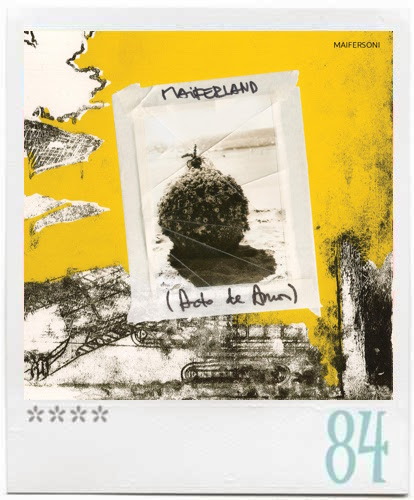
Maifersoni - Maiferland (Acto de amor)

Maiferland (Acto de amor), Maifersoni
Quemasucabeza, Chile
Rating: 84
by Giovanni Guillén

More than half a decade now separates us from the era of chillwave. And while the internet will forever preserve all those YouTube mixes and gratuitously tagged bandcamp albums, it’s still not quite time to look back. Not yet. For Chile’s Maifersoni, this fall into obscurity represents a tragic overlook. Ostensibly, his project met us the way dozens of others got our attention in 2010: an eye-grabbing geometric campaign led by an elusive creator, not to mention a home on one of the most consistent and beloved Chilean netlabels (Michita Rex). But the dimensions of Telar Deslizante were unique. Eventually the shoegaze/lo-fi veneer faded away revealing a sincerity that went beyond taking drugs or going on YouTube and commenting about taking drugs. Our founder/líder Carlos Reyes must have seen this when he boldly extracted the song “Nómade” and fit it into a Fonogramáticos volume where it could connect with its pop origins alongside El Guincho’s “Bombay” and Dënver’s “Olas Gigantes.”

Maifersoni returned this year with a double single ("Partners" / "Las flores más hermosas se marchitan"), marking a five year gap between his debut and new material. Despite the long gestation period, Enrique Elgueta and producer team De Janeiros knew exactly how to evolve the project. “Partners” showcased a blissful and weightless return that led to expectations of an exuberant full-length to match. Maiferland (Acto de amor), the resulting album, is much more reserved than its single led on. Yet through the weeks we have spent digesting it, the album remains as immersive and enthralling as when it was first released.

Maiferland approaches pop with a special reverence. As such, there are parallels to how someone taking on a new language would approach the task. While others would likely jump into it, awkwardly employing false cognates, settling on a short-lived charm (thus never achieving fluency), Maifersoni understands that pacing is everything. Syntax must be respected along with tenses and memorized verb forms. Opener “Partners” functions as any interjection would (a “здравствуйте” or “Hola”), a placeholder to set up a phrase of greater value. There’s flute sounds and drums working in tandem. One can almost imagine the spirit of a rave track left for the earth reclaim and for flowers to spring up. “Vuelta olímpica” brings out guitars and whistles for more carefree, pastoral pacing. The length of the song becomes a test of how long one can ward off a restless attitude (or the skip button). "Invocación" achieves this as well, but Elgueta carefully allows the composition to swell, building confidence and scaling new heights in a manner that would make Japanese artist Cornelius proud. 

Elsewhere Maiferland spends considerable length courting alternative rock. “En los pastos de la plaza” marks an overcast tint to the second half of the record. The stunning “Picorocos de Guanaqueros” leads us into twilight, beginning the transition with soft notes that end up at guitar distortion, heavy percussion, and overlaid vocals through a dramatic seven minutes. A sure contender for one of the best songs of the year. Noting that, there are some missteps here and there. “Andina” sounds less like an upgrade and more of an unnecessary paint job. At 55 minutes, already a bold enough choice, the album could have cut it altogether.

It is with the penultimate track “Idahue” (which might’ve made a more fitting closer) that the record wormholes back to Telar Deslizante. Uniting his previous work to the present perhaps as a pitstop on the new journey ahead. By now it should be clear that Maifersoni’s musical instincts have not let us down. Maybe next time people will stop sleeping on those instincts.


Empress Of - Me

Me, Empress Of
Terrible Records, USA
Rating: 87
by Sam Rodgers

Two years ago, with a swatch of colors, Empress Of - a moniker with the mystique of a 'Lorde' or a 'Lana Del Rey' or a 'Kali Mutsa' - released fifteen snatches of ideas for beats and harmonies, with some bursts of melodic inspiration. Lorely Rodriguez's generosity, whether intended as a stepping stone or tentative first step, gave those of us paying attention a grab of an exciting new voice, one that we'd soon learn was producing everything herself. With Color #10,  you get an insight into Rodriguez's latin@ roots - a California-raised, Honduran-American, now based in New York. For the most part, her identity mirrors a lot of the Fonograma staff, and for this reason, we're claiming her; though she is definitely set to be watched by a vaster, more global audience sooner rather than later, with the release of her first LP, Me.

The first and, perhaps best, revelation on Me is that Rodriguez's vocals are now front and centre, an assured decision, and logical considering the album's title. However, unlike the previously mentioned masked singers, Rodriguez's voice swings between the bark of your best friend shouting at you from the swimming pool to eery-chanteuse-flexing-scales in a heartbeat: there's little pretense to it. Given the costume of 'Empress Of', it's the lyrics of Me that save the project from residing in the pile of 'just another...' (while we're using sentence fragments as nouns). Rodriguez thrusts her journal into your hands and says, "I'm going to sing this to you", and starts without permission. But this is a carefully considered journal: lyrically, Rodriguez knows exactly how much she needs to obfuscate, retain, and push forward. The anatomy of a pop song centers around a basic theme, but better still, a signifier that presents each track as a stand alone: something Javiera Mena continues refining in an alternative technicolor world. Me, on the other hand, is much more monochromatic, like its cover photo; much more tactile, too. You're still holding onto the newest per(sonal)-zine by Empress Of, the photocopier ink fresh and warm. It's just that now her aesthetic stands apart. (Note how un-flashy Rodriguez presents herself on the cover, but how her pose is calculating and observational all the same. A different type of power.)

What makes Me so conspicuous is its very contemporary take on relationship navigation: we're now in a post-casual-sex-happens-get-over-it world; we're in a post-Beyonce-is-also-a-Feminist world; we're in a post-another-article-about-how-selfies-are-narcissistic world. Me operates for those who've done the reading but know how messy life in 2015 really is: to choose not to be seen results in just as much isolation as presenting your best self at all times. The latter, the nature of social media, has also bred something not often broached in danceable pop outside of hip hop: class and money. Rodriguez targets these in two of the best tracks of the album, the arresting first single "Water Water", and one of the best tracks of the year so far, "Standard". Using potable water to signify privilege, we get a dirty dance track inspired by actual thirst whilst writing the album alone in small-town Mexico. On "Standard", the listener gets a clearer picture of Rodriguez's anguish. Here, she's addressing a trust fund love interest, with torch-song melodies and great, incisive lyrics, hitting bullseye after bullseye: "I've been living below the standard / while you struggle being home and bored"; "Tell me what you see / in the mirror when you're feeling restless / Do you see a man who isn't there? / Living for the sake of living / I can promise you no one cares."

Elsewhere on the album, Rodriguez nails the frustration of being cat-called in the street with "Kitty Kat", a stomping declaration of independence and intolerance of double-standards: "Don't take me by the hand and walk me through with pity / If I was a man would you still do the same?" But this is just one moment in a life - on other tracks, Rodriguez allows us to hear her vulnerability through co-dependence: whether on human contact or human escape. On "Need Myself" she meditates on balancing one's own identity within a relationship "to be happy with you" - like Björk's rumination on the edge of a mountain in "Hyperballad." Sonically, Me shares an experimental pop edge like the Icelandic artist's first solo albums, never losing sight of its digestibility. What makes this album more remarkable, though, is Rodriguez's claim that making the album was purely instinctual. To do it all oneself, and to then put yourself as the main subject matter without older professionals helping you edit that down to a listenable whole, is no mean feat. The fact that Empress Of made it to this stage without even commenting on this laborious process within the album is testament to her tenacity and understanding that non-artists don't 'get' what's on the other side of a shining piece of pop. She touches on it in the video for "How Do You Do It"(all backstage and touring footage) and much more obliquely in the closing track "Icon" where the lyrics about the absent, heart-curdling feeling fresh from a break up mirrors the intense isolation an artist feels when no one's there appreciating the work: "Every minute passes like an hour / When I'm just in the room with the lights on / And there's no one who knows I'm their icon." Luckily for Rodriguez, there's sure to be worshippers at the Empress Of alter soon enough.


Technicolor Fabrics - Bahía Santiago

Bahía Santiago, Technicolor Fabrics
LOV/RECS, Mexico
Rating: 80
by Souad Martin-Saoudi

I will sound like a pop psych/self-help preacher, but I believe we all have, within us, a child (I can feel the mass eye-roll as I’m writing this). Yet, more often than not, the adults that we are abandon or silence that child (I’m referring to you, eye-rollers). This repression inevitably crushes our spontaneity, creativity, authenticity, even our ability to express ourselves, have self-esteem and be natural. Under this context, to recognize and unleash our inner child, as a carrier of transformation, is to recognize and unleash our inner essence, our creative potential and spontaneity; it is to identify all the fragmented parts of our psyche and ultimately find our true self. This is a lengthy process; but it is one that pushes us to become complete. Bahía Santiago, title chosen by Technicolor Fabric for their latest album, is the imaginary cove where this inward odyssey begins; it’s where we (re)connect with the one we were before becoming apathetic, “normal” adults.

Over the course of two years, Technicolor Fabrics tactfully crafted nine songs like nine viewpoints overlooking the various facet of their concerted voyage within. This collection of songs is actually the band’s third album, but where Run… The sun is burning all your hopes (2008) and Ideas (2011) seemed like indecisive attempts at anchoring their particular brand of indie pop rock, Bahía Santiago is all about refinement and definiteness, whether it is in Juan Pablo Corcuera’s startlingly melancholic tone and rock accent, in Abraham López’s dextrous percussive punches, Daniel Salazar’ immaculate yet ardent synth progressions, Joaquín Negrete’s sleek and elastic bass lines or in "Yogui" Raúl Cabrera’s smooth and earnest guitar riffs. Bahía Santiago is their most ambitious and probably their most complete and accomplished album.

The first drum stroke and guitarrazo of opener “Aviéntame” immediately signals a course-alteration for the quintet who recently moved from Guadalajara to D.F. The vigorous distortion-fuelled track sounds nothing like the others on the album (and is the only one produced by Milo Froideval). Yet, it acts like the essential phase to undertake a fundamental re-think of the past and present – the journey to Bahía Santiago. “Mi templo es frágil yo me pierdo. Me fundo y viajo por el mar abierto, muy lento” sings Corcuera with the hint of a smile. You know the band just dived straight into a vault of anxiety and despair induced by the contemporary urban condition only to emerge at the other end, a little lighter. “Volver a Comenzar” naturally follows, accompanied by a fluid synth line and layered "oh, oh, ohs." It’s the embodiment of an existential reality: unconditional acceptance of the loved one is an illusion; it’s sad, disturbing, yet reassuring. The dominant bass, organ-shuffle and solid backbeat on “Ceniza” presages we are finally reaching the shores of Bahía Santiago. Here, Corcuera shows some creative wisdom recognizing that we are at the end of the day, all insignificant, like ashes at sea (“La verdad siempre cambia de lugar, si no sabes dónde va, se va, se va. Dime si tú también lo ves así, soy ceniza nada más”). “Fuma” is a synth-triggered marimba gem. The song, which features the new wave-esque inflections of Siddhartha (I hear some Cerati!), reveals how hooky Technicolor Fabrics can be with their minimalist approach. The spirit of the singer-songwriter, who produced all but two songs on the album, can be glimpsed all through this journey dedicated to nostalgia, innocence and beauty.

Layered percussion, clean organ patterns, and precise guitar lines bounce around and off of one another on obvious standout track “Globos.” While the title inevitably leads me back to the compelling images of Albert Lamorisse’s oscar winning medium-length film, the lyrics emits the desire to recover one’s ability to risk without fear and renew with the innocence of simplicity. On wordless “Venezuela,” the earthy summer breeze of Bahía Santiago wafts our faculty for awe, wonder and naïveté but also holds our accumulated traumas, fears and hurts. The Tapatío boys have sonically evolved in a sort of horizontal organization where every member is visible, and the 2 minutes instrumental piece demonstrates their fully grown ability for decentralized arrangements. “Desde el Mar,” with its wailing guitars and ethereal synth lines, give out rock poem vibes. The sonic collage continue to expand on “Solo,” as the band seem to have channelled Sebastien Tellier’s erotic pop feel just seconds into it. “Hoy,” one of the most accomplished tracks on the album, sounds both borrowed and fresh. The album closer “Química,” which features the members of Baltazar (Corcuera’s other band), releases something somewhat fascinating. With its singular sound aesthetics (a combination of pop traditions, mysticism and modernism), the rock hymn makes for an interesting finale.

From a first listen, the panorama presented by the style-hopping pop band might just seem like a flaunting of their musical pedigree. Yet, the feel quickly dissipate as it becomes clear the various genre incursions are all put to the service of the songs. More striking, however, is the consistency of the journey; the sequence of the pieces on Bahía Santiago is smooth and everything flows perfectly. Still it’s an album of beginnings of songs, not of apotheoses or grand finales. The best tracks reveal themselves in their first minute, which alone is enough to conquer.


Astro - Chicos de la Luz

Chicos de la Luz, Astro
Nacional Records, Chile
Rating: 85
by Sam Rodgers

Sometimes the evolution of artists is noticeably fed by their influences: genre hopping from album to album or song to song. Other times, an artist 'matures' into their own recognizable sound: auteurs which are invariably marked by a sound that listeners had either rejected or accepted wholeheartedly from the outset. So while Astro's debut EP contained heavy distorted guitars, as on the hit "Maestro Distorsión," and used electronic sound effects sparingly amongst the otherwise four piece standard, it was Andrés Nusser's distinct vocals and knack for unpredictable, but catchy, melodies that elevated the band from their peers. And so this separation continued with Astro - their first LP - which was loaded with ideas, and songs keeping within the traditional 3-4 minute pop limit. 2011's Astro shimmered with more keys, and honored 8-bit aesthetics, folding it into a straight-faced rock set, delivering lines about plastic bunny ears, gods of the forest, and animals heading down to the mangroves. The track, "Pepa" is the best example of Nusser's mythology, one that could be an allegory for drugs, but could also just be the trip, such is the rush of color and imagery he shares in his hallucinogenic state (further explored in the soundscapes he wove on his individual EP, Karakoram-Mekong. Astro are never morose, only ponderous. There's always an element of sheer joy lifting each track - these narcotics are all natural - pure escapism.

Finally, after four years and an interim single, "Hawaii," Astro return with their second LP, Chicos de la Luz, shifting their sound further away from their beginnings, while remaining undeniably Astro: Nusser's mystic lore permeating the ten tracks. It's their most electronic album. It's sparser and more confident: their debut crashed down on the listener, who then had to spin out the components on repeated listens. On Chicos de la Luz there is a disarming simplicity. Nusser and band show restraint, which suggests that the band have created an album that can be reinterpreted on the road, perhaps a reaction to four years of seemingly constant touring of an album and a half of songs.

Chicos de la Luz begins with "Uno" with an extended opening groove reminiscent of Jamiroquai's pop-disco and Neon Indian's indie-electro, before heading into the tropicana vibe that singles "Hawaii" and "Caribbean" relished. When Nusser's vocals finally come, they're as mellow as a bass line. The track builds around his ruminations on loneliness and anxiety, before changing gears halfway, turning up the ecstatic Astro demand to find oneness: we all contain multitudes, our way forward, of letting go, is big bang-esque.

The majority of tracks on Chicos de la Luz trade on this gear change approach, though it doesn't feel as contrived as it would in lesser hands. There is real skill in Nusser and Co's soundtracking of each multiplayer game. The mood change complements the mood before it, and no track seems out of place - there's a through-line to the album, cloaked as mischievously in psychedelic ramblings as their first LP, with melodies that only get more fun the more one revisits them. This is most pronounced on latest single, "Druida", which is as heady as Astro's "Colombo" - with a guaranteed spring in step in every spin.

There isn't much, if any, filler on the album. "Warrior" and "Rico" are perhaps the casualties of the rest being a little more imaginative, though the former has a memorable lumbering nature, and the latter, while barely there, is brief. In fact, the average length of track sits around the five minute mark, which makes the album flow better than if the band were trying to make every song a potential single.

Final track, "Kafka" could be Astro's answer to those comparisons with Animal Collective (which are lazy), inasmuch Nusser simply asks for a house and family a la "My Girls", but sonically, Astro place more importance on the narrative of the song, rather than the elliptical nature of the Baltimore band's work. But herein lies Astro's ability to create songs that are lyrically both earnest and throwaway, meaning everything to the protagonist and yet mean nothing in particular for the casual listener: like an episode of Adventure Time for a child - happy to be captivated by the color and drama without understanding any subtext. And like that cartoon, Astro aren't cynical - they manage to sound euphoric without being disposable pop-of-the-moment, nor trite. Theirs is a signature that will be interesting to follow as they explore new lands of bliss.


Fakuta - Tormenta Solar

Tormenta Solar, Fakuta
Quemasucabeza, Chile
Rating: 81
by Zé Garcia

Things start off strange on Fakuta's sophomore record, Tormenta Solar, but by the second verse of its opening track you remember (if like me you have been mythologizing Chilean pop since 2010) that you're in the company of contemporary Chilean greats who's opening numbers have a history of feeling larger than life itself ("Como Puedes Vivir Contigo Mismo," "Arde Santiago," "Mantén la Conducción," "Las Fuerzas"). Then you realize the opening track is called "Guerra Con Las Cosas." Is this a Chilean pop or an anarcho punk / metal record? Fortunately for us, the Chilean pop gods at work on Tormenta Solar take us to a starry disco that beams back from the funky 70s and synth driven deep cuts from the 80s all in the service of what Fakuta (Pamela Sepúlveda) has described as "space pop."

"Guerra Con Las Cosas" gives way to "Despacio," a likely second single and the album's biggest banger. Reminiscent of the Chicago house / freestyle mixtapes we inherited from the 90s (it literally sounds like nothing else on the album) it invites a personal speculation of what a proper Mamacita album might sound like with the assistance of Milton Mahan and Pablo Muñoz who both have production credits on Tormenta Solar. And this prospect is a spectacular possibility all its own as "Despacio" would totally play on the same dance floor as mamacita's "No Eres Tu". Anyone care to put the Latinx Divas Do Chicago House Mixtape together? By the third chorus of "Despacio" we know that for this particular track, Fakuta is making a run for the proverbial Chilean pop crown. Fakuta could have just as easily retold "Despacio" for the rest of the album (& we would have loved it) but Fakuta has much more in store for us. What does she do instead? She goes on to make deeply jarring observations about the fragile human condition- something that isn't that weird as far as Chilean pop goes if you've been closely listening to Gepe, Ases Falsos, and to a lesser extent, Dënver.

From urging mankind to stop being cogs and become runaways on the excellent "Fugitivo" to the primordial appeal of walking the earth with your loved one in total liberty on the supernatural and epic "Mascota" one can't help but realize Fakuta isn't just dabbling in political theory. She also isn't crassly talking about "human rights" or reform; Tormenta Solar appeals to something much more cosmic here, something more ancient. And she has emerged as likely the best poet of the entire Chilean bunch, up there with Briceño himself. Lyrically, the album continues the cosmic interpersonal observations of Al Vuelo (and most of Chilean pop today actually). The catharsis of "La Intensidad" is one of the album's most sentimentally appealing moments. It is here where Fakuta finds the ability to move us deeply as the space pop prophet that she tends to be- consider "La Intensidad" as this album's "Virreinatos."

Space pop prophecy in the Chilean pop scene would not be complete without churning out a floor filler or two which brings us to "Tormenta Solar"- the single. Not on board with the rest of CF, "Tormenta Solar" was an immediate hit in the Top 40 of my heart. And the video only served to catapult it to #1. Immediately I felt like both sonically and visually the single would have found its public at Soddom & Ghomorra- a queer / trans punk house in Chicago who's aesthetic was known for everything we see in Fakuta's video: nuns in gas masks, nuns smoking bongs, pink upside down crosses, and neon automatic weapon imagery. Upon hearing the single, I immediately tweeted Fakuta: "this anthem bangs along with the the best of Flans and Fey." Her duet with rock poet virtuoso Cristobal Briceño is likely the best song on the album. Its biggest surprise is the glorious chorus which takes from the 70s funk excellently executed in Ases Falso's latest album, especially on "Al Borde del Cañon."

The riveting closer "Mascota" -a paranormal tour de force- begins with its most forwardly anti authoritarian prose yet: "Los animales alzados van Contra la ciudad se revelará / Cansados de  ser sumisos protestar / Hasta que los amos se rendirán." Such a blatant nod to Chile's contemporary insurrectionaries gives way to synthesized choral horns reminiscent of Camilo Sesto's "Fresa Salvaje" (excellently revived earlier this year in a sample by the Venezeulan duo Las Hermanas). The message of "Mascota" sounds like pop prophecy but considering the global scale of uprisings today, the lessons of Tormenta Solar only seem all the more urgent. From Mexico's self defense committees, to the fires of Ferguson, to Chile's Mapuche and anarcho communities, the timeliness of Tormenta Solar can at times sound like the soundtrack of a popular or personal (space pop!) insurrection. Did we also mention the album dropped on the eve of a total lunar eclipse in Aries?

With all this praise we have to talk about the albums weakest track- "Luces de Verano." It is a perfectly ok song but given the context of what we're talking about- musically speaking- it ends up sounding a little like Live Aid or Teleton Music- it is a bit of a blemish on an otherwise great record. This time around the space like or cosmic offerings of Fakuta's album are more conceptual and lyrical than sonic- there are (sadly) not as many satellite like whirrings or spaceship take offs as on Al Vuelo. Missing too are what CF writer Enrique Coyotzi described as the "architectonic" pop landscapes that made her debut such a heart stopping future pop record back in 2011. Fakuta's ideas on Tormenta Solar are more direct and humanist than ever before- but gone are the adventurous and breathtaking sound collages of Al Vuelo- there is nothing that sounds like a space station disintegrating into dubstep (talking about the great "Las Partes" here) on this album. Despite Tormenta Solar not being as heroic sonically as its predecessor, Fakuta's meticulous space pop continues her legacy as a sonic constellation that shines along the brightest amongst her peers.

Desert - Envalira EP

Envalira EP, Desert
Buenritmo/Minty Fresh, Spain
Rating: 80
by Giovanni Guillén

Oftentimes at Club Fonograma we’ll let entire seasons pass between a record’s release and when we actually come to review it. The delayed writing process exposes the fickle nature of journalistic impressions, consequently turning the whole effort into a daunting task. Even if personal or professional obligations are behind the initial delay, we may still arrive at those frustrating cycles of love and hate, doubting ourselves (“was this actually good?”) to an unnecessary degree. Luckily, time has not weakened our admiration for Barcelona’s Desert, who originally released their debut EP all the way back in June. Envalira still holds up as an ambitious future pop, one that delivers on its etymological promise (the titular name is derived from verbs synonymous with “euphoric” and “spellbinding”) even in such a compact four-song format.

Desert first grabbed our attention in 2012 after the dissolution of Granit gave light to a new project and a hardened but beautiful single (“Camins”). Back then the duo exuded mystery as to their purpose, and it could only be solved with blogger speculations and obligatory comparisons with anything and everything. Cristina Checa and Eloi Caballé have since traded their internet/producer mystique for a more straightforward presentation of their music, embracing pop and electronic templates and revels in its limitless potential.

Side A channels a more kinetic vibe on its two tracks. Opener "Tu ets el so" aims for ascension with a bounce that recalls Grimes’ “Genesis,” only here singer Cristina Checa’s deeper register is the star. Her voice bellows as if encouraged by the claps and tumultuous charge. “Quars” flutters to a calmer place, opening with a hypnotic ring taken from weirdly color-graded 70’s films. As the song finds its footing the colors become more vivid, projecting and emoting with intricate and delicate progressions. Should there be a video in the future it will certainly demand some esoteric choreography, in this way the song is a clear ally to Caroline Polachek’s Ramona Lisa project.

Side B incites the more fragile side of Desert. On the title track and fitting closer, Checa’s voice lulls while transporting us back to 2006 when Javiera Mena’s “Perlas” brought us at the meeting points of precious ignorance and terrifying revelations. Yet the strongest moment on Envalira continues to be where there’s more at stake. I first described the majestic “Saps prou bé” in an earlier post as a “chariot ride through an arid landscape at night.” An image which I think still stands as appropriate but misses the true scale of the track. Most ballads rely on face to face contact to become effective torch songs, and yet “Saps prou bé” with its orbiting unceasing pace gives the impression that we never quite make that connection. In fact, the attempt is as futile as our hopes of reaching celestial bodies that have long-ago disappeared and whose light has barely reached us. Envalira, however, doesn’t mourn this loss. It celebrates that it existed in the first place.

Univers - L'Estat Natural

L’Estat Natural, Univers
Famelic, Spain
Rating: 88
by Carlos Reyes

Unlike what Almost Famous thought to early milleanials, writing about rock music is the least exciting duty for the modern pop music journalist (nowadays bloggers). While our staff fights over who gets to review the latest pop album from Chile, reviewing rock music is often a chore. Unless you have controversy behind a band (or have the spectacle of a frontman at hand), the structure of a rock band reduces the room to approach music through personal or auteur lens. At least once a year, a rock record comes along and triggers an emotional vein that breaks any writer’s block and resorts the romance between fuzzy guitar chords and the shameless pop slut (that being me this time around). L’estat Natural is that album for me this year.

Recent triumphs for the rock genre (Ases Falsos, Bam Bam) have been either escapisms or cultural blueprints. Univers’ first full-length record L’estat Natural, much like Él Mató a un Policía Motorizado's La Dinastia Scorpio, comes from a different manufacturing –rock music that is gentle, personal, benevolent and woefully emotional. It’s not that I would describe rock music as cold, but the rock posture venerated by pop culture has way too many sons and daughters yearning the promised luxury of rock and roll. L’estat Natural benefits from this cultural friction. It’s a record that feels simultaneously borrowed and new. Where melody breathes and travels through the haze. The songs are anguished and longing, but not in the hot pursuit for privileged platforms but rather with the purpose of marrying the pleasantness of pop structure with the noise and aesthetics of shoegaze. Nothing is particularly catchy here, yet everything resonates.

Not that the members of Univers sat down and thought about the zeitgeist this meticulously. When confronted by a song as rapturous as “Estatua En Moviment” one has to wonder if the band was even conscious they eclipsed the pop-structured first half of the song with a post-punk juggernaut on its counterpart. Artistic endeavor sure goes a long way. What separates Univers from many of its white noise contemporaries is their ability to rapture and roll back into silence. The dynamic seems simple enough, but really, few bands can march and cross the sunlight (“Travessant La Llum Del Sol”) and collect themselves with such disarming restraint and warmth. If you find yourself singing along to the catchier tracks of the album ("Iceberg" and "Minerals"), and you’re as estranged with Catalan as most of us, embrace it. Transgressive music takes no shortcuts to manifest its greatness.

Greatness is not the most suitable word to describe the first album by Univers. As giant as might get to be at times, it's a record that has a small-scale realism to it –its detachment from social anxieties puts the light on what fellow Fonograma critic Pierre Lestruahut referred to as “that unequivocal gorgeousness of those true bare bones post-punk classics.” At 33 minutes long, L’Estat Natural unfolds quickly and gracefully. It isn’t that the album discloses its beauty unobtrusively, it’s missing risk and uniqueness to touch elbows with say, the two first albums by Triángulo de Amor Bizarro. But that doesn’t stop it from being one hell of a knockout. An even greater achievement considering this is Univers' debut. Call it rock music, shoegaze, white noise, or post-punk, the breaking and sheltering of up-tempo guitars rarely sounds this gorgeous. It’s earnest and an interlocking romance.

Carmen Sandiego - Ciudad Dormitorio

Ciudad Dormitorio, Carmen Sandiego
Independiente, Uruguay
Rating: 82
by Monika Fabian

Five years and four releases into a band’s life, it’s way more common to hear of reshuffling or downsizing than, say, expansion. And yet Carmen Sandiego did the unthinkable: it doubled in size in between 2010’s Joven Edad and Christmas Eve’s Ciudad Dormitorio. Fortunately the gamble by Flavio Lira and Leticia Skrycky to welcome longtime collaborators Matías Lens and Ezequiel Rivero into the fold paid off immediately. Ciudad Dormitorio is Carmen Sandiego’s most accomplished work to date. The outcasts, antiheroes, and daydreamers populating this ‘Bedroom Community’ evoke post-adolescent lust, ennui, and restlessness from the inside out, and the band behind this world fuses lyrics and melodies of equal emotional weight to construct solid, multi-dimensional narrative statements.

Dormitorio largely sheds the adolescent fascinations of its predecessor; only occasionally waxing juvenile. Narrators in “Generación 2002” and “Monja En La Fiesta,” for example, envision bombing their high school reunion and making their peers kneel on glass. Although the albums are touchtones of their respective life stages, Edad is like a tumblr to Dormitorio’s Moleskine. The former is a less realized version of the latter, yet both works are inextricably necessary. Dormitorio is a repository of obsessions, insecurities, fantasies, pettiness, and love poetry penned by someone more inclined to look around and ahead than back. It’s quarter-life living and anxiety circa 2014.

But it doesn’t even take delving that deep to understand, or even appreciate, Ciudad Dormitorio’s brilliance—the music is effortlessly dexterous. Carmen Sandiego has upped its musicianship with polished, full-bodied arrangements that convey newfound confidence and maturity. Lira’s reedy voice is a wonderful counterweight Skrycky’s ethereal turns. The guitar work vacillates from jagged to dreamy throughout the effort, and shades in the songs’ worlds (“Maria” and “Avalon en Larravide”) as it gives way to the smaller touches (“Mi Pierna Derecha”).

At the risk of taking its title too literally, Carmen Sandiego’s latest reminded of several surburban rock quartets. The overall catholic coherence felt Tacvba-esque. The jangly guitar hooks in “Ocupaciones y Oficios” and “Chocotoño Killer” had DNA smatterings of REM. And the retro, lo-fi feeling “Generacion 2002” and “Fiat 600” recalled the Ramones and Beach Boys. And yet that’s all to say that the Uruguayan quartet’s new work is in storied company and essentially captures something all those groups have before them. In Ciudad Dormitorio, they use a potent symbol of guarded idealism, beauty, ugliness, idyllic emptiness, nostalgia, rage, sadness, and ambivalence to reflect on all of the ordinary humanity wandering about.

Los Mundos - Retroterapia

Retroterapia, Los Mundos
Sour Pop Records/Casete, Mexico
Rating: 80
by Enrique Coyotzi

Los Mundos set in motion a flourishing career with their convincing self-titled album, a collection of 11 cacophonous pieces that hinted at grandiosity, yet never fully bloomed into real transcendence. The band’s been quite active ever since. In the past two years, they've presented a couple of tight EPs that showed them adapting new versions of their early songs (Mi Propia Banda Quiero Ver) and covering bands that have undeniably defined their sound (Regalando Todo). However, the real task was a sophomore album that didn't feel as unvarying as their debut. Don’t get me wrong, I love the first record, but Retroterapia truly represents the ample canvas eagerly expected from Alejandro “Chivo” Elizondo and Luis Ángel Martínez. Improving their long-distance songwriting formula, Retroterapia finds the duo displaying a gorgeous throwback of delightful compositional dexterity and impossibly amusing lyrics, culminating in the glorious pairing of two of Mexico’s most offbeat minds into full creative synergy.

The first half of Retroterapia stands out as a robust smasher, a vigorous portrayal of splendid songwriting skills dressed by filthy abrasiveness, whimsical self-reflection, and plenty of cranky wit. Opening tracks “Todo te Cobran” and “El Peor” establish a bombastic start, showing the ensemble back in full form. “Mirar Sucio” and “Mini Shorts” are both sexy as fuck. The former is dominated by a powerful guitar riff, which, reinvigorated by Martínez’s I’m-definitely-gonna-fuck-you inviting words, marks the horniest declaration of the band so far. The latter, through its Blur-esque development and giggly, not-as-explicit remarks, flirts with sexually-infused, provocative fashion showoff curiosity. Initial promotional cuts, “Lentes Mágicos,” where Chivo undergoes a spaced-out magic visual trip relying on some pedal shit, and “666,” where Martínez understands how to make a song inspired by the number of the beast a hilarious success (few lines like “Escupiendo flema de color” and “Levitando en tu habitación” commit such comical stretch while remaining so disturbingly dark), are damn rewarding as well.

The second half might appear slightly limp, but not less substantial. Our heroes test the widest ranges of their dreamy textures in tracks like “El Mundo se Viene” and “Retroterapia.” Here, Los Mundos not only conjure majestic walls of sound and a variety of must-get-out-of-your-chest emotions, they also challenge the listener with serious climatic territories that launch the being into some kind of zen state. This characteristic particularly gleams in closer “Eco en la Luz,” an instrumental as exceptional and full of possibilities as El Columpio Asesino’s “MDMA.” On an unconvincing side, it’s notable how the less accomplished takes are the ones regarding pets. “Gato Buena Onda” and “Abraza un Perro,” while nicely executed, stand on the verge of irrelevance and forgettable. Nevertheless, these stumbles aren't much of a blow to Retroterapia. Especially when you have such an outstanding hit like “Morir es Aburrido,” spelling “The Passenger” all over its charming chords.

It seems like Los Mundos’ discourse is finally acquiring some necessary roundness. Retroterapia may carry its flaws, but they ultimately end up overshadowed by the LP's own distinctive energy and alluring delivery, nurtured via the exploration of broader subgenres. Truth is, with this reference—an irrefutable testament that exposes their noteworthy stateliness—they have reaffirmed themselves as an essential force that’s translating many great ideas into magnificent pop tunes, paving a privileged, not-to-be-missed trail in the process.

Siete Catorce - EP2

EP2, Siete Catorce
NAAFI, Mexico
Rating: 82
by Enrique Coyotzi

Ever since moving to Distrito Federal in June, the 20-year old prolific Marco Polo Gutiérrez, better known as Siete Catorce, went from being Mexicali’s best kept secret to Mexico’s most talked about producer. His arrival to the capital was a game changer—a crucial event which shook the local independent and electronic community. Throwing almost every weekend surpassing shows heavily charged by stamina, Gutiérrez logically attracted fast interest, instituting his arcane yet welcoming sound on the tongue of tastemakers, colleagues and newly-converted fans.

Ruidosón’s youngest exponent is an unstoppable, youthful prodigy. Simultaneously working on many completely opposite but just as relevant side projects (Den5hionSin AmigosIgnxrnce, amongst others), the ingenious boy has enjoyed major success while embarking seriousness under the Siete Catorce pseudonym. Unlike his eerie but still highly upbeat first EP (which was backed by a unsettling tale of the artist murdering his entire family), Siete Catorce goes into gloomier, regularly depressive spaces in the sturdy EP2 (his strongest release so far, along with this year’s Un EP Irrelevante as Den5hion)whose progressive production manifests growth, vision and freakish craftsmanship through far reaching guapachoso rhythms mixed with avant-garde soundscapes.

The 6 tracks comprising EP2 are searing. Each of them effectively evokes a series of disturbingly high-strung emotions (from desperation, to anger, to fury) whilst properly injecting the listener the yearning of non-stop dancing. It may not result as immediately engaging as Siete's previous reference. However, repeated listens clearly define said assortment as a step forward into a more mature direction, where mental bad trips plus physical agitation operate as something natural. From its spacious introduction to its detonation into horror cumbia, the feverish opener “Flor de Lirio” sets the frenzied mood. Coincidentally (or intentionally?) clocking at 4:20, the marching, tribal-fueled, pill-appetizer “Roche Dos” atmospherically fucks the listener’s mind, affecting like a heavy THC hit. “Éter” and “Perdido” nervously trace Siete’s penetrating melancholic notes, acquiring abstruse emotional connection thanks to his instinctive talent for juxtaposing moody environments with full-blooded tempos. On the other hand, “Verdad,” with its Televisa-opening sample that progressively gets clearer, and “Somnolencia,” set across an enveloping build up that derives into nostalgic cognizance, bring out the EP’s sharp distressing angle.

Everything points that Siete Catorce’s career is destined to take off into even larger heights. Not only has he proven to be a one of a kind revelation, the skillful visionary’s also settled a standard of execution, idiosyncrasy and inventiveness pretty difficult to be matched. Fact is, it doesn’t seem crazy to state that with the prominent EP2, Gutiérrez (who's already preparing a third installment) has, for sure, dethroned Erick Rincón as Mexico’s youngest, smartest and most forward-thinking producer.

Füete Billēte - Música de Capsulón

Música de Capsulón, Füete Billēte
Independiente, Puerto Rico
Rating: 94
by Enrique Coyotzi

It was back in January, when we first stumbled upon the thrilling “La Trilla,” that Füete Billēte, Puerto Rico's hottest rising act, started creating a significant amount of buzz. Ever since that promising introduction, Füete Billēte uploaded periodically to their SoundCloud many more dazzling tracks, whose quality promised a daring, piercing, and remarkable first reference. After some months of waiting, the superb, scandalous, hit-packed mixtape Música de Capsulón is finally here, marking the boldest debut release by any Iberoamerican artist this year.

Füete Billēte, made up by rappers Beibi Johnson and Dávila 666 frontman Pepper Kilo, along with producer Freebass, seem to be sailing under A$AP Rocky’s “PMW” philosophy. Their lyrics, while consistently offensive and misogynistic, honestly share the point of view of a street dog, a pimp, a gangsta—dudes who are real and aren’t afraid to explicitly speak about the shit they’ve gone through, their experiences exactly the way they’ve lived them. They tell it like it is. Despite falling into bad taste territory, as Pepper Kilo declares in “Bien Guillao,” “una vida como ésta hay que contarla.” He also justifies pretty well the group's motifs in this interview, explaining, “Rap shouldn't be an acceptable thing for everyone. Rap is about speaking the truth, what happens in the street, and how people live in the streets.” While some listeners may take Füete Billēte as a joke (some of their lyrics are simply too damn funny or purposefully outrageous), you can tell Pepper Kilo is being dead serious when making this statement.

Hate them or love them, there’s no denying Música de Capsulón is a hell of an accomplishment—a necessary refreshment for 2013’s closure. If you've been following their SoundCloud activity, chances are you probably know by heart the majority of these songs. The real pleasure is to have them, at last, in a perfectly sequenced release, where there’s hardly chance to breathe. And I mean that as a compliment. Like Janelle Monáe’s The Electric Lady, or even El Gran Silencio’s Chúntaros Radio Poder, Füete Billēte include a couple of skits resembling radio listening and a couple of others that bring to mind that disconcerting, yet hella funny voice message at the end of Calle 13's “Uiyi Guaye.” With hardly any pause between tracks, the MCs found a robust manner to accommodate their previous offerings, assembling an entrancing narrative. Whether it's with the assistance of Freebass' luxurious beats or Overlord's under-purple-drank, stoner production, Füete Billēte's vast musical spectrum, which ranges from '90s rap, to crunk, to contemporary hip hop, stands out throughout, revealing new genius in every spin.

Beibi's and Pepper's performances, however, are what steal the whole show. Johnson's reggaeton-esque flow is commanding, while Kilo's sick, often Auto-Tuned verses are intrepid. If the listener could picture their physical state during the entire record, one would admire them with red and dilated eyes. The sheer volume of smashers on Música de Capsulón is impressive. Following the throwback intro “Mira Esa Perrita,” the title track quickly makes itself present. It easily equalizes the same exciting effect we had when we first heard “La Trilla.” The self-aware “La Moda,” hard-hitting “Hasta el Piso,” and Aaliyah-sampling “Una en un Millón” are ultimately designed for perrear/twerking. Outstanding singles “Bien Guillao” and “Al Mando” bring out their most gangster side, while Overlord-produced tracks “Fumaera Namás” and “Vaso Lento” exhibit them DUI all the way. They even show their more romantic style in the fucking sexy “No Me Quito” and get dreamy in the opulent “Peces Cuadraos.” Whichever side they present, they succeed in it.

From the Fugees’ inspired album cover to the notable invested labor in its conception and brilliant nods to its influences, everything about Música de Capsulón feels meticulously mastered and conferred. Even though it's conceived as a mixtape, just like BFlecha and her panoramic βeta, Füete Billēte confected a release that surely feels like an album in the whole extension of the word. Inescapably irresistible, potentially controversial, and already exuding timelessness, Música de Capsulón certainly establishes one of the greatest hip hop careers in years to come.