Showing posts with label andres calamaro. Show all posts

Club Fonograma's favorite futbol songs


The 2014 World Cup has already seen a few teams starting to pack, and although the always not-so-bright artist selection for World Cup song performers is having you listening to Pitbull and J-Lo before every game, we've decided to compile our favorite football songs in order to give you a little variety in football-related music during the big event in Brazil. Ranging from official World Cup songs, player tributes, players singing, and Spaniard indie classics, we managed to put together an assorted collection of Latin songs related to the game.

Los Ramblers - "El Rock del Mundial"
Listed as the first official World Cup song according to Wikipedia, Los Ramblers’ lighthearted slice of New Orleans Jazz-influenced rock‘n roll certainly established the recurring theme in almost every World Cup song: treating the tournament like a huge party and gathering of different cultures. The one trait that went uncontinued is that the song blatantly supports the home team, and hopes Chile will crush its opponents. Aside from that, it’s got a nice parallel between the boogie dancing and the organized teamwork often required to have success in football. - Pierre Lestruhaut

Roberto do Nascimento - "Fútbol México 70"
“Fútbol México 70,” the official song of the (duh) 1970 World Cup, is cheesy as all hell, but what cheese! For starters, it comes out of your speakers sounding like an offensive clash of traditional Mexican music. But all of a sudden it becomes this proto-MOR pop that’s also weirdly appealing. Seriously, after three minutes you can’t help but scream “FÚTBOL MÉXICO SETENTA!” like Gerd Müller’s up in your grill. Then there’s the horn section halfway through that’s accompanied by this delicious touch of syncopation and clapping. This is easily the best official World Cup song undoubtedly created by a committee of fifteen people. - Andrew Casillas

Ricky Martin - "La Copa de la Vida"
What can I say about “La Copa de la Vida” that hasn’t already been said about the Beatles’ “Revolution?” Seriously. This thing sounds like a goddamn truck. It has a chorus built for 70,000 seat stadiums. Even the BRIDGE sounds epic (that salsa piano, y’all). In retrospect, what’s key to the song’s lasting charms is Ricky’s vocal. It’s deft—not overtly macho. Any rockero would have belted the hell out of this and obscured the song’s hopeful nature. And most other pop stars would have cut the balls off this track by singing it like a gospel song. Indeed, Ricky Martin make it sound like the world’s most handsome fan—which he was, in all honesty. - Andrew Casillas

Shakira - "Waka Waka"
Remember “Waka Waka”? Shakira’s 2010 feel-good World Cup stadium anthem has about as much going for it as it does against it. For starters, its chorus’ winding backstory from Cameroonian military song to World Cup world-pop is absolutely fascinating. The song itself is serviceable and catchy—the coupé-décalé guitar makes the whole track as far as I’m concerned. “Waka Waka” is also global, in that it’s a muddy amalgam of cultural signifiers, not unlike its singer—and also similar to the Africa depicted in Michael Jackson’s “Remember The Time” and “Black Or White” music videos (which youtube conveniently suggested after “Waka Waka”). And that’s its biggest problem: from the Lion King-esque opening shout to the slightly patronizing “this time for Africa” line, “Waka Waka” sonically and visually indulges in too many Africa tropes and platitudes. It’s an Africa that is only exists in the imaginations of U.S. movie and music execs, and is remote from everywhere else—including South Africa, 2010. But, even with all that said, “Waka Waka” is still better than “We Are One (Ole Ola).” - Monika Fabian

Andrés Calamaro - "Maradona"
There have been enough Maradona tributes written throughout the years to fill out half of this playlist. There’s Los Ratones Paranoicos adaptation of their rock en español hit “Para Siempre,” cuarteto music singer Rodrigo’s tribute to the infamous Mano de Dios, and Manu Chao’s more subtle “La Vida Tómbola” that got immortalized in Kusturica’s documentary. Yet we went with Calamaro’s tribute because nothing really beats a rock legend singing about a soccer legend. As you would expect it glorifies the former player awarding him divine status (“es un ángel y se le ven las alas herídas es la biblia junto al calefón”), and is also very apologetic of his doping and off-field issues (No me importa en que lío se meta Maradona es mi amigo y es una gran persona (el diez)”), which just pretty much gives you an idea of the godlike figure he managed to become in his home country. - Pierre Lestruhaut

Mano Negra - "Santa Maradona"
Not a exactly a Maradona tribute in the traditional sense, it rather treats the Argentine legend’s name more as a pop signifier in a song that celebrates the intensity of playing the game and being a futbol fan like none other. Polyglot and eclectic music fan Manu Chao sings in french here and drops a series of rhymes that go from team supporting, to match narrating, to violence inciting, singing “allez, allez, allez” a few years before Ricky Martin had the whole world singing it in 1998. As far as capturing the viscerality, intensity and adrenaline of every facet of the game goes, no one’s done it better than Mano Negra. - Pierre Lestruhaut

Marcelo D2 - "Sou Ronaldo"
“Sou Ronaldo” is one of those songs you can’t stop listening to simply because it’s by far the weirdest, kitschiest and most amusing player tribute there is. Where do we start? There's the fact Marcelo D2 raps in first person as if it were actually Ronaldo himself who was indulging in braggadocio, there’s the (sorta failed) attempt at the weird hybridization of bringing hip-hop and samba together, and there’s also that sort of collective shout you hear when a star players’ name is called on stadium speakers that gets added to the song as part of the beat. “Sou Ronaldo” is essentially a little bit of everything you expect from great rap music: braggadocio, genre hybridization, and sonic experimentation. - Pierre Lestruhaut

Jorge Ben - "Fio Maravilha"
Although player tributes tend to be written for legendary stars that have been instrumental in bringing soccer glory to a whole country or city, Jorge Ben wrote the most humbling one of them all for a player that might be more popular because of this song than for his playing career. A hit single in the 1970s, it recalls a game between Flamengo and Benfica in which, after the crowd demanded that Fio Maravilha entered the game, he was brought in as a substitute and scored a memorable goal in which "he dribbled past the goalkeeper but did not enter the goal with the ball because he had humility." A metaphor for the substitute player entering to save the game as an angel sent from heaven. - Pierre Lestruhaut

Kabah - "Oye Como Canto"
Realtalk: everybody knows that Kabah’s best futbol song is really “La Vida Que Va.” It has nothing to do with the World Cup per se, but it was the theme song to “El Juego de la Vida,” that early aughts teen soccer telenovela (starring all of the 30-something “teenagers” in Televisa at the time) which sought, at least in name, to capitalize on residual World Cup ‘98/“Copa de la Vida” fervor. But a few years before that, in anticipation of Rafa Marquez and Luis Hernandez’s tricolor in France ‘98, Kabah released “Oye Como Canto” a mid-tempo brassy number punctuated by Tarzan-ish “oh-eh-oh’s” and futbol stadium sounds. It earnestly extols Mexican soccer and national pride—honorable Mexican pastimes, to be sure, but doesn’t do much else. But hey, sometimes you gotta make your “Oye Como Canto”’s to get your “La Vida Que Va”s. A difficult song to come by, the best quality version of the song we were able to find was this not-so-stellar YouTube stream. - Monika Fabian

La Habitación Roja - "Nunca ganaremos el mundial"
Although many people claim that the song is no longer valid ever since Andrés Iniesta scored the winning goal for Spain in Johannesburg, La Habitación Roja’s “Nunca ganaremos el mundial” remains Spaniard indie rock’s finest futbol related track. Written just a few years before “La Roja” finally ditched their eternal underachievers label and started their ongoing world football domination, it’s a depiction of football fandom as unconditional passionate romance. A love song of epic proportions, it draws parallels between the loyalty a fanbase shows for its own team and that of a person for its lover (“Aunque las calles se derritan, aunque las flores se marchiten, aunque pasemos de los treinta y las derrotas sean eternas.”). Spain may have finally won the World Cup, but “Nunca ganaremos el mundial” still holds up as one of the the greatest poetical depiction of sports fandom. - Pierre Lestruhaut

Los Planetas - "La Copa de Europa"
Although lyrically it has no relation to football aside from its title, members of legendary indie rock band Los Planetas have claimed the song was intended as a late tribute to their city’s club FC Barcelona and their 1992 European Cup triumph. Although it’s more renowned for being the closing track in what’s considered by many as the seminal record in Spaniard indie rock, its baroque pop grandeur and epic build-up make it the perfect song for soundtracking old footage of memorable futbol games on YouTube. Fuck it, this should actually be the song that’s played at the end of every soccer trophy ceremony, instead of Queen’s dried up “We are the Champions.” - Pierre Lestruhaut

Planta Carnívora y Adrianigual - "Maracanaso"
The song was uploaded on Diego Adrián's Soundcloud page a few days before Chile's major upset over Spain, and eventually served as a premonition for what was going to happen at the Maracana stadium between those two teams. The song is quite surprising, since we weren't really expecting that 2010's Chilean pop first attempt at World Cup-related songwriting would end up being a reggaetón song. I would have expected that having Adrianigual trying themselves at reggaetón would end up being campy, but "Maracanso" is actually both infectious and hilarious. Planta Carnívora (whoever that is) is awesome at rhyming some of the Chilean players' names (I mean: "El negro Isla dejando todo en la pista," "Pinilla, bueno para mirar a las chiquillas"), and Diego Adrián, as usual, is excellent at singing sexually charged hooks ("Llegamos al Maraca, mami muéstrame tu arco"). If anything, "Maracanso" is way better than any song you'll hear on the World Cup soundtrack, and already feels like the greatest underground World Cup song ever. Also probably the only one we've ever heard. - Pierre Lestruhaut

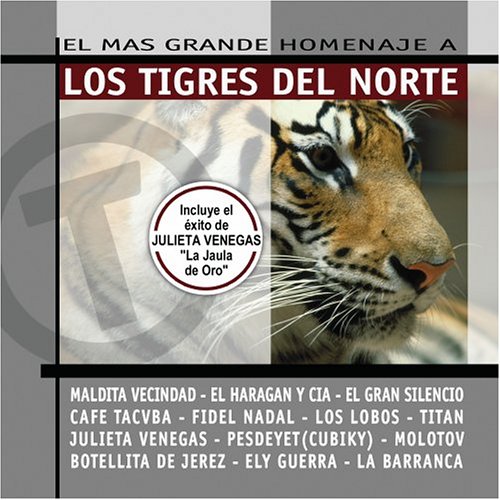
Los Tigres del Norte - MTV Unplugged: Los Tigres del Norte and Friends

MTV Unplugged:
Los Tigres del Norte and Friends,

Fonovisa, Mexico

Rating: 44

by Andrew Casillas and Blanca Méndez

It's not that Club Fonograma's two Texans have ever been (directly) involved in drug trafficking, cock fighting, or any of the other unlawful activities that Los Tigres del Norte make music about, but having both grown up near the Texas-Mexico border listening to the accordion-heavy sagas that the band is famous for, Andrew and Blanca just know what Los Tigres are about. That's why they decided to review the band's Unplugged record together.


Andrew: So, we doing this?
Blanca: Yeah, hold on while I get my coffee.
A: Good, hold on while I get a paleta.
I just had some spicy as fuck chile, and my mouth feels like its gonna fall off.

****

A: I guess the easy way to start a Los Tigres del Norte joint review is by discussing our respective thoughts on the band.
Personally, I love the living hell out of these dudes.
Still one of the best concert experiences I've ever had.
B: My appreciation for them is fairly recent.
I grew up listening to them because they were pretty much the only band that my dad ever listened to.
A: That's interesting...My dad loves their music but cannot take most of their stuff seriously.
Probably because there's a whole chunk of Mexicans who listen to "Jefe de Jefes" (coincidentally the opener on this Unplugged record) and think "THAT'S MY LIFE, VATO!"
(btw "Jefe de Jefes" is a fucking gangsta ass track and I'm glad they opened with it.)
B: Agreed.
My dad likes to sing that song when he wants to feel better about himself.
A: I completely sympathize.
So, you aren't up on these guys aside from the big singles?
Like, you've never heard one of their compilations or full-length LPs?
B: Not recently, no.
But, like I said, I grew up listening to them.
My dad has everything they've ever recorded, and he played their music all the time at home. So, their music is pretty much ingrained in me. At least at a subconscious level.
A: So getting to this Unplugged thing, is it me or does this crowd sound loaded?
B: Yeah, I was going to mention that...
A: To be fair, these dudes come out SWINGING on the first two songs.
Flat-out classics.
And THEN...Paulina fucking Rubio


B: I <3 Paulina.
A: Of course you do.
I'm trying to figure out the point of this Unplugged.
Were they trying to appeal to people like you, who have nostalgic ties to Los Tigres but also totally go crazy for Paulina?
Or is this some sort of tribute to Los Tigres del Norte and how their music transcends the corrido genre?
B: Maybe a bit of both, but probably more the latter.
Because I don't really see "people like me" listening to this album strictly for the nostalgia.
A: Have you heard this record before?
B: Yes.
A: Because if it’s a matter of Los Tigres transcending shit, well there's our evidence.
But WHY THE FUCK ARE THERE STRINGS IN MY CORRIDOS?!
Now I know how those beatnik fuckers felt when Dylan plugged in at Newport.
I don't know, maybe Paulina just leaves me cold...I guess we'll just listen on.
B: I agree that the strings in the corridos are disturbing.
I don't get it.
My dad would probably be all, OMG STOP.
(If my dad actually said things like OMG, that is.)
A: "Lagrimas del Corazon" reminds me of another good point.
For all the praise and notoriety of their narco-corridos, these guys can write one hell of a love song.
B: Yes!
A: They're very casual and significant.
They don't aim to be deep or universal.
They're very personal, and yet have a great reach.
THIS is honestly the type of thing I wish this Unplugged would showcase.
B: Exactly.
A lot of the reason that I wasn't really about them growing up, was I found their vocal style really grating.
But it works so well for this kind of love song because it feels really sincere.
A: So, how are you feeling the vocals in this quieter setting?
B: Well, for that last track, the setting is perfect.
But I can see how other songs, like the two openers, would work better in a rowdier, more big dance-type setting.
A: Or "La Puerta Negra."
The audience found the open bar right before this song came on.
And, in all honesty, I was doing a bit of air accordion right now.
B: Ha!
This is one of my favorite Tigres tracks.
Probably because of the accordion.
A: See, but it's the Los Tigres-ness of this track that SHOULD BE REWORKED on a record like this.
Why not add some funky instruments like it's an outtake off Cafe Tacuba's Re?
Replace the accordion with steel pedal or a fiddle?!
B: Fiddle on this track would have been amazing.
A: Fiddle on EVERY track would have been amazing.
Or, I mean, fuck, they have Andres Calamaro on the record, and he doesn't do anything!
B: None of the guests really do anything.
I feel like the "and friends" part of this whole thing was more like, "Oh, and these other people, I guess."
A: Good point.


I still wrestle with this record's existence.
It would never get played on radio stations that play Los Tigres del Norte songs.
And it would never get (non-deliberate MTV promo) air time on a music video channel that shows Paulina or Calle 13.
I mean, using Julieta's Unplugged as an example, that thing appealed to ANYONE who liked Julieta OR the guest stars.
B: Yeah, this one's in a weird in between place that doesn't quite work for any specific audience.
Like, I probably won't listen to it after this.
It would have been much more interesting for me if the guests had actually contributed something worthwhile and weren't just an afterthought.
A: Well, speaking of the guests, now we're at the one with Zack de la Rocha.
Fifteen-year old me is high-fiving the shit out of himself right now.
But here's another example of why this album doesn't work.
You have the lead singer of Rage Against the Machine up there, and he doesn't do what everyone knows he does.
He's just a bystander in Los Tigres del Norte.
Why not speed up the tempo and let the guy do his angry-rap thing?
B: Right.
I was excited about this one for a number of reasons.
The main one being because I was a pretty big fan of Rage in my brief angry teenager phase.
I was really interested in how Zack would fit into this song.
A: Apparently he fits like a duvet cover - he's there, but not in any essential way.

****

A: OK HERE WE GO
JUANES TIME
B: OMG
A: Besides the fact that he's Colombian in a song CLEARLY ABOUT MEXICANS, he actually tries to put himself into the track.
But it's just weird to have this cover, when this exists.
B: I was waiting for you to link to that.
A: WELL OF COURSE
But, yeah, I don't HATE the Juanes version because at least there's an effort.

****

A: Now for the closer...
B: This is the only one I didn't remember listening to before.
And the brass intro threw me off.
But the Calle 13 part…
A: At least they let him rap.
B: True.
But it still feels disjointed.
A: To be fair, at least they patterned this album like an actual Los Tigres show.
This is usually their go-to closing number.

****

A: The crowd certainly loved this, what are you final thoughts?
B: If I had been in the crowd, I probably would have loved it too.
But listening to the recording of it doesn't quite translate.
A: Well, I guess that's the problem with these Unplugged records as a whole.
Unless you're doing something outside of your M.O. (Julieta, Nirvana, Jay-Z), it's gonna be a one-time listen thing for anyone.
I mean, even great bands like R.E.M. have done Unpluggeds that just didn't translate because the album was too indebted to what came before.
I'm glad MTV chose this tribute to Los Tigres del Norte (for whatever reason) but don't think I need to hear this ever again.
I'll just go play the originals while drinking Bud Light.

Vive Latino: Review Day 1


VIVE LATINO 2009
10th edition of “festival iberoamericano de cultura musical”
first day (long day – long review)
by Juan Manuel Torreblanca

Pictures by Pnacho

------------------------------------------------------------------------------------------


Gepe
I got there a bit late, I must confess, but I managed to get a good glimpse of this first day. I must say that I felt this time the sponsors and the efforts concerning all the inside little shops, stages, art installations & ornaments were much more visible, making it a more spectacular festival. My entrance to the “foro sol” was distracted by a voice that I (sincerely) confused with Mexican pop star Belinda, but I said to myself “it seriously can’t be her… it was to early for a Moderatto surprise appearance anyway. So I looked into the Red Stage and it was Satin Dolls. Nope… I decided to just get inside to get a better view of the main stage. I caught a bit of San Pascualito Rey, it was sounding nice but I wanted to check out Gepe (I’m a big fan) so I made my way to the Carpa Intolerante “intolerant tent?” it sounds a bit like a tongue-twister… well, I got there and it was almost empty, 30 persons tops. I bumped into a couple of friends there and stood in front of the stage, really close, eating gummy bears (that I had brought along from home) until Gepe (joined by the wonderful Pedro Piedra) stepped onstage. They blew my mind away. I had seen him live a couple of times before here in Mexico City (at La Faena and el Centro Cultural España) but he had never sounded so great, he owned the stage, filled it up with his voice his unique dancing style and his folkloric electro-pop; and the tent continuously saw more and more people join the party. We all danced and sang along. They truly lifted our spirits. That’s what a music festival is supposed to do, I’d say. Gepe made me fall in love with the Vive Latino.

After that, I headed to the Red Stage to catch the Simplifires. That stage had a bit of a Coachella thing going on. The green grass, the palm trees surrounding it, the sun. The neo-hippies scattered all over the field. The Simplifires took the stage and Dave O took off with that outrageous yowl he delivers out of nowhere. His deep lyrics floated over their tight rock beat & despite a slight lack of presence of the guitar (talking about the mix not Shine’s performance here), the audience responded with warmth and a grateful ovation. They also went from a middle sized crowd at the beginning, to a rather big and captive bunch when they said their goodbyes.
Little Joy
I had to walk to the opposite side of the stadium to get to the Blue Stage where I wanted to stay for Little Joy, Ximena Sariñana and Hello Seahorse!

I got there and Little Joy had already started. I enjoyed them a lot! They had such an ease and an indescribable grace to them that it was just beautiful. Rodrigo Amarante’s voice has all the flavor of the Brazilian giants. He even sang some Gilberto Gil and kept me smiling all through it, under the partly-cloudy sun. Fab Moretti (beyond famous thanks to the Strokes) and Binky Shapiro (with her blonde hippie-chic chick glamour and sweetness) complete the band; but they fill it out for their live performances with Todd Dahlhoff and Matt Borg from The Dead Trees (on bass and guitar, respectively), and Matt Romano from Albert Hammond Jr's band (on drums). They’re delightful.

They had warned (on their MySpace) that Fabrizio would be busy recording with the Strokes for most of their June dates, but (unless my glasses aren’t working anymore for me) he was here with them.

I got to see a bit of Kinky’s set through the screens while they were prepping everyting for Ximena Sariñana. It looked cool and it was probably a blast (as usual). It was also fun for me to see how impatient people were with the unavoidable burden of reconnecting and line-checking (the nightmare of festivals, for the staff)… however the creativity shown by their desperate yells got more than a couple smiles out of me.

After a bit more than expected, Ximena Sariñana and her band of virtuosos took the stage. She opened with Eric Couts’ cover of “Rara” and the first thing that made my jaw drop was her drummer Hernan Hecht’s amazing strength as he drove the song into a version that’s a million times more energetic and interesting than the album’s (that sort of happened to me with all of their arrangements for her live performance), Aarón Cruz (on bass) kept up and took the jazz concept of the “walking bass” to another level, one where it was more like dancing and hopping and painting the harmonic structures of the song surprising colors. And, of course, there’s Ximena. Her beauty and undeniable charisma really shone beneath the evening sun. Her voice was full and healthy (though the mix on it was a bit low at first) and she was really confident and enjoying herself. Visibly nervous and excited to be playing her first Vive to a medium-sized crowd which (nonetheless) sang along LOUDly to all her songs. I especially enjoyed the brief moments in which she improvised a bit and just let go. She ended her set (a bit short due to the problems they had setting her up) with a slightly faster take on “Vidas Paralelas” and I loved it like I never loved the album version.

Hello Seahorse!
Then came the time for one of the hippest bands playing this festival to take the stage: Hello Seahorse! I have believed for some time that, in the end, it doesn’t matter all that much how beautiful or charismatic the frontman (or frontwoman) of a band is; it doesn’t matter how well he or she might sing or how cool they might all be; it’s the songs that matter. And Hello Seahorse! have risen to a new level thanks to a bunch of really good songs, increasingly better with every release; but mostly, thanks to one song that really conquered the airwaves the past months, "Bestia", and it’s been said before, but it was so clear to see now. The people were really excited to see them, and they asked for that song from the first moment. So, I must add that they too had some problems getting everything ready, and it took enough time for me to catch a bit of Zoe on the screens (boy, they had some gorgeous visuals) but back to HSH!, once they got going, it was up up up… Lo Blondo’s voice was awesome and present (in her ethereal high & crystalline almost soprano style), her face couldn’t hide her joy & wonder at such a warm reception from the crowd, well they were all SUPER happy to be honest. Oro de Neta had the coolest little red keytar and he rocked it like it was 1985, I was so jealous hehe… and he & Bonnz provided the powerful thread that managed to join the old and the new HSH! into a mature young band, darker, fresher and promising. Unexpected but fun was the guest appearance of Niña Dioz rapping to the early hit “Cassette” a bit awkward to see the hip-hop young star jumping to the happy twee of that song once the rapping was over, but they really pulled it together to end it cool and tight.

I meant to race back to the “Intolerant Tent” (hehe) but I had to eat something so I made a stop and had some tacos & soda before I got to see Los Dorados. I might dare say that tent was my favourite. The lighting with them was brilliant, they really evoked a fire: smoke that erased the limits that draw walls and roof and orange and neon yellow lights that found glimmering ways between the musicians. Demián (the guitar player) had just played with Ximena (as part of her virtuoso band) and here he was really letting himself go crazy. Dan Zlotnik is probably my favourite sax player in the world, and the rhythm base created by Rodrigo Barbosa & Carlos Maldonado (plus the DJ and his excellent scratching) is a fantastic mix of Radiohead and Jazz and godknowswhat… it made me think about a quote I heard not long ago (& sadly I forgot who said it but) it said “all music is experimental, really” and I believe it’s a bit true…anyway… Los Dorados had a full tent and the people were really into it… I started hearing the rumour (Austin… Austin…) so I guessed Austin TV would be the surprise this year… and apparently they were going to play that tent just then… and they did.


Austin TV
Austin TV were announced as Zanate y asociados, and somehow fans (I am, obviously, not one of them) figured out it was them. They took a stage that was half electronic devices, half a tropical jungle, donned in their little green grass smurfs masks, with cool Victorian school-boy (and school-girl for Chiosan) outfits. I must say I wasn’t expecting what I saw then. It was the wildest crowd of the night. They LOVE Austin, capital letters, absolute devotion. The kids give their all onstage, and they sprinkle the songs with heart-felt speeches in-between. The audience clap to the rhythms, they draw all the melodies on the air with their hands (Austin brings the orchestra conductor out in most of them). And despite it being an instrumental project, with no singing and no lyrics, people sing along to the melodies and “hey hey hey” and “ho ho ho” whenever it fits. It is amazing. They played two covers, first “around the world” originally by Daft Punk, and near the end a bit of “el baile y el salón” originally by Café Tacvba (for which they brought onstage Rubén Albarran) it was a highly exciting moment. Everyone burst into that anthemic “papa rupapa eu eooo” and sang along, even though the structure of the song was very different and it was just a fragment of it, the rest was those ups and downs in intensity that drive Austin TV fans crazy. Mosh-pit-slam-jump-up-&-down-scream-your-lungs-out crazy. I must confess that, personally, I don’t quite get it. I mean, they don’t do it for me. BUT it is a phenomenon to watch. And it also proves that an audience fully involved makes a concert huge like no one other performance can. So it was a nice surprise, when it ended, people were happy, you could hear comments on how “cabrón” it was etc.

And then it was time to head to the main stage, the Green Stage, to see Andrés Calamaro. It was dark and I could appreciate some details better before he appeared onstage; like the Olympic flame that lit the middle of the arena or a series of 6 really iconic Mexico City buildings that stood on one side of the seated area (the VIP area) and beautifully lit you could see the Torre Latinoamericana alongside the Monumento a la Revolución & others. I believe this is the nicest Vive Latino so far. By the time Calamaro & his band took the stage, I was rather tired and I had to watch the first part sitting down, but that didn’t make his concert a bit less spectacular nor less worthy of a headliner’s position (i.m.o.).

It was the perfect example of a mature and ripe show. Everything in its right place, every song a great song. A grateful crowd enjoying the presence of a poet & pop-star (all in one), of a master of hooks & an expert craftsman when it comes to the architectural side of songwriting. An Argentinean friend told me during his concert that Calamaro was such a prolific giant that in 2000 he released a CD that included more than 100 songs (well, it was 5CDs actually) and it was called “El Salmón” because it made reference to those who swim against the current… ain’t that cool? It was a brilliant, exciting and moving show. You could tell that time and life have given him quite a ride and his voice the raspy color of experience, of tango, of cante flamenco & -of course- of old-school rock & roll. He made a couple mentions of Michael Jackson. He quoted (musically & lyrically) Led Zeppelin’s Stairway to Heaven. Above us a sky that remained cloudy but spared us the burden of rain. And Calamaro gave all until the end. He sang about La Alta Suciedad, he sang La Flaca and to finish Sin Documentos. He kneeled, he owned every corner of the stage, he harmonized beautifully with his bandmates and he won his crowd with his colossal talent.

I had to catch the subway to get back home and my feet were starting to ache by then, so I decided to pass on La Castañeda and, the IMS (I had seen them before at Pasaje America and danced –what seemed like– all night to their music, I felt I wasn’t going to die for missing them this time. So that was it, my first day, and now it’s almost 3am and I don’t remember what the Matchbox 20 song said about that… but I know that once I’m randomly rambling, it means I must get some sleep.

If your poor and humble servant gets tickets for tomorrow, I will gladly send another review… if I don’t, then that’s that!

a vive latino hug

juan

Nada Se Pierde, Andres Calamaro

NADA SE PIERDE, ANDRES CALAMARO
EFE EME, Argentina **1/2
Rating: 51
By Carlos Reyes

Efe Eme is a well known web magazine in Spain; they are celebrating their 10th anniversary with some huge surprises. Several artists embraced the publication by presenting unreleased material in the form of either LP or EP entirely free to the readers. Among them are the Spanish duet Amaral, the always forgotten Ariel Rot and the big dish, master lyricist Andres Calamaro. It would be wrong to refer to Nada Se Pierde as a new Calamaro album considering it’s made up of poor recordings and covers put together, but I guess rockers don’t embrace the mixtape format as much as they should. Latin radio has put Calamaro’s previous production La Lengua Popular (2007) aside, which has to be his most mainstream album yet, but also his best in a while. It only takes to play the first tracks to know this is even worse than a ‘rarities’ compilation, a track like “Mejor no hablar” is so pathetic it should have never seen the light, it’s kind of a painful gift. Here is the thing, in some other time this set of songs would have been welcomed with much warmth considering he is a high profile artist, but as the rise of the netlabel continues artists must realize the audience is looking up for actual quality, and unless you’re a hardcore Calamaro fan, this free release will come as a loopy and sloppy album that doesn’t even sound good on the iPod. What it does offer is a Calamaro recording in the English language covering some of his big influences, decomposing himself almost entirely to the point it reaches the garage-sound only to square the precocious sound even more. Nada Se Pierde works best in tracks like “Los Mareados” or “Una noche sin ti” because the acoustics don’t hurt as much or feel like forced rapid tracks. The big highlight and leading track is his take on “Bajan”, a classic by Luis Alberto Spinetta that had been previously covered by Gustavo Cerati. So yeah, wait for the next real album and don’t conform to leftovers. 

♫♫♫ "Bajan"
Download "Nada Se Pierde"