Showing posts with label shakira. Show all posts

How Women Reclaimed a Space for Themselves in this Decade of Música Urbana

   By Lucas Villa | Nov 8th, 2019

    Artwork by Alonso Ayala (@ouchal)

“Eso no quiere decir que pa’ la cama voy,” (That doesn’t mean I’m going to bed with you) declared reggaetón music's first lady, Ivy Queen, on her 2003 breakthrough single, “Quiero Bailar.” Fast-forward to 2018 and one of the women who has risen in her wake, Karol G, boasted in Spanish, “Mi cama suena, y tu recuerdo se va,” (As my bed squeaks, your memory fades away), on  “Mi Cama.” Ivy was part of the female voices in reggaetón standing on her own during the genre's exposure in the 2000s. The past decade has seen reggaetón, and the larger música urbana movement, come back stronger than ever and fortunately, many women followed in Ivy's footsteps and fought harder for representation and space in the industry.

As the decade-end think pieces start to pop up, many of the men of reggaetón like Daddy Yankee, J Balvin, and Maluma, and the recent Latin trap music upstarts like Bad Bunny and Anuel AA, will be revered for helping globalize música urbana. However, women hold a higher regard, in part for pushing through the male-dominated genre and accumulating accolades as well and regardless of quantitative accomplishments, women deserve respect on their names. Inspired by Ivy Queen, reggaetoneras like Karol G, Natti Natasha, and Becky G were able to stand strong like the guys and further spread the female perspective on topics like sex, heartbreak, and swagger.

Near the middle of this decade, Colombia's Karol G and Dominican Republic's Natasha released a string of singles that earned them notoriety in reggaetón while Mexican-American singer Becky G was starting to crossover from the Top 40 pop of “Shower” to music in Spanish. As Latin music and artists experienced a global outreach in part due to the amassed appeal of  “Despacito” in 2017,  women  collaborated with their male colleagues and lessen the gender disparity of the genre exposure Natasha earned her first big hit with Ozuna on “Criminal” and Karol G rack up millions of views leading Bad Bunny on “Ahora Me Llama” while Becky G did the same with “Mayores,” a smash that solidified her as a force in reggaetón.

With their heightened profiles in música urbana, the women were able to follow-up with hits that highlighted the girl power the genre was lacking. On the bouncy “Mi Cama,” Karol G seamlessly switched between sweet and hard in letting an ex know that her bed was still getting plenty of action without him.

“There was a journalist that told me he didn't respect a woman making a song about her bed squeaking,” Karol G said in a L.A. concert leading up to last year's Latin Grammy Awards. “My bed is bringing me to the GRAMMYs and it keeps squeaking and squeaking.” A few days later, Karol G became the first female reggaetón act to win Best New Artist.

One of Natasha's songs that really made an impact was “La Mejor Versión de Mi,” an emotional ballad where she discovered her self-worth after leaving a toxic relationship. Finding strength in solidarity, Becky G scored one of the biggest hits in Latin music this decade with Natasha on “Sin Pijama,” a reggaetón-pop romp about throwing a sexy sleepover.

“The industry, the press, the audience would rather see women compete against each other and fight against each other,” Becky G said in an interview with Billboard this year. “I would like to change that. So many people told me not to do ‘Sin Pijama’ with anybody. Imagine two powerhouses coming together. That's lights out. That's a moment in music history. That's more than just a hit song. That is making a statement that will change the game and that's exactly what we did.”

With women of música urbana teaming up, female Latin pop stars also joined. Argentina's pop princesses Tini Stoessel and Lali Espósito worked with Karol G on separate occasions. The former racked up millions of views with Karol on the empowering “Princesa” while the latter broke through a power studded lineup of Latinas on Mau y Ricky and Karol's “Mi Mala” remix alongside Becky G and Leslie Grace.

Just before “Despacito,” Colombian superstar Shakira was back in the reggaetón game with “Chantaje” featuring Maluma. In the early 2000s Shakira and Alejandro Sanz attempted a similar feature with “La Tortura.” Currently, “Chantaje” nears 2.5 million views on YouTube while Spanish artist Rosalía, has a pop take on flamenco music turning heads, and now rubbing elbows with urbano with “Con Altura” with J Balvin and “Yo x Ti, Tu x Mi” with Ozuna.

Like Shakira, Jennifer Lopez is a powerful Latina who dabbled in reggaetón this decade. On a remix of the male-centric “Te Boté,” she gave the savage kiss-off track a much-needed female voice. “Let's be real, I threw you out,” J.Lo fired back. Brazilian superstar Anitta found her groove in música urbana, especially on “Downtown,” where she took control in the bedroom and gives J Balvin the directions where to go.

As música urbana goes global, more artists around Latin America are finding their voice in the movement. ChocQuibTown from the Afro-Colombian city of Chocó recently dropped a single titled “Que Me Baile” where the group's female member Gloria “Goyo” Martínez takes the lead in demanding hot-and-heavy dancing in the club alongside Becky G. In the music video, Martínez reigns and shines like a rightful queen over her bandmates and a team of dancers. Acknowledging reggaetón is a Black sound, seeing and hearing women like Martínez reclaim the genre for Afro-Latinx women is powerful, such the case of Dominican-American rapper Cardi B dominated the charts in both Spanish and English.

Women have been thriving in the genre for the better half of this decade. The opportunities they're pushing will be carried into the next one.


Lucas Villa is a freelance music journalist based in Santa Ana, the barrio of Orange County, California. He has been writing about all things pop music for 8 years now. He's covered countless pop stars, concerts and events across the country and abroad. As a Mexican-American writer, his coverage lately has been more focused on Latin music and its movement across the globe. He feels the most proud to give Latinx artists (especially the divas) the coverage that they're lacking and deserve. His words have been featured in Rolling Stone, Billboard, MTV News, and Remezcla. Connect with him on all social media @MyPrerogative15.¡Vamos órale!
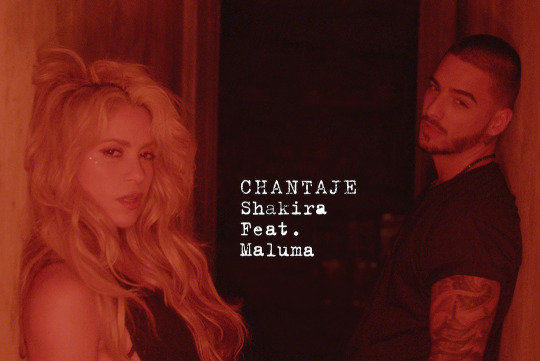
Shakira (feat. Maluma) - "Chantaje"


Andrew Casillas said it best when he rejected the notion of Shakira as Latin America's Prince and relegated her to the category of Latin America’s Jay-Z cemented by the catastrophic final result that was 2014's Shakira, a forgettable album of bland pop generica. As Shakira's net worth continued to soar, Shakira's social capital took a hit given the Baranquillera's cringe-worthy output in recent memory. From Bud Light Lime EDM classics with Pitbull, the Tecate Michelada rock stylings of Maná, to a culturally hegemonizing sports anthem, it would seem as if indeed Shakira was ‘trying everything’, much to the depreciation of her critical acclaim. We’re not even going to get started on "La Bicicleta”.

It seemed for some time as though only an innovator like Arca could resurrect our fallen Latina Empress of Global Pop. And although ‟Chantaje" does not feature production credits from the Venezuelan sound freak, it does sound as if an acolyte of Timbaland produced it. Firmly situated in the seductive future reggaetón environment spearheaded by compatriot J Balvin, "Chantaje" is ready for Top 40 mass consumption & personally gratifying listening experiences. It features rising star Maluma, further cementing Columbia as reggaetón’s current stronghold. Manipulation, codependency, autonomy, agency, unrequited love and emotional masochism take center stage on “Chantaje,” a narrative of intimate warfare amongst doomed lovers. It is Shakira's most relevant single since the merengue bangers of 2010's Sale El Sol and has reinvigorated a level of trust amongst those of us who have been here for Shakira since 1995 and care to see her be remembered for her artistic merits-not her commercial prowess.


Ivy Queen - "Que Se Jodan"

A photo posted by @ivyqueendiva on


Ivy Queen's 2016 return is buzz worthy by its own merit, but these are no ordinary times for Ivy Queen to release a single. Javiera Mena's revelation to Club Fonograma last week that she is determined to work with Ivy Queen has our musical mythologies reeling. The prospect of such a collaboration is the stuff pop dreams are made of. As legend would have it, Shakira released three merengue singles from 2010's Sale El Sol as per Club Fonograma's suggestion. Evidently, Rita Indiana's excellent El Juidero made it to the ears of Shakira's production team, thereby inspiring the Caribbean sounds found in her last decent album. Or so the legend goes. Since 2009, Club Fonograma has been a haven for the analysis of provocative sounds from both the underground and the mainstream. It is our belief that a Javiera Mena / Ivy Queen collaboration could pave a road towards a certain type of immortality for both artists. On one hand, Javiera Mena could gain the notoriety and respect of going to the source- the Queen herself- for the reggaetón backdrops she employs on everything from "Cuando Hablamos" to a few tracks from Otra Era. On the other, Ivy Queen could steer her industry towards a different plateau by incorporating emerging left field talent from Latin America into her repertoire. Javiera Mena could be Ivy Queen's first of many fortuitous collaborations with a hipster underground. I mean, "Que Se Jodan" already sounds like Ivy and her producers have been listening to Puerto Rico heavyweight, Füete Billete.

"Que Se Jodan" is hip-hop, showcasing the strong rap element Ivy Queen honed in on for 2014's ambitious Vendetta, a multi-part album that dedicated itself to substantiating four different genres of music: reggaetón, bachata, salsa, and hip-hop. Ivy Queen does a lot of posturing during "Que Se Jodan," a nefarious if short lived number. Ivy Queen flaunts her two decades-long artistic career, her rap skills ("¿Qué sabes tú de letra?), and proclaims her love for hip-hop ("esa es mi medicina"). Ivy Queen is a good enough rapper, but it should be noted that some of the braggadocio on "Que Se Jodan" is not befitting a 20 year veteran. Still, her claim that she reminds womn to fill themselves up with greatness is pretty powerful. Consider "Que Se Jodan" a reintroduction to Ivy Queen, a good enough track that has us hoping she can channel the brilliance of 2003's "Yo Quiero Bailar" at least one more time.

Club Fonograma's favorite futbol songs


The 2014 World Cup has already seen a few teams starting to pack, and although the always not-so-bright artist selection for World Cup song performers is having you listening to Pitbull and J-Lo before every game, we've decided to compile our favorite football songs in order to give you a little variety in football-related music during the big event in Brazil. Ranging from official World Cup songs, player tributes, players singing, and Spaniard indie classics, we managed to put together an assorted collection of Latin songs related to the game.

Los Ramblers - "El Rock del Mundial"
Listed as the first official World Cup song according to Wikipedia, Los Ramblers’ lighthearted slice of New Orleans Jazz-influenced rock‘n roll certainly established the recurring theme in almost every World Cup song: treating the tournament like a huge party and gathering of different cultures. The one trait that went uncontinued is that the song blatantly supports the home team, and hopes Chile will crush its opponents. Aside from that, it’s got a nice parallel between the boogie dancing and the organized teamwork often required to have success in football. - Pierre Lestruhaut

Roberto do Nascimento - "Fútbol México 70"
“Fútbol México 70,” the official song of the (duh) 1970 World Cup, is cheesy as all hell, but what cheese! For starters, it comes out of your speakers sounding like an offensive clash of traditional Mexican music. But all of a sudden it becomes this proto-MOR pop that’s also weirdly appealing. Seriously, after three minutes you can’t help but scream “FÚTBOL MÉXICO SETENTA!” like Gerd Müller’s up in your grill. Then there’s the horn section halfway through that’s accompanied by this delicious touch of syncopation and clapping. This is easily the best official World Cup song undoubtedly created by a committee of fifteen people. - Andrew Casillas

Ricky Martin - "La Copa de la Vida"
What can I say about “La Copa de la Vida” that hasn’t already been said about the Beatles’ “Revolution?” Seriously. This thing sounds like a goddamn truck. It has a chorus built for 70,000 seat stadiums. Even the BRIDGE sounds epic (that salsa piano, y’all). In retrospect, what’s key to the song’s lasting charms is Ricky’s vocal. It’s deft—not overtly macho. Any rockero would have belted the hell out of this and obscured the song’s hopeful nature. And most other pop stars would have cut the balls off this track by singing it like a gospel song. Indeed, Ricky Martin make it sound like the world’s most handsome fan—which he was, in all honesty. Andrew Casillas

Shakira - "Waka Waka"
Remember “Waka Waka”? Shakira’s 2010 feel-good World Cup stadium anthem has about as much going for it as it does against it. For starters, its chorus’ winding backstory from Cameroonian military song to World Cup world-pop is absolutely fascinating. The song itself is serviceable and catchy—the coupé-décalé guitar makes the whole track as far as I’m concerned. “Waka Waka” is also global, in that it’s a muddy amalgam of cultural signifiers, not unlike its singer—and also similar to the Africa depicted in Michael Jackson’s “Remember The Time” and “Black Or White” music videos (which youtube conveniently suggested after “Waka Waka”). And that’s its biggest problem: from the Lion King-esque opening shout to the slightly patronizing “this time for Africa” line, “Waka Waka” sonically and visually indulges in too many Africa tropes and platitudes. It’s an Africa that is only exists in the imaginations of U.S. movie and music execs, and is remote from everywhere else—including South Africa, 2010. But, even with all that said, “Waka Waka” is still better than “We Are One (Ole Ola).” - Monika Fabian

Andrés Calamaro - "Maradona"
There have been enough Maradona tributes written throughout the years to fill out half of this playlist. There’s Los Ratones Paranoicos adaptation of their rock en español hit “Para Siempre,” cuarteto music singer Rodrigo’s tribute to the infamous Mano de Dios, and Manu Chao’s more subtle “La Vida Tómbola” that got immortalized in Kusturica’s documentary. Yet we went with Calamaro’s tribute because nothing really beats a rock legend singing about a soccer legend. As you would expect it glorifies the former player awarding him divine status (“es un ángel y se le ven las alas herídas es la biblia junto al calefón”), and is also very apologetic of his doping and off-field issues (No me importa en que lío se meta Maradona es mi amigo y es una gran persona (el diez)”), which just pretty much gives you an idea of the godlike figure he managed to become in his home country. Pierre Lestruhaut

Mano Negra - "Santa Maradona"
Not a exactly a Maradona tribute in the traditional sense, it rather treats the Argentine legend’s name more as a pop signifier in a song that celebrates the intensity of playing the game and being a futbol fan like none other. Polyglot and eclectic music fan Manu Chao sings in french here and drops a series of rhymes that go from team supporting, to match narrating, to violence inciting, singing “allez, allez, allez” a few years before Ricky Martin had the whole world singing it in 1998. As far as capturing the viscerality, intensity and adrenaline of every facet of the game goes, no one’s done it better than Mano Negra. Pierre Lestruhaut

Marcelo D2 - "Sou Ronaldo"
“Sou Ronaldo” is one of those songs you can’t stop listening to simply because it’s by far the weirdest, kitschiest and most amusing player tribute there is. Where do we start? There's the fact Marcelo D2 raps in first person as if it were actually Ronaldo himself who was indulging in braggadocio, there’s the (sorta failed) attempt at the weird hybridization of bringing hip-hop and samba together, and there’s also that sort of collective shout you hear when a star players’ name is called on stadium speakers that gets added to the song as part of the beat. “Sou Ronaldo” is essentially a little bit of everything you expect from great rap music: braggadocio, genre hybridization, and sonic experimentation. Pierre Lestruhaut

Jorge Ben - "Fio Maravilha"
Although player tributes tend to be written for legendary stars that have been instrumental in bringing soccer glory to a whole country or city, Jorge Ben wrote the most humbling one of them all for a player that might be more popular because of this song than for his playing career. A hit single in the 1970s, it recalls a game between Flamengo and Benfica in which, after the crowd demanded that Fio Maravilha entered the game, he was brought in as a substitute and scored a memorable goal in which "he dribbled past the goalkeeper but did not enter the goal with the ball because he had humility." A metaphor for the substitute player entering to save the game as an angel sent from heaven. Pierre Lestruhaut

Kabah - "Oye Como Canto"
Realtalk: everybody knows that Kabah’s best futbol song is really “La Vida Que Va.” It has nothing to do with the World Cup per se, but it was the theme song to “El Juego de la Vida,” that early aughts teen soccer telenovela (starring all of the 30-something “teenagers” in Televisa at the time) which sought, at least in name, to capitalize on residual World Cup ‘98/“Copa de la Vida” fervor. But a few years before that, in anticipation of Rafa Marquez and Luis Hernandez’s tricolor in France ‘98, Kabah released “Oye Como Canto” a mid-tempo brassy number punctuated by Tarzan-ish “oh-eh-oh’s” and futbol stadium sounds. It earnestly extols Mexican soccer and national pride—honorable Mexican pastimes, to be sure, but doesn’t do much else. But hey, sometimes you gotta make your “Oye Como Canto”’s to get your “La Vida Que Va”s. A difficult song to come by, the best quality version of the song we were able to find was this not-so-stellar YouTube streamMonika Fabian

La Habitación Roja - "Nunca ganaremos el mundial"
Although many people claim that the song is no longer valid ever since Andrés Iniesta scored the winning goal for Spain in Johannesburg, La Habitación Roja’s “Nunca ganaremos el mundial” remains Spaniard indie rock’s finest futbol related track. Written just a few years before “La Roja” finally ditched their eternal underachievers label and started their ongoing world football domination, it’s a depiction of football fandom as unconditional passionate romance. A love song of epic proportions, it draws parallels between the loyalty a fanbase shows for its own team and that of a person for its lover (“Aunque las calles se derritan, aunque las flores se marchiten, aunque pasemos de los treinta y las derrotas sean eternas.”). Spain may have finally won the World Cup, but “Nunca ganaremos el mundial” still holds up as one of the the greatest poetical depiction of sports fandom. Pierre Lestruhaut

Los Planetas - "La Copa de Europa"
Although lyrically it has no relation to football aside from its title, members of legendary indie rock band Los Planetas have claimed the song was intended as a late tribute to their city’s club FC Barcelona and their 1992 European Cup triumph. Although it’s more renowned for being the closing track in what’s considered by many as the seminal record in Spaniard indie rock, its baroque pop grandeur and epic build-up make it the perfect song for soundtracking old footage of memorable futbol games on YouTube. Fuck it, this should actually be the song that’s played at the end of every soccer trophy ceremony, instead of Queen’s dried up “We are the Champions.” Pierre Lestruhaut

Planta Carnívora y Adrianigual - "Maracanaso"
The song was uploaded on Diego Adrián's Soundcloud page a few days before Chile's major upset over Spain, and eventually served as a premonition for what was going to happen at the Maracana stadium between those two teams. The song is quite surprising, since we weren't really expecting that 2010's Chilean pop first attempt at World Cup-related songwriting would end up being a reggaetón song. I would have expected that having Adrianigual trying themselves at reggaetón would end up being campy, but "Maracanso" is actually both infectious and hilarious. Planta Carnívora (whoever that is) is awesome at rhyming some of the Chilean players' names (I mean: "El negro Isla dejando todo en la pista," "Pinilla, bueno para mirar a las chiquillas"), and Diego Adrián, as usual, is excellent at singing sexually charged hooks ("Llegamos al Maraca, mami muéstrame tu arco"). If anything, "Maracanso" is way better than any song you'll hear on the World Cup soundtrack, and already feels like the greatest underground World Cup song ever. Also probably the only one we've ever heard. Pierre Lestruhaut

Shakira - Shakira

Shakira, Shakira
RCA, Colombia
Rating: 67
by Andrew Casillas 

Until fairly recently, I considered Shakira to be the closest thing Latin American would have to “our” Prince. Each has a wildly eclectic sound, a willingness to be overtly sexual (both musically and in public), and an underrated musicianship. But as the years have passed, it seems like Shakira has outgrown the Prince comparison. In perspective, Shakira is really “our” Jay Z. Each had a substantial run of highly innovative and highly influential albums, along with a charismatic public persona. Subsequently, the two diverged further and further into their own celebrity, to where their careers are now sustained entirely on their existence as Shakira™ and Jay Z™, corporate entities.

That’s not to say that either artist is stunted from their genius. Indeed, each is still capable of drafting a stunner. Jay Z can go through the motions on his albums all he likes, but when inspired, the dude can seem untouchable (“Empire State of Mind,” “Roc Boys,” “Niggas in Paris”). Shakira, likewise, can still be gracefully sultry (“Antes de las Seis”), popularly singular (“Hips Don’t Lie”), and brilliantly batshit (the still unfuckwithable “Loba”). So we can pine for the days of consecutive instant masterpieces all we want, but those days are over. Instead, both Jay Z and Shakira are hustling to stay relevant as they veer further away from their 20s. Staying relevant in the fucked up world of pop stardom means forcing yourself to become the biggest stars of your pop music niche. Be everywhere, sell everything, evolve from tireless worker to CEO. Blame The Voice and Rocawear all you want, but, without them, Shakira and Jay Z would never get as many opportunities to indulge their musical side.

Going into her second decade as a Multimedia Superstar, Shakira represents Shakira’s attempt to capitalize on the peak of her celebrity following her new roles as a mother and as a judge on America’s highest rated reality show. Therefore, it’s no surprise that Shakira attempts to deliver something for everyone. And in varying ways, the album succeeds at that. First single “Can’t Remember to Forget You” is representative of the parent album’s theme. The Bruno Mars-like blend of The Police and pop radio sheen is simultaneously inoffensive and entirely effective. You feel like you can chart the song’s creation in a boardroom. Regardless, it’s uncompromisingly Shakira, not to mention an opportunity for Rihanna to do more than act as a hook girl. It’s also a great showcase for Shakira as sexually aggressive songstress. Her ferocious yelps during the final chorus are organically erotic in a way that the track’s gratuitously sexed-up music video wishes it could be. Speaking of unnecessarily sexed-up, there’s “Empire,” the album’s second track and second single. There’s a lot to praise for the sheer power balladry of the song, but the heavy metaphors prove too much for something instrumentally over the top already. In fact, it sounds almost like a Shakira parody (notably, “Empire” is one of two songs on Shakira not written by the album’s namesake).

The first half of the album is shockingly derivative, even if there’s some fruit. “You Don’t Care About Me” is a really nice slice of Gotye-rock, and “Cut Me Deep” is a deft bit of pop reggae. However, the less we speak of official World Cup anthem “Dare (La La La)” the better. I’ll just mention that it’s pretty much a re-write of “La Copa de la Vida” set to the tune of “Spice Up Your Life.” Shakira’s second half is where things get interesting on a macro level. Musically it’s a mixed bag. There’s the big Blake Shelton duet “Medicine,” an all too obvious attempt at country music radio airplay; there’s “The One Thing,” our obligatory motherhood track; and a few other tracks (“23,” “Spotlight,” “Broken Record”) that reveal Shakira’s (or at least her PR team’s) greatest influence: Taylor Swift's Red.

This makes sense considering the album’s latent purpose: in order to dominate the market, why not look to who’s already dominating the market? That the Swift-inspired numbers don’t marginalize Shakira are a testament to her strengths as a singer (“Broken Record” is actually quite fabulous). But they’re also way too straightforward. Even when her previous English album She Wolf (a lesser record than Shakira) failed, it wasn’t because Shakira played it safe. Indeed, that album was almost too extreme in its early adoption of EDM-inspired globo-pop. Shakira is still a good pop record and something that she can base another 25 years of a career on, but hopefully Shakira can strike a balance between these last two records going forward, or risk lapsing into Jay Z’s current phase as the rap game 1981 Rolling Stones—20 years going strong with only 20% of the effort.

And what if Shakira ends up lapsing? Meaning, in effect, only making music as an excuse to go on tour and on television and keeping the coffers full. Would it still be important to cover artists like these? It certainly wouldn’t be because Shakira needed the exposure or our recognition. The reason that Shakira’s career is worthy of continued critical evaluation is because she represents the breakthrough that we’d love any of our favorite artists to achieve. Unlike other crossover stars like Ricky Martin or Juanes, she didn’t achieve a sudden lapse in popularity or stagnate at minor celebrity-hood (indeed, Juanes seems sadly resigned to a life as the token Latin musician at every Grammy ceremony whenever Gloria Estefan is unavailable). What Shakira does with her career, or rather, what she chooses to do with her career, is instructive for what happens whenever any of our favorite artists break through. And there’s the key: for all intents and purposes, Shakira seems fully in charge of her career. And she’s still damn good at being Shakira. Even if she’s lapsed into the Shakira™ stage of her career, she can still lead the way for the next Latin American critical darling turned superstar. And if that leaves you feeling a bit discouraged, don’t blame Shakira or Jay Z, blame the system.

Video: Shakira - "Addicted to You"


Even casual fans and borderline haters should give props to Shakira. When the 2010/11 party months were crowded with Ke$ha and David Guetta-produced house, Shakira opted for rhythm and a refreshing take on merengue. Ultimately, it was the strength of her singles (yep, even the title track grew on me) that redeemed the uneven but really-not-that-bad Sale El Sol. Now, as summer approaches, Shakira concludes and celebrates the success of Sale El Sol with one last single. At two and a half minutes, "Addicted to You" doesn't carry the same potential her last hits did but, as the layered "oh, oh, ohs" indicate, the song is more of a victory lap. And a well-deserved one, too.

As for the accompanying clip, it’s harmless eye-candy. Enjoyable even. Pop videos and I have a complicated relationship. In high school, I had nothing but contempt for the common pop video. I cringed at the sight of lens flares, slow motion shots, and product placement. In other words, exactly the kind of videos director Anthony Mandler has spent a career making. But even I’m having trouble hating on this. Mandler's shots accompany Shakira through gorgeous and colorful locations. And yes, we get the obligatory lens flares, but at least we're spared any melodrama. This one is just fun.

Shakira - Sale El Sol

Sale El Sol, Shakira
Sony Music, Colombia
Rating: 57
By Carlos Reyes

Milquetoast. That’s the official word Club Fonograma’s staff is using to describe Shakira’s latest album Sale El Sol, the seventh album in her triumphant career. There’s a shared anxiety among music journalists to legitimize true divas, we do our own share with Shakira. The Colombian global star has created a career of unexpected turns (musically), always keeping an ambitious eye to get into the new trend, and adding her peculiar persona to anything she gets her hands on. Shakira is like the one hot girl in your class generation, who is also very nerdy (that justifies that cool The xx’s “Islands” cover). Ok, not Zooey Deschanel hot nerdy, but tidy enough to make good music through/by her sensuality. We also know her career is inconsistent, mostly on her atrocious English-language albums. Sale El Sol breaks the rule; it’s her first bad Spanish language album, aside from a few numbers, it’s inefficient, milquetoast, almost colorless.

When Shakira delivered the amazing Fijacion Oral Vol.1 she argued she was ‘trapped’ on a line between Bocanada (Gustavo Cerati) and Velvetina (Miguel Bose), she clearly found her escape with “Loba”, perhaps her finest single yet. While following the disco strings would’ve been the obvious choice, Shakira announced she was going back to her roots, a place not even Shakira is sure about. When her fantastic single “Loca” was unveiled, everyone assumed she was coming back to her ‘Latin’ roots; unfortunately, she comes back to an era of uncooked melodies, like in Pies Descalzos, except it’s not very charming this time around. The title track opens the album with a very sober Shakira picking up on her career-motif of love making people blind and stupid; somehow, she always finds a way to make it work. In “Sale El Sol”, every ounce of content is set loose to a level of self-reflective leisure.

Like most of her first singles, “Loca” is completely misleading to what’s really in store, but before getting into the depressing part, let’s highlight how amazing “Loca” is. This is the kind of mainstream hit any pop lover secretly hopes for, a song fully unattached of the pop sound (as a genre), and picking up an out-of-nowhere sound like Merengue to extend pop music even more. Rarely has Shakira sounded this good, rarely any of her peers get this sexy in and out, dragged & sweaty. Only Shakira is able to envision herself and her men as 4-leg animals over and over again, always keeping it sexy & cute. Too bad most of the rest of the album manifests so very little; the lyrics are all restrained, and the music is uninspired, only nearby to fill its purpose.

People have been salivating for a Shakira-Calle 13 collaboration, and “Gordita” finally does it. The song is not bad at all, just a bit underwhelming considering how epic it could’ve been. After dissecting in many parts, we know what’s missing, Visitante’s magic touch in the music. Talking about Residente, he shares album credits with Cuban-American rapper Pitbull (in “Rabiosa”), who he has dissed via Twitter several times. Gustavo Cerati (get well soon) co-wrote and produced “Tu Boca” and “Devocion”, two pieces in which Shakira accomplishes to sound like the rocker she’s always strike to become, despite that, they’re hardly memorable beyond its electrified riffs. Sale El Sol could be divided in two; one half with the fun dance jams, the other, with poor-to-middling tracks as little stimulating as "Waka Waka" and 97% of her English songs.

Video: Shakira - "Loca" feat. Dizzee Rascal


We started our Shakira “Loca” single review whining about our readers’ biased hate towards the Colombian diva, and surprisingly, we’ve heard nothing but great feedback about this hot single. There’s something strange going on with Shakira’s edgy pop structure, and people are noticing. Last year, “Loba” made it into our Top 20 best of the year list, was the #4 spot on Pitchfork’s Pop Songs Reader Poll, and had Hot Chip and Patrick Wolf inspired by a very weird song with phenomenal disco strings and overall substance. “Loca” is way crazier, but less accessible, especially on its awful translation. As our very own Andrew Casillas puts it, “whoever is translating her songs into English should get fired.” It used to be Gloria Estefan, but I guess Shakira should just fire English-idiom herself already. This video was shot on the streets of Barcelona, there’s not much artistic value to it, but admit it, those gold pants are crazy hot.

New Single: Shakira - "Loca"

We always get a lot of crap whenever we mention Shakira around here; some of you have not forgiven us for including some of her songs on our Best of the Decade special (including the still astounding “Loba”). After her uninspired and career-worst album She Wolf, and the unprecedentedly weird “Waka Waka,” Latin America’s most famous persona is back. We all know her English-language are as meaningful as a hipster’s scarf, but we’re quite excited about her new Spanish language album Sale El Sol (out October 19). It’s been highly rumored the album features collaborations with Pitbull and Calle 13, can’t wait to hear those.

The album’s first single “Loca” is creepy weird, unexpectedly sweaty, we dig it. It’s phenomenal how she always manages to put on great first singles, “Loca” isn’t as impressive as “Loba” or “La Tortura,” but it’s sexy in all its funkiness. We’re probably too framed within our scene, but one would swear Shakira has been listening to Rita Indiana and Javiera Mena lately. This is some kind of tropical heaven, and the Colombian star sounds as if she's having an orgasm, “dance or die.”

The song is actually a reimagining of “Ella Eh Loca Con Su Tiguere” by Dominican artist El Cata, who appears in the song credits. We also recognize Puerto Rican flow-master Ñejo, whose sexual explicitness is finally devoured by Shakira’s charms. The single’s cover is fantastic, I see a tail, she finally accomplished to look like a lion, a sexy beast. A first impressive single, looking forward to hear the rest of the album, blow our minds Shakira.

Shakira covers the xx at Glastonbury


This past weekend saw Colombia's finest (legal) export, Shakira, play the renowned Glastonbury Festival in England. Amidst a pretty typical Shakira set (anybody wanna bet that she didn't play "She Wolf"? Anyone?), the pop megastar delivered a faithful, yet surprisingly rousing, cover of the xx's "Islands." While the level of Shakira's artistic acumen has become one of Latin music's great argument starters, it shouldn't be hard to see what's so special about this performance. For starters, the contrast in styles: the xx's work exemplified as being very hushed and silently sensual, while Shakira's is anything but deft and unassuming. Yet here, she finds a nice little bridge between herself and the U.K. indie duo, accentuating the song's dance rhythm without overwhelming the original's intentions. Kind of makes me wish I had been there. Instead, I spent the weekend seeing both of my chosen football teams collapse upon themselves. Damn you, Aguirre.

Oh, and congratulations Argentina. No ill will. BUT HE WAS OFFSIDES AND YOU KNOW IT!

New Single: Juanes - "Yerbatero"

Juanes’ new single “Yerbatero” was sent out today to start the on-fire promotion of his latest album. Just as a clarification, we don’t hate Juanes, it’s more of a resentment many of us have towards the industry for filling up our FM radios with what they claim is the ultimate ‘Latin rockstar,’ when we all know he isn’t. He fills the rock-alternative quota with utterly underwhelming songs, not as terrible as Mana per say, but still, a boredom. You didn’t see it, but our staff deeply disapproved of Andrew Casillas' decision to include “A Dios Le Pido” on our Songs of the Decade list, only to find ourselves admitting the song’s unavoidable virtues (plus Un Dia Normal is quite good). But I challenge Mr. Lawyer Casillas to defend “Yerbatero,” it’s awfully bad.

The Colombian star will premiere his single today at the South Africa FIFA World Cup, as if Shakira (and her WakaWaka) wasn’t enough. But see, Shakira is like a goddess, even with such a laughable song she is a better musician and a charmer, something Juanes lacks on every level. As mean as I might sound, it won’t level up to the ridiculous raves this song will be getting in the upcoming hours, example, Latin Gossip: “WOW WOW WOW… it’s amazing, everything we expected and more! Totally Juanes! Totally rhythmic! Totally it!” Sorry for making you read that, but hopefully you get what I’m saying, the balance is off.

Sure, we could act cool and oversee the song and just not talk about it, but this is a Latin Pop music blog, we must speak up. If anything, this song comes to reaffirm Juanes’ sharp sensibility while picking up Colombia’s folklore, something done cleverly in "La Paga" but that sensibility doesn’t go too far when you barely have a template to work with. When trying to be catchy, Juanes falls into the toxic exoticism. Juanes is particularly misguided outside the Santaolalla circuit, something truly noticeable here at the hands of English producer Stephen Lipson. Perhaps not as awful as “Odio Por Amor,” but still painful, this is anything but uplifting, self-remedy ain't for you Juanes.

Hot Chip Covers Shakira's "She Wolf"


The great people from Nacional Records leaded us to this strange MP3 of Hot Chip covering Shakira’s “Loba” (!). We’ve been telling you the song is pretty great, and those disco strings were dazzling. As the Colombian diva prepares to kickoff the 2010 FIFA World Cup in South Africa in about two months, Hot Chip takes on “Loba” with lots of affection, although I do get a bit of a feeling they are embracing the song as they are making a spoof, but most Hot Chip songs sound that way (I’m not a fan). Now, the song sounds quite terrible here but it’s fun, too bad they couldn’t pull out their howl. Grab it at Abeano.


She Wolf, Shakira

SHE WOLF, SHAKIRA
Sony, Colombia
Rating: 55
by Andrew Casillas

I guess I should start by saying that I’m one of Shakira’s most ardent supporters in the music-crit community. Her faux-poetry is capable of reaching grand, vivid expressions of romantic imagery. Her voice, while understandably grating for some, is one of the most distinctive and well-utilized tools in modern pop music. Her music is as eclectic as any Latin pop star this side of Café Tacuba’s Re. To me, she’s essentially Morrissey with a Prince fetish.

But that’s just in reference to her Spanish-language records, which are all varying levels of excellent. Since Shakira became the great lasting Latin pop star hope in 2001’s Laundry Service, there’s been a seemingly never-ending debate about to what degree her music has “suffered” since the transition to English. Some people love her awkward attempts at sarcastic quips (“I hope you don’t confuse my breasts for mountains,” etc.), some people think her music has suffered from “Anglo-ization,” others just don’t care as long as her music videos maintain the same level of, um, excellence.

But we’re not here to debate this (that’s what the comments section is for, folks). We’re here to discuss her new “crossover” album, She Wolf. Specifically, what a disappointment it is. It’s with a heavy heart that I report that this is Shakira’s least-inspired English-language album to date. The problems, you could say, start from the top, with the title track. I’m not usually the type of person to dismiss a song for its lyrical content, I’ve gotta say that the lyrics of this track completely derail any attempts at taking the song seriously (although “I'm starting to feel just a little abused/like a coffee machine in an office” is admittedly somewhat awesome). While it’s Spanish-language counterpart “Loba” (included here as a bonus track) is a whirlwind of sound coupled angry sexual politics, exemplified by the double-meaning of the title in her native tongue, the lyrics of “She Wolf” are merely clunky and gawky, like at 7th grader’s first attempt at poetry. I guess some of the credit/blame could be passed off to the song’s respective songwriters, Jorge Drexler for “Loba” and the guy from the Bravery for “She Wolf,” but Shakira’s too smart to let someone else take too much control of her music.

In fact, it’s her approach to collaborations that seems to submarine her attempts at improving her sound. While previously, she let Emilio Estefan, Gustavo Cerati, and Rick Rubin stay in the background as quality control men of sort, this time she allows John Hill, the Neptunes, and Wyclef Jean run rampant all over the record. What results is the loss of the “Shakira-ness” that makes her music distinctive. Listen to the Neptunes “Why Wait,” which has the Middle Eastern elements that Shakira has always deftly infused into many of her better songs, but are made bland by generic synthesizers. Or how “Good Stuff” tries too hard to sound like Crystal Castles with a club beat, when it could easily be a slice of Javiera Mena-like casual electro pop. And that’s not even mentioning the quickly forgettable and rudimentary “Men in this Town” or “Gypsy.” Oh, and as for the Wyclef-assisted “Spy,” I recommend just deleting that song from your iTunes as soon as you upload this record.

Luckily, Shakira always provides one nugget of hope on every one of her English albums. This time, it’s “Mon Amour,” a delicious little rocker that closes the English part of the album. Like previous standouts “Objection (Tango)” and “Timor,” this track is full of bite and vigor as Shakira portrays the “betrayed and pissed-off lover” persona to perfection. Lily Allen would kill for a song like this.

Overall, this isn’t a completely gawd-awful record; just a huge disappointment. Regardless of your personal feelings about her music, Shakira is an important figure in Latin pop’s evolution towards general acceptance, and we hope that she makes a record as essential and powerful as any of her Spanish records so the population-at-large can appreciate the treasure that we’ve all known for years. And while this sadly won’t be that elusive great English recording, it’s great to think that we have musicians like her in the first place, and that she even has this opportunity to begin with.


Track Review: "Loba", Shakira


SHAKIRA - "LOBA"
Sony Music Entertainment
Album: She Wolf
Rating: 7.4

(9.7) Andrew Casillas. I've been wrong all of these years. Time after time, I would explain to my gringo friends how Shakira was our Prince. Turns out, she's our Michael Jackson. I mean, get over the polarizing vocals, and the sexy hip shaking, and "Loba" is basically straight out of Off the Wall! The beat doesn't gyrate, as much as it thumps, and the whole track rides the subtle bass funk to the point of saturation. There's also that vague sense of fun/paranoia that MJ was absolutely the best at undertaking, at least until you're forced out onto the dance floor. And with the Spanish version, there's the deft, yet important, double meaning of the title, unlike the English versions bland implications. Also, it has DISCO STRINGS, PEOPLE. Awoooo!

(7.0) Carlos Reyes. Shakira claims “Loba” characterizes the woman of this century when it doesn’t, there was a sexual revolution already. Despite the very ambitious and quite forced theme, she does exorcism the animal inside her in a very seductive, brushed-steel gleaming pop song. It’s kind of hard to shamelessly soak the lyrics considering Jorge Drexler is the co-author of the song, but it’s the only way to find it fully compelling. It does sound great; it’s well sequenced (“mirala caminar, caminarrrrr”), subliminally humorous and its mid-night outburst is appreciated. Awoooo!

(6.7) Jean-Stephane Beriot. I’m pretty sure I prefer “La Tortura”, seriously, it was great to see our popstar (likeit or not) messing daringly with the reggaeton beat. I’m one of those who thinks her music is way ahead of the average top40 artist; Fijacion Oral Vol.1 was quite fantastic. “Loba” is not nearly as interesting as its awesome and very flexible video; still, it makes me move in strange ways and proves how great of an entertainer she really is. I just wish her music would take the risk of her hips and I’m afraid Pharrell won’t help. Awoooo!

(6.0) Juan Manuel Torreblanca. It’s a super-production, sure; this is the LatAm queen of pop. However, there is also something called over-production & I believe this one might suffer a bit from that. The beginning reminds me of Madonna’s intro for music. The lyrics swing shamelessly from naïve to pretentious (she does have the self assurance to deliver them as dead serious as her dance moves in the video, though) so –in the end– I don’t know if she’s laughing with us or we’re laughing at her. And that wee howl! haha… Awoooo!


Video: "She Wolf", Shakira

It’s not like you’re not going to see it somewhere else, Shakira’s latest clip “Loba/She Wolf” is bound to become the most popular video on MTV Tr3s and certainly so, despite what you might think about the song, the video is probably the sexiest she has done yet. Everyone argues “La Tortura” video was sexy, I disagree, it was unintentionally funny and brutally grotesque to see the Colombia diva covered on chocolate. One thing is for sure, she controls her body like very few people can but I’m still undecided on the quality of the actual song, I was almost convinced until she stated it was a song about the 20th century woman, and “Loba” doesn’t strike as far. But let’s wait for the entire album, although it’s not as exciting since we know she has yet to release a good album in English. She could surprise us though, Fijacion Oral Vol.1 was great and we hear Calle 13 and Gustavo Cerati will be around. By the way, I like the Spanish version better but couldn't find a video for it.


Summer Jamz 09: Andrew Casillas & Dan Weiss–Manischewitz and Margaritas


As I've stated before, I was a writer for glorious-but-defunct Stylus Magazine. One of the more popular re-occuring bits on the site was a feature that we called "Summer Jamz," which were customized mixtapes curated by the individual writers. The purpose was for each writer to compile a playlist to celebrate a mood, theme, or meditation based on the season. And even though Stylus lies in the internet graveyard, many of its writers still continue the "Summer Jamz" tradition through the website The Passion of the Weiss, which is run by the world's greatest hip-hop writer (and former Stylus alum) Jeff Weiss. This year's other Summer Jamz are running on that site through the next few weeks, and I'd highly recommend checking some of these out.

However, I'm here to post the entry compiled by me and Dan Weiss, another Stylus ex-pat who contributes to The Village Voice and Pitchfork. He's also responsible for that awful (and hilarious) cover art. Be warned that this mixtape sounds better with sugar around the rim of your glass. Now please, enjoy!

Premise: The year is 2109. Accordions are banned. This is because 100 years ago, two rogue, outlaw music critics made a mixtape so important, so inspiring, so…fucking amazing that all bandwidth worldwide swallowed itself and left all civilization in darkness for over 5 years. After President Obama restored electricity to the northeastern states, the newly formed Republi-Whig party, which controlled both houses of Congress, the British Parliament, and 3/4 of the Legion of Doom, passed the accordion ban of 2016, to prevent such awesomeness from ever coalescing and concentrating this violently ever again. As for the two music writers who created the mixtape, after the passage of the accordion ban, they were sent to an undisclosed location somewhere north of Helsinki, where they were placed in a highly experimental procedure conducted by Greg Gillis and Kanye West to see if the very essence of a human being could be sampled on record and auto-tuned (turns out, yes it could). The following is the notation of their original mixtape…

Download: http://www.megaupload.com/?d=NMMCFLVL

1. Los Lobos – “Kiko and the Lavender Moon”

Pro accordion-to-rock transfigurationist David Hidalgo’s smokier, cinematic tendencies got the best of him in the early 90s, resulting in the Tom Waits-ish Latin Playboys project, and bleeding over quite a few Lobos tunes, like this slow-burning candle. (Dan)

2. The Pogues – “London Girl”

Rapid-fire accordion riff? Horn accents? Bitchin’ rhythm section? If anything, there’s too much to love here. Personally, I’m struck by how a blistering fusion of punk and Irish folk like this could also be such a heartfelt love song. The sense of optimism and passion makes it the ideal choice for a summer romance. In a way, this song does for London lasses what “The Girl from Ipanema” did for Brazilian beach babes. (Andrew)

3. The Klezmatics – “Man in a Hat”

A decade before Gogol Bordello and Golem it’s truly surprising after hearing neo-trad klezmer that fits and wiggles like this (straitjacketed bassline, speed-metal tempo) that the Klezmatics are still one of the only acts to do this sort of thing. (Dan)

4. Bowerbirds – “In Our Talons”

I have a weakness for creepy-erotic, predator-prey songs, like the spider “come to wrap you up tight until it’s time to bite down” in Cursive’s “The Recluse.” Read into this what you will. (Dan)

5. Calle 13 – “La Jirafa”

Sometimes I like to lie in the grass and let the Dada in me wander. Then I get bored and start looking around for pretty girls. Luckily, this song proves a viable soundtrack for each situation. Seriously, try telling the next pretty girl you see that you want to wrap her in a tortilla. If she laughs, she’s yours. If she’s puzzled, she’s probably the type that brings an umbrella to the beach. You don’t want to be with that girl. (Andrew)

6. Los Inquietos del Norte – “La Gripa”

Forget everything you ever liked about cocaine songs. “La Gripa” out-balls every single one of them. Without providing a line-by-line translation, here’s what you need to know about this track: The narrator loves coke, his buddies love coke, they particularly love snorting coke while drinking tequila and…well, everything after that is kind of disturbing and offensive. But good Lord is it fun! Hell, you would have to be on coke yourself to move to this—it’s played that fast. Oh, and those snorting noises that bookend the track? They’re not faking. Take THAT, Clipse… (Andrew)

7. Clipse – “Momma I’m Sorry”

With all respect to Eminem’s “Square Dance” and MF Doom’s “Accordion,” it’s hard to spit bars over accordion without sounding gimmicky or tacked-on. The Neptunes make it sound stark and menacing. Pusha T and Malice ignore it altogether; they’re so obsessively single-minded they could be manufacturing coke-talk over an accordion for all they care. So they did. (Dan)

8. Gogol Bordello – “Think Locally, Fuck Globally”

As improbable, bracing and out-of-nowhere as the White Stripes or Nirvana, I could’ve picked almost anything from the planet’s best onstage bet. So I picked the one that yells “Party!” after claiming to invent the country. (Dan)

9. Celso Piña – “Cumbia Poder”

Cumbia, for those who aren’t aware, is a centuries-old fusion of African and South American sounds whose origins as a courtship dance ritual. Modern Latinos have continued this tradition—mostly by dedicating long sections of our wedding reception playlists to this music. This track, a mix of traditional cumbia and hip-hop music, is a celebration of the power of cumbia as party-starter, booty-shaker, and baby-maker. (Andrew)

10. Nortec Collective – “Tijuana Sound Machine”

Mexican folk music (norteño, banda, etc.) gets a bad rap from American audiences for being too rigid. This wordless techno track from members of Mexico’s renowned Nortec Collective is a virtual bitch-slap to that round of thinking. And if the song’s video teaches us anything, this will make attractive people break dance right in front of you. And who doesn’t love that? (Andrew)

11. Jordan Knight – “Give It to You”

Probably not the only Billboard smash in many a year to feature accordion—not with all that experimental Timbaland and Nashville crossover. But this has-been (never-was?) came back from one of the least-retained fames of all time to deliver this sweet little telegram about his dick. (Dan)

12. Paul Simon – “Boy in the Bubble”

A few years ago, VH-1 Classic began airing a series called “Classic Albums,” and this was one of the first episodes. During one pivotal scene, Paul Simon shows the production techniques that went into mastering this song. After complementing himself on how surreal his lyrical technique was, he revealed that the accordion track was actually mixed in reverse. That may be common knowledge to some people, but this was quite the revelation for me, considering I had been fascinated by what I thought was expert accordion playing. Instead, it’s all lies. Yet I still love this song. Damn, that Paul Simon has got some balls on him… (Dan)

13. Ramon Ayala – “La Rama de Mezquite”

Ramon Ayala’s music epitomizes the perfect summer night. Locating a bar where the $1 drink specials flow like wine. Where a bartender can serve you a “four horsemen” shot followed by a double shot of Grey Goose and not lose his liquor license. Where the DJ plays what you want him to play. When the dance floor is so packed that you can’t even find the exit. Where the prettiest girl in the world dances with you all night and doesn’t even tell you her name. Why do I say all of this about “La Rama de Mezquite”? Because that night once happened to me. And it was perfect. (Andrew)

14. Beirut – “Scenic World” (Lon Gisland version)

Not really a fan in the first place, I considered Zach Condon over after he dusted the Balkan Brass for less interesting Euro-pursuits. This is his bon voyage. You know it’s one of the catchier death rattles when your then-girlfriend agrees to sing it at the open mic if you’ll kazoo the horn part. (Dan)

15. Lila Downs – “Skeleton”

I hate the term “world music,” mostly because it doesn’t mean ANYTHING. Yet, if anyone is ever going to fit that label, it’s Lila Downs. Specializing in traditional Mexican folk, American blues, rock and roll, South American cumbia, vocal jazz, etc., she can play any style of music she wants and do it convincingly. This track, a zydeco-influenced romper, may be about death and spiritual rebirth, but it swings like the best that NOLA has to offer. Sounds great with a hurricane cocktail and orange peel. (Andrew)

16. Dead Milkmen – “Punk Rock Girl”

I discovered this song as a kid and even then it was easy to see past their shit. With the accordion arrangement and big Broadway send-off (“Eat fudge banana swirl/ We’ll travel ’round the world”), this wanted to be a parody but these boneheads just didn’t have the heart to sabotage this lovely melody they stumbled upon. Bonus sentiment for stuff from my youth like Zipperhead. (Dan)

17. The Hold Steady – “You Can Make Him Like You” (Live)

I’m not a big Hold Steady fan, mostly cause we’ve got our own “bar band made good” down here in Texas (Los Lonely Boys anyone? Anyone? *chirp*), but this song is just fantastic. This was by far my favorite track on Boys & Girls in America, but the juxtaposition of acoustic guitar and accordion on this version accentuates the tension between friendly advice and romantic yearning that seems to be at the center of this song. There are very few songs that can balance these without making their protagonist sound like a complete loser, but this, this is just perfect. (Andrew)

18. Bumnandi Utshwala Bakho – “Kati Elimnyama”

The mix was finished except for some sequencing scruples when I finally acquired the elusive Heartbeat of Soweto compilation on Soulseek, something I’ve been too cheap to just order since I fell in love with The Indestructible Beat of Soweto years ago. Predictably, mind-blowingly beautiful mbaqanga, but this one I had to play over and over. Then I sent it to Andrew. There weren’t many qualms about squeezing it in. (Dan)

19. Barenaked Ladies – “Straw Hat and Old Dirty Hank” (Live)

What, never heard “Barenaked Ladies” and “intense” in the same sentence? “I know your address!” Also “I bring you flowers and a .22 with shells”—this is about Anne Murray’s stalker. I’d only known the excellent live version on Rock Spectacle, so I played the tepid studio take just to be sure; doesn’t do it justice at all. Doesn’t even have accordion. (Dan)

20. Julieta Venegas – “De Mis Pasos”

Julieta Venegas is the undisputed Queen of Mexican alternative rock and, for my money, the greatest female musician of the past decade (no, I’m not kidding). This track, from her debut album, is pretty straightforward lyrically (by her high standards), but it’s as musically rich as left-field pop/rock can get. Her accordion doesn’t lead the song, but rather guides it through subtle note changes and varying tempos. The track builds, and builds, and builds, until the final rush of the chorus gives way to exasperation and finality. And if it weren’t so enthralling, you’d be hard-pressed to catch your breath too. (Andrew)

21. Lily Allen – “Never Gonna Happen”

To the six people aside from me who still think Alright, Still is a masterpiece: Yes, it still is. But let’s stop pretending that It’s Not Me, It’s You is anything more than serviceable. Instead, let us focus our attentions on this little nugget buried in the middle of that record. The lite-tango beat (with handclaps!), the conversational delivery, the down-to-earth bitter smirk of every verse—it’d be deplorable if it wasn’t so damn effective. So rejoice, and even if my words don’t convince you, that sweet accordion will. (Andrew)

22. Charles Mann – “The Walk of Life”

There’s a long list of songs I could-have-sworn had accordion that I wanted to sneak onto this and the wretched Dire Straits’ not-wretched “Walk of Life” would be at the top. So I did a little research and dug up this Cajun guy. Yeah, this is cheating. But it’s every bit as good and you’ve never heard it and hey, bonus Mark Knopfler exorcism. Loophole of the year. (Dan)

23. Shakira – “Objection (Tango)”

Andrew—whose Spanish is better than mine let’s say—understandably bristled. But there’s something to be said for her strange command of English; I think during our argument I called the use of the word “unfixable” Stephin Merritt-esque. But this is a great tune and a thematically sound closer: America and non-America clashing culturally, discomforts and misunderstandings intact, raging, lying and stealing. Plus we needed a tango and with respect to like, Astor Piazzolla, this one rocks. (Dan)