Showing posts with label gepe. Show all posts

Balún - "La Nueva Ciudad"


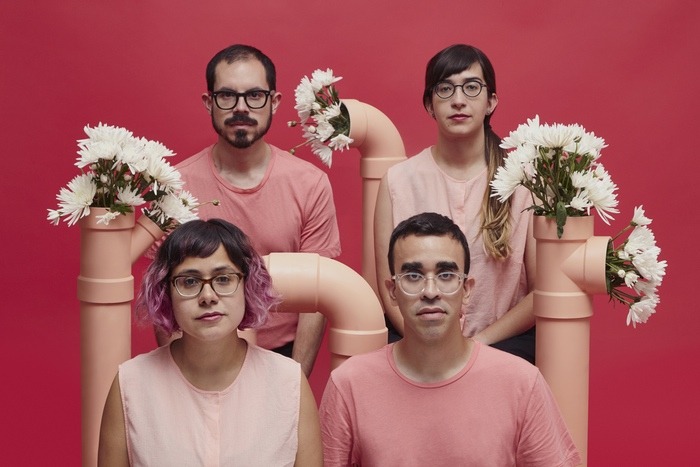
Balún is a band from Puerto Rico with an acute sense of creating ethereal moments of the sad kind. Could the tropigoth tagline apply? As sunset approaches on the Summer of Love 2016 (a cosmic event that last took place during the tumultuous social uprisings of 1967) the Brooklyn-based via Borinken four-piece return by making ripples across waters with a trademark sound they call dreambow. Incorporeal dream-pop, techno, shoegaze, folkloric sounds of South America, & dembow (one of reggaetón’s rhythmic daughters) are the amalgamation of the band’s idiosyncratic soundscape. A formula that after almost 7 years since Balún’s first contribution to Club Fonograma has stood the test of time.

With Afro Caribbean sounds like tipple, bomba barrel drum, dembow & a hazy, humid sense of a transcendent melancholy at work, “La Nueva Ciudad” joins the cannon of unorthodox, reggaetón-based classics of late. The sonic transmutations of established greats like J Balvin, Arca, Gepe, Javiera Mena & newcomers like MULA, Coral Casino, & Tomasa del Real have been expanding our understanding of the infinitely mesmerizing possibilities of the genre. Even Ibiza Pareo expressed interest in flirting with reggaetón during their Ruido Fest showcase in Chicago this summer. Clearly, our collective sonic future still belongs to the iconic, Afro-Caribbean sound. 

Balún’s return feels accomplished, academic and ancestral. The chorus of “La Nueva Ciudad” invokes collective rapture (the spiritual power of reggaetón at work here) while Angélica Negron's vocals communicate intimacy & distance, discussing the circular nature of time, planets, & the need to create a city without mirrors. The prolific percussionist/producer Lawson White (Shakira, Wilco, Jamie xx) has been working behind the scenes with Balún, whose current lineup boasts PhD ethnomusicologist and Puerto Rican folk music expert Noraliz Ruiz (playing cuatro and on “La Nueva Ciudad”), Raul Reymundi, along with veteran players Angélica Negron & José Olivares. It would seem as though Balún have become curators of globopop. “La Nueva Ciudad” is the lead single from the forthcoming Prisma Tropical LP which is due in 2017. Listen to it below and its b-side, “Esta En Tus Manos,” a cover of the pioneer of indietronica reggaetón herself, Javiera Mena.

We went there: 8 things we learned at Festival NRMAL Costa Rica 2015


Text by Pierre Lestruhaut 
Photos by Carolina Vargas

And so it happened… Unexpectedly, Festival NRMAL expanded all the way to the capital of the small Central American nation that’s been trying to place itself as the musical bridge between contemporary North American and South American musicians with the recent efforts of Epicentro. Hosted in a single day at Centro de Eventos de Pedregal, in a typical November afternoon of rain, umbrellas, fashionable ponchos, a lot of booze and some very good music, we experienced the first edition of Festival NRMAL outside of Mexican territories. Here’s what we learned from it.

1. NRMAL lineups are never disappointing 

At least if you’re musical sensibilities are similar to our own. But it’s not only the fact that the line-ups are usually stacked with bands that we’ve constantly praised over the last few years, it’s also the ballsy decisions to avoid cash-grabbing headliners, give way to very disparate styles in a single stage, and showcase acts with barely any material released. Thus, this edition was not devoid of very-well respected independent acts (Gepe, Helado Negro, Algodón Egipcio), pioneering legends (The Sonics, aUTOPerro), and up-and-coming electronic musicians (Raido, AAAA, The Wiesengrund Project).


2. Respect your elders…

Though NRMAL and Epicentro have let it clear that they are big supporters of young and emerging Latin American artists, this festival also outlined just how much NRMAL acknowledges artists who have been keeping it real for decades. Local noise duo aUTOPerro (who were making avant-garde sonic experimentation right around the time Throbbing Gristle were experiencing their creative apex), took the main stage early in the afternoon and despite stylistically contrasting with the rest of the acts performing there, managed to get a furious roar and applause from the crowd following the climactic ending of their set. Much in the same way that 60’s pioneering garage rock band The Sonics attracted the biggest crowd of the whole afternoon, which was predictable, given the Costa Rican indie scene's still overwhelming preference for good ol' rock music over anything else.

 3. …and give credit to those who were there before you 

As expected, Buscabulla put out a very pleasant show that induced the movement of loins and played her hits from her debut EP with a few unreleased tracks and covers. If you’re not aware that Raquel Berrios started making rounds in the NYC scene as a DJ, one listen to some of her mixtapes will let you know of the deep-knowledge she has of Latin American dance music. Of course, she wasn’t shy of handing out her respects to some of her beloved artists from the past, especially when performing her tribute to Frankie Ruiz, and it’s precisely this constant awareness of the greatness of past musicians that make her music so appealing in the first place.

4. Hijos might be deserving of some pre-debut album hype and high expectations

They’ve already been praised elsewhere, and it’s about time they got praised here as well. Hijos, the solo project of Costa Rican Pablo Rojas (Monte, Florian Droids) is a solid candidate to become the next great act to come out of the small nation. There are have been couple of pop-hued tracks circling around the internet these last few months, and “La Playa,” where vocal duties are taken by Kumari Sawyers, is deserving of superlatives such as “excellent,” “blissed-out,” and other adjectives like “tropical” and “heartwarming”. Hijos put out a solid early afternoon set where their already known pop melodies stood seamlessly and successfully side-by-side with the more proggish oriented soundscapes that Rojas’ other bands were more accustomed too.

 5. Gepe is getting closer to Latino pop stardom with every album 

A strange statement to make about an artist headlining what has been one of the most underground-promoting festivals in Latin America, NRMAL Costa Rica wasn't really the platform or the audience for him to feel like a pop star yet. But it’s Gepe’s conflation of Latino pop and folk motives, his undeniable charisma, irresistible dance moves, and catchy pop idioms that make him more suitable for grand arena Latin pop. And we wouldn’t be surprised if he got there rather soon.


 6. … and “En la naturaleza” is still the greatest latino song of the last few years

Even though Estilo Libre is Gepe’s biggest effort at exploring some of Latin folk’s most danceable patterns, “En la naturaleza” is still his most accomplished effort in fusing modern dance music and Latin folk. Despite dembow being a Latin club staple for more than 10 years, Gepe’s “experimental conquest” still feels fresh, unmatched, and absolutely drives the crowd insane. As DJ deMentira, who was wearing a Discos Pegaos shirt, took over PedroPiedra’s duties as Gepe’s sideshow rapper, the realization came forward that Gepe is all the things we’ve usually admired from a musician: crowd-pleasing enough to want to be a continental star, ballsy enough to explore territories no one else in his niche would dare to, and self-conscious enough to always be aware of his indie origins.

7. 10 pm is a very early time to end a one-day music festival 

The best music festivals we’ve been are obviously the ones that extend the partying well past midnight and allow dance music lovers to keep on dancing through the night. This first edition of NRMAL Costa Rica had a very well-crafted and conceived electronic music dome stage, much in the vein of Primavera Sound’s Boiler Room tent where sets could extend for those looking for non-stop dance action. In between main stage performances, we managed to catch a small portion of each of the acts playing the dome: The Wiesengrund Project’s drone-oriented and politically charged beats and visuals, Raido’s more introspective synth-driven hip-hop, and AAAA acid and Chicago oriented sounds. The only downside: 10 pm was a very early time to shut down an overheating dome that reeked of sweat and weed, hypnotized its crowd with warping beats, and should've kept the party going longer.


8. Enrique Coyotzi is an insensitive prick 

Promises were made. Expectations were raised. But our dear dear Enrique Coyotzi was nowhere to be seen at NRMAL Costa Rica, despite those very promises that were made, those expectations that were so highly raised. We will still hold on to those memories of NRMAL 2013, of seeing him arrive midset to Fakuta’s performance at Gómez, watching him leave after hearing 10 seconds of Dustin Wong at Panamérika Stage, and swinging like a lost child amidst the hip crowd of Monterrey. Your presence was missed.

Video: Gepe (feat. Wendy Sulca) - "Hambre"


For the video of Gepe's latest single "Hambre", the director, Ian Pons Jewell, has gone with a literal take on the lyrics of the song. And why not? What Gepe, like most of his Chilean peers, has been crafting through his career is a redefinition and refinement of niche genre: this song takes his past major-key singles and shaves off their edges, narrowing down ideas, but retaining the essence of pure fuck-yeah ANDEAN POP! As 'Club guru, Carlos Reyes, stated in his first review of the song, there is always the worry these sounds (and collaborations) will slide into kitsch - what pan-pipers the world over have been actively promoting for decades. Aware of this, but not embarrassed by it, this video celebrates the "disfraces finos y elegantes" of the past and present backbone of the continent.

The video opens with a be-shorted hipster entering a cool establishment, greeted with a "Be Our Guest" enthusiasm, only to wind up as the main course. The wry humour, and deliberate gross out factor - that's just pork, isn't it? - subverts the theme of the song: the constant search for satiation, carnal or otherwise. We're all hungry, and there's a fine line between enjoying it, like a feast, and sacrificing each other to Wendy Sulca's high priestess. Dale de comer!

Video: Gepe - "Bomba Chaya"


Last night, Gepe unveiled the music video for “Bomba Chaya,” the fourth single from 2012’s excellent GP. The gorgeous short by Gustavo de la Torre finds the Chilean musician singing and strumming a charango amidst the colorful puppets, stilt walkers, street performers, caporales, and other folkloric dancers of Peru’s carnivalesque “Gran Marcha de los Muñecones.” In many ways, the video for “Bomba Chaya” feels like the perfect circle-closing complement to last fall’s “En la Naturaleza (4-3-2-1-0).” From its warmer, sun-colored hues to the marching revelry through Comas’ streets, Gepe’s latest brims with life. It’s a visual love letter to tinku, saya, and all of the rest of the Andean folk culture that’s the wellspring of Gepe’s inspiration.

Video: Gepe - "Lluvia, diente, lluvia"


The news of Gepe releasing a music video for “Lluvia, diente, lluvia” (one of the less memorable numbers from GP) raised some eyebrows, but the visual offer turns out to be nothing short of a slice-of-brilliant. Helmed by Chilean production/publicity house Merced, “Lluvia, diente, lluvia” embraces the song’s smallness and offers it the right frame and proportions for a narrative bloom. Daniel Riveros’ dynamic self sits in bed looking exhausted, unresponsive, and soulless. The camera pans like a bobblehead yearning for the slightest gesture, as does the sexy girlfriend who penetrates the miniature canvas and gives it her all. The caffeinated Gepe stays seated, comatose and unimpressed. Victorious, perhaps. It’s small and calm, but carries a comedic rhythm in the pulse of Jim Jarmusch, Fernando Eimbcke, and Noah Baumbach. It’s not even two minutes long, and yet it hits you deep. Perhaps Gepe's most memorable clip yet.

Alex & Daniel - Alex & Daniel

Alex & Daniel, Alex & Daniel
Quemasucabeza, Chile
Rating: 85
by Giovanni Guillén

The first Mecano song I truly fell in love with was “Hawaii-Bombay.” Before I picked up on its more suggestive tones, I was completely mesmerized by the mood it created. Ana Torroja appeared to understand and appreciate the sensation of wanderlust better than anyone else. Her descriptions and sighs weren’t just from casual daydreaming they were clearly hallucinatory. And although the places she described existed, they could be found in pictures or experienced first hand, they could never compare to the ones she envisioned in her bathtub. That feeling is something I immediately recognized upon listening to Alex & Daniel. Chilean idols Gepe and Alex Anwandter deliver on their first collaborative album and it's a pleasant little trip filled with oneiric and seductive gems.

From the time it was announced, Alex & Daniel felt like a bold career move. It wasn’t failure that it risked, but the possibility that as an experiment it would struggle to find a place among either artist’s oeuvre. It certainly isn’t as ambitious as Odisea, nor does it contain the raw and personal narrative found in Rebeldes or GP. Not as a whole, anyway. What Alex & Daniel does accomplish is effortless studio magic, two friends at their artistic peak going with their gut. No sonic impulse is ignored, every idea feels necessary: a saxophone to close out things (“Cada vez que invento algo sobre ti”), steel drums to illuminate (“Mejor que yo”). Another worry that was much-discussed between CF writers was whose presence would overtake the album. First impressions viewed Anwandter as the main character, but as we listened more the dynamic became clearer. The compositions on Alex & Daniel truly resemble double exposures, no foreground or background; their appeal would be lost or at least incomplete without each contributor.

My year-end blurb for “Mundo real” was quick to declare Anwandter “back in Odisea mode.” That might’ve been too easy. Even if Anwandter’s hands are all over the production, it is still a distinct effort. The world of dreams plays a huge role in shaping the sound of Alex & Daniel (“entre las sábanas me vuelvo a armar”). While our protagonists seek refuge in sleep, their subconscious takes over. Traces of both artists and their respective solo efforts are everywhere. "Baby" revisits the scenic bliss of Rebeldes highlight "Como una estrella" and, as with any recalled experience, becomes an invention of the mind, embellished here with bleeps and boy band chorus perfection. “Mejor que yo” picks up where “Campos magnéticos” left off, and actually comes across as small victory for Daniel.

It is strange to think of Alex & Daniel as a commercial product that needs to be promoted. Chances are if you read this blog you didn't need 500 words to convince you to listen. If there's anything that should be put into question, it's what songs will outlive the Alex & Daniel project. Twenty years from now, at a 10-day-long Coachella, what recordings will be absolutely essential to perform.

The closers "Miña" and "Una nueva aventura" rise to the challenge and produce glorious results. "Miña" soars, recalling the eccentric flourishes of Fleetwood Mac's Tango in the Night. And as if lines as beautiful as "quiero morir así, me llevo a ti" weren't enough, the song is engulfed with love drunk beats that are just begging the listener to break out some Anwandter choreography (or maybe just some classic Gepe moves). "Una nueva aventura" is an anthem for those yung & restless types, a lustrous theme for anyone who romanticized Antoine Doinel's escape ("el día es muy corto para dudar"). You heard Alex. Go on adventures. And take this album with you.

Gepe - GP

GP, Gepe
Quemasucabeza, Chile
Rating: 88
by Enrique Coyotzi

Two years after gracing us with his instant classic Audiovisión, the creative monster that is Gepe returns with his fourth album, GP. It's immediate and friendly and finds the singer-songwriter embracing his innate compositional talents in a logical universe. Considering the approachable intentions of its predecessor, his current music could impact the mainstream (Carla Morrison as a guest singer, reggaeton and moombathon appreciation) due to the smartly crafted, yet natural venture into pop confection, where folklore and novelty comfortably coexist.

We can envision this new work as a metamorphosis of Daniel Riveros' career into possible transcontinental acclaim. Gepe has always been a cool guy with indie cred, but watching him swagging, collaborating with Pedropiedra, while awkwardly donning sunglasses in the video for lead single “En La Naturaleza (4-3-2-1-0)” unveiled a more laid back side to Gepe, both in artistic style and persona—one that doesn't sacrifice an ounce of introspection or authenticity.

As reported in an insightful interview for Super 45, Riveros admitted that, under his stage name, he wanted to "try a brand, establish it..." And he has accomplished that in GP. Generally secreting joviality, it signifies the Chilean star's most accessible creation to date, playing almost like a blueprint of his whole career. Its simplicity will conquer newcomers, while making faithful devotees fall in love all over again. Unsurprisingly, the virtuoso found equilibrium between effortless eloquence through colloquial scenarios and straight-to-the-soul sincerity, relying on rousing arrangements, sonic textures, and unique sensibility.

Pairing up for a second time with super producer Cristian Heyne, Gepe revisits the ideal vessel necessary to direct his delights. The record soothingly oscillates between marching trumpet-led, Andean numbers ("Con Un Solo Zapato No Se Puede Caminar," "Bomba Chaya") to heart-grabbing, mellow pieces that'll get you weeping on your pillow ("Campos Magnéticos," "Un Gran Vacío"), or simply dancing ("Bailar Bien Bailar Mal"), all of them displaying a variety of genres that jump from folk to hip hop, flamenco to reggaeton, carrying on the finest pop articulation.

Even though this is the musician's highest vibrant and upbeat collection of themes, we shouldn't be fooled only by the animated harmonies. The dynamic songsmith also distills awe-inspiring lyrics guaranteed to provoke tears in sensitive, susceptible listeners. Take, for instance, tracks like "Campos Magnéticos" or "Un Gran Vacío," whose brutal honesty may cause difficulty in coming back to them without feeling a bit down. On the other hand, tunes in the vein of "Fruta y Té" or "Bacán tu Casa" are romantic and direct compositions so enchantingly sticky and melodiously alluring they might not leave your head for a while.

Gepe has yet to release a weak record. We can describe his flourishing trajectory to this accessible stage as something risky yet impeccable. And, though the free-spirited, unabashedly digestible GP probably will disconcert many fans, there's no denying it's yet another strong addition to the artist's exceptional discography. Most important is the manner this achievement flows. It's entrancingly circular and, contrary to that recent Café Tacvba effort, should take you one spin to get attached. Gepe is a composer who seems to conjure hits effortlessly. Hell, he wrote the majority of these songs during a period of three months, recruited the best producer in the game, and quickly gave birth to a round release that has made us re-evaluate if "El objeto antes llamado disco" is obsolete. Yet, as Pegasvs, Juventud Americana, and now GP have demonstrated, we can firmly declare that the album format is still alive.

Video: Gepe - "En la Naturaleza (4-3-2-1-0)"

"En la Naturaleza (4-3-2-1-0)," a song as charming as its performer, finds Gepe fully committing to the folk reggaeton that he experimented with on "Por La Ventana," and the video for first single off the upcoming GP also seems like an extension of the video for the song that foreshadowed it. While not nearly as bright and festive as "Por La Ventana," this video has similar framing and character focal points, while the darker color palette and layered footage adds texture and dimension. And, since Gepe's already done the natural setting thing in videos before, for this one he established a clear boundary between the natural world and the manmade one. Despite the song's title, the closest Gepe gets to nature is the landscapes projected behind him and his supporting cast. Two of the women in the cast are working out for the duration of the video in what may be an allusion to Darwinism. But Gepe and co-star Pedropiedra don't seem too concerned with survival of the fittest. Gepe, in a snazzy blazer and wayferers, looks a little too cool for his signature white boy dance moves, while Pedropiedra in his geo-bling and cartographer's jacket is the most simultaneously austere and absurd rapper ever and looks like someone who would love to talk to you about the healing power of crystals. Probably not people you want to be lost in the woods with.

Video: Caravana - "Sigue Sus Ojos"


Melodic resonance is best appreciated under minimalistic frames. “Sigue Sus Ojos,” one of the most heartfelt tracks of last year, has finally been given the single treatment. This song dips deep into the laws of attraction, piercing emotions on every hook. Luciano Rubio has crafted a monochrome video that celebrates the analog formation of Caravana, balancing the dreamy haze of instruments with the stark silhouettes of their musicians. Caravana’s Rodrigo Santis is accompanied by an all-star band comprised by Felicia Morales, Fernando Milagros, Gepe, and Pedropiedra (all looking gorgeous and wearing awesome sweaters). Caravana will be performing on the first day of Vive Latino at Carpa Intolerante (March 23rd), in what’s one of the not-to-be-missed performances of the entire three-day fest.

Video: Gepe - "Alfabeto"


After winning every girl’s heart at SXSW, finishing an extensive tour around Spain, and jumping on stage to sing “Debajo de Mi Lengua” alongside Julieta Venegas, Chilean heartthrob Daniel Riveros is back into the large scale promoting his masterful album Audiovision (Quemasucabeza, 2010). Following the multihued “Por La Ventana” and otherworldly “Un Dia Ayer” videos, it’s “Alfabeto” that now gets the visual narrative treatment. A year ago we applauded this song’s bundled strings and how it managed to “present domestic gratification, all while embracing pop elements with turbulent, collapsing clutches tracing back to Phil Spector.” This clip, directed by Bernardo Quesney (solo this time around), is dramatic and rustic. In our SXSW interview, Gepe described this song as one that equaled skill with artistic ambition. “I think of “Alfabeto” in the way of not saying anything. The music that I like never tells a story. It’s always little bits of ideas and scenes and images, but never a story from beginning to end. And I think Chileans are like this, we never tell an entire story."

SXSW Entry #10: Gepe - La Entrevista!


Perhaps the most exciting Club Fonograma-approved presence at SXSW was Gepe, who played two phenomenal shows while he was in Austin. After his performance at the Billboard showcase, we claimed a bench on Congress Ave. and sat down for a nice chat. I’ve edited all of Gepe’s cachais out, but just imagine each of his responses ending with “cachai?” and you’ll get the gist. Cachai?


Blanca Méndez: For someone who is such a big fan of yours, I don’t really know much about you outside of your music. So let me start with a basic question: What experiences led you to start creating music and why do you keep doing it?


Gepe: I’ve made music since I was so little that I can’t remember the motive. It became serious about five years ago, and it wasn’t until very recently that I considered myself a musician.


BM: What changed that finally made you say that you’re a musician?


G: When it became my way of earning a living is when the change happened. Now I live because of and from the music.


BM: Before that, were you working outside of music?


G: No, only music. I am also a designer because I studied graphic design in college. But when I was in college, I started making a lot of music, and after I graduated, I kept making lots of music and I started going on tour and working solely on music. SometimesI still do design, though. And I also make music for movies.


BM: Very cool. What movies have you contributed music to?


G: I recorded a Leonard Cohen cover of “Hallelujah” for Sugar.


BM: How do these projects come about?


G: People call me, usually the directors. Like for Sugar, Lynn Fainchtein called me to record the Leonard Cohen cover. She knew about me through Julieta Venegas, who had passed my music along to her.


BM: How do you decide what projects to go forward with? Do you read a script?


G: Mostly I talk with the directors to get a sense of what the film is about. Sometimes I do read the script, and then make a song.


BM: Do you enjoy making music with such a specific goal andset guidelines?


G: I really like to make music not using my name and background. I love not being me. I enjoy when people give me direction and tell me what they need. I liketo put myself at the service of others and to not be Gepe. It’s a break from being me. And I love playing with other people in other bands. I play the drums with Pedropiedra, and I only follow his rules.


BM: Yeah, I wanted to ask you about that. I know that you’ve worked with Pedro and Javiera Mena and a lot of other musicians in Chile. How does this way of making music differ from your solo work?


G: In Chile, we have a very close community of musicians, like Pedropiedra, Javiera Mena, Denver, Astro…they make very good music, very mature. And all of these people work with each other. I play the drums with Pedro and with Javiera, Javiera plays keyboards with me, Pedro plays guitar with me, and I play with Alex from Odisea. We are making an album together. The people who are making indie music in Chile are all very close. We’re all friends. We hang out a lot together. My girlfriend used to date another musician that’s part of our little community, so it’s like that. That close.


BM: Recently a lot of musicians in Chile are making a big mark on Latin American music. What do you think is happening in Chile right now that is so special?


G: I think it might be a generational thing. Around the year 2000 this group of musicians that I’ve been talking about started making music. What’s happening now, despite all of us sharing spaces, sharing friends, sharing girlfriends, is that we are all working on very personal projects. We all make very distinct music, each project has its own life, its own world, but at the same time there are similar qualities and all of the music is connected in some way.


BM: You mentioned that you’re working with Alex Anwandter on an album. How is that going?


G: We both have very personal projects and working together is having to cede certain things. In doing that we got to know each other more. I had never worked with someone else on lyrics and neither had Alex, and working together that closely, we’ve become even better friends. I think when you work with a certain level of trust is when work comes out better, and that kind of trust you get from friends. I’ve always worked with my friends. And this album is one that neither of us could have made on our own. It’s at the exact midpoint between the two of us, and it’s been such a wonderful process.


BM: And you can definitely tell when there’s a close bond between musicians who collaborate.


G: It’s like Animal Collective, the thing that I most love about them is the synergy between them. You can tell that they’re good friends, and there’s something special that emanates from that. Also, one of my favorite Chilean bands in the 90s, Tobias Alcayota, who were like my Beatles, had this same kind of energy. And that’s always stayed with me and influenced the way that I make music.


BM: How has your own style of making music changed over the years?


G: One of the things I like best about music and musicians is how what they do, the way in which they make the music, the way in which they dress, the attitude that they take on, changes over time. I love that the work gets enriched with time and doesn’t crystallize at any particular moment. The music that I make has evolved because what I do isnever closed. It continues to transform. What I want to do is always ahead. Like Animal Collective, what I like about them is that everything they do is a work in progress.


BM:
What are you working on now, and what are you thinking about for the future?


G: Right now the album with Alex is the first priority. I’m also working on videos for Audiovision, and I have some gigs in Brazil, Argentina, and Mexico. I don’t know, just making songs and keep playing. To keep playing is the most important thing.


BM: What videos are you working on?


G: The video for “Alfabeto” and “12 Minerales.”


BM: Awesome! “12 Minerales” is my favorite. And the videofor “Por La Ventana” is pretty great. It looks like it was a lot of fun to make.


G: It really was!


BM: And the song is fantastic. I love the yos in it and how it inserts some humor. How did you decide to inject a little hip hop into the song?


G: I was set on including the yos somewhere, so if it hadn’t been that song it would have been another. But I think it works best in “Por La Ventana.” That song and video came about very spontaneously. I love having a good time when I work. I don’t like directing, I like letting things happen on their own.


BM: That video is very much a group experience, and I feel that your music is often about shared experiences or that a song is in itself meant to be a shared experience. When you write a song do you have in mind the kind of experience it’s going to create for people?


G: Definitely. I like for the themes of the music to be as general as possible. I’ve tried to simplify my music as much as I can for it be as general and as simple and as raw as possible, the most direct in my language. Like “12 Minerales” was exactly what I wanted to say in the most direct way that I could. The general a lot of times feels like it’s nothing and so many things at once.


BM: I think that has to a lot do with your voice, which to me is on the surface so simple and straightforward, but at the same time carries in it a lot of wisdom. A lot of your earlier music was driven by your vocals, but your last album used a lot more instrumentation. How did you decide to go that route and how important is it still to you for vocals to drive a song?


G: I’m very influenced by traditional Chilean music and that music is played with one instrument and one voice. Usually it’s the melody of the voice that makes the song and the instrument is a much less important accompaniment. John Jacob Niles did something very similar in the States, and that influenced me a lot. But with time I started listening to people like Miles Davis and with albums like Miles Ahead and Sketches of Spain became more interested in more involved instrumentals and more complex arrangements. And I think I’m going to keep going in this style of making music.


BM: Do you prefer making music in this way now?


G: What’s most important to me is for a song to work with only vocals and one instrument. Then I begin to build on that. If I feel like a song has a lot missing when I play it with just one instrument, then I don’t go forward with it.


BM: Do you remember what the first song you ever wrote was?


G: Yes, it was “Namas.”


BM: How did it come about?


G: I wrote it for a girlfriend, exactly what the song says. It’s not really a love song, it’s just talking to another human. More than writing about a relationship, it’s just something that I needed to say. In fact, it’s something that I never said to her in person.


BM: A lot of people I know really love “No te mueras tanto,” and I guess what I want to know about that song is what’s so funny?


G: What I mean by “no te mueras tanto” is don’t forget about yourself and take care of yourself. In this case I also mean “no te desesperes.” And if you do, it’s kind of funny, “muy idiota.”


BM: Why did you write that chorus in English?


G: That’s just how it happened. Since I listen to so much music in English, sometimes that’s just what comes to mind when I write. That line was the first one that I wrote, and I built everything off of that. I didn’t change anything about it. It just came out how it came out.


BM: Do you do that often? Just write songs without changing things?


G: No, that ‘s something I used to do. Now I change everything.


BM: Are you more critical of yourself?


G: Definitely. It’s like I have a lot less respect for myself and I change things over and over. The lyrics for me are always the hardest and I end up agonizing over them. Like right now I have about five songs that I’ve been trying to write lyrics for for a long time. And, like I said, I try to write as generally as possible. Not really saying anything to anybody, but at the same time speaking to everybody. It’s not important for me to say anything about myself, but I still impart something personal because it’s what I know. Sometimes I write songs with other songs in mind. Like Brian Wilson’s “Surf’s Up” helped me write “Esgrima” and “Estilo Internacional.” That song for me is paradigmatic.


BM: What do you like so much about that song?


G: The magic of the lyrics is so simple. The “columnated ruins domino” line is so beautiful to me. To me that song is perfect.


BM: I agree. The beauty of that song lies in its simplicity. Is that kind of beautiful simplicity what you try to achieve with your songs?


G: I love writing about simple things, things that won’t escape through your fingers. I do that because that’s what pop is about. The songs that I like, like Paul Simon’s “50 Ways to Leave Your Lover,” talk about simple things. I like doing that, writing about simple things, but giving them importance.


BM: You also mentioned earlier that you’re inspired by traditional Chilean music, which you can definitely hear listening to your songs. But also for me, your songs often sound the way I would imagine Chile to look like. Is creating a landscape with your music ever something that you do consciously?


G: I think more than creating a landscape my songs embody the Chilean people. I’ve spent all of my life in the same city, most of it in the same neighborhood and I write about what I know. And what I know is all very normal. Most Chileans are like me. We’re introverted, but we still talk a lot. We can talk a lot without saying anything. We have a certain timidity that can also be humorous. I think Chileans in that sense are similar to Mexicans. In the simplicity and the joy and the not having one ounce of European in them, and I think you can hear that in my songs. I adore my country and my people and it’s important to me to convey that in my music.


BM: Which one of your songs would you say exemplifies what you’ve just talked about?


G: I think “Alfabeto” in the way of not saying anything. The music that I like never tells a story. It’s always little bits of ideas and scenes and images, but never a story from beginning to end. And I think Chileans are like this, we never tell an entire story.


SXSW Entry #7: Chilean Showcase


Because of Friday night insanity, I got a late start to my final day at SXSW. So I grabbed a freeto burrito and hustled over to the Filter party to catch Those Dancing Days, who totally owned. “Fuckarias” is such an anthem for when you are sick of someone. I stuck around for a bit, then went over to the Neon Gold day party to chill for the rest of the afternoon.


The Chilean showcase at Maggie Mae’s later that night was surprisingly good. Despite the absence of acts like Javiera Mena, Denver, and Odisea, the show was curated quite well. Fernando Milagros brought some harmonica action and invited his buddies Pedropiedra and Gepe to play with him. It’s awesome and kind of adorable how they are all friends and play in each other’s bands.


Next up was Francisca Valenzuela, who was wearing a leopard print top, which made me love her immediately. Plus she really got down with her keyboard, so total stamp of approval from me. She was followed by the Austin/Santiago-based pop rock band Intimate Stranger, who I actually didn’t hate despite my apprehensions about them. They played a solid set, nothing special and a little too long, but not awful. I didn’t hear their entire set, though, because I ran into Orlando, and we had a nice chat about his time in Austin and how it’s great that there is a decent Latin American presence. But we both agreed that it would be better if these Latin artists got to play more showcases outside of the strictly Latin ones.


Then Gepe was up and you know I had to devote my full attention to him. Dude was wearing a grandpa vest that I was dying over. Sorry if this is Gepe overload for you (there’s still an interview coming), but when you’ve waited as long as I have to see him and don’t know when you’ll be able to see him again, things get serious. He played “12 Minerales,” which is my jam and closed with a stunning performance of “Celosia.” I can die happy now.

SXSW Entry #6: Gepe, Ximena Sariñana

I was a responsible adult on Friday and had a real breakfast (breakfast tacos because I am in Texas, duh) at the Brooklyn Vegan party. I split most of my time between that party (like a good vegan) and the Mexican Summer x Gorilla vs. Bear party. Didn't see any Fonograma-approved artists at either, but I kind of fell in love with Grimes.


At the Brooklyn Vegan party, I formed a special bond with an Austin native (shout out Leanne!) over our mutual love for beets, and she invited me over for an afternoon snack (beets, of course). On our way to her house we stumbled upon a backyard party, which it turns out I also wandered into last year because I ran into my old goat friend. We also saw Taylor Hanson and had a moment because we were both pretty big Hanson fans back in the day. Go ahead and judge, but you know you love "MMMBop."


But even more awesome (and relevant to this blog) was the Billboard showcase at Prague. I finally fulfilled my years-long dream of seeing Gepe live. He, accompanied by Pedropiedra, played an incredible set. Maybe I'm getting emotional in my old age or maybe I'm just that big of a fangirl, but I got a little worked up during "Salon Nacional De Tecnologia." Though the crowd got into it, most folks weren't familiar with Gepe. I overheard a few comments about how he sounds like Peru and wanted to scream, "It's Chile, people!"


Ximena Sariñana was up next, and it was clear that she was the one everyone was there to see. The place was packed, and as soon as she started, my view was immediately obstructed by everyone's phones, many of which stayed up for the duration of her set. Note to everyone who does this: PLEASE STOP. After opening with "Mediocre," Ximena quickly got into her new songs. I particularly enjoyed "Shine Down" because it got everyone dancing. She also played one of my favorites, "Normal." Yeah-uh, commentary on traditional gender roles! After Ximena's set, I had the pleasure of sitting down for a chat with Gepe and I did a pretty great job of maintaining composure even though my inner dialogue sounded something like "OMG OMG OMG." Highlight of SXSW for sure.


Video: Gepe - "Un Día Ayer"


We don’t know about you, but ever since SXSW announced its showcase lineup, we’re doing whatever it takes to get there. The most attractive name in the bunch is Chilean pop-folk astro Gepe, and believe us, everyone needs Daniel Rivero in their lives. We are premiering his new video “Un Día Ayer,” the second single and one of the finest songs from his masterful album Audiovision (the omnipresent album on this year's best-of-the-year lists). Despite being a very laidback track, it’s an emotional ride like very few in his career. Working with a very small handful of instruments, he relies on his slow-burning soulfulness and scaled-down vocal shifts to tell the ultimate story on symphonic departure.

The clip directed by Luciano Rubio shows the always handsome Gepe laying down in the woods, in the very good company of bandmates Begoña Ugalde and Valeria Jara. A journey on self-discovery and our multicolored, multidimensional forces (with some help from magic mushrooms).

Video: Torreblanca feat Turra Medina & Sonido Landon - "Por La Ventana" (Gepe Cover) / Fonogramaticos Vol.10


When we made the call for entries for our upcoming Fonogramaticos Vol.10 compilation we weren’t expecting any videos, but our dear Juan Manuel Torreblanca surprised us with this fun, self-claimed ridiculous video. This very special video is a surprise and is filling our hearts with joy. As you can see from the awesome t-shirt he’s wearing in the clip, Juan is a big fan of Chilean pop astro Gepe, and we can’t think of anyone more suitable to cover Gepe’s catchiest song “Por La Ventana.” Torreblanca recruited his Mexico City-based Chilean friends Sonidolandon and Turra Medina to craft this very hip, amusing and gripping version, by far, one of the most joyful tracks in the compilation.

This video was shot by Jimena Montemayor as the group of friends met to record this awesome version. We told every band participating to have fun, and if all the other bands had half as fun as these guys, we couldn’t be happier. We’re not sure what’s up with the banana motif, but great job recreating Gepe’s awesome video, the guys sure look sexy with those wigs (and that La Rosa de Guadalupe moment is priceless). We'll unveil more tracks this coming week through a set of bootleg promo videos, all framed by great Latin American movies.

Video: Gepe feat. Javiera Mena - "Lienza"


In our review of Gepe’s Audiovision, we described his collaboration with Javiera Mena “Lienza” as “a smoky suspension that lifts them up to a height where they’re talking about transforming, transcribing, and repairing whatever is preventing them from catching the boat.” Seems like this collaboration is officially the album’s second single, following the success of “Por La Ventana.” This is a nice little video by Bernardo Quesney, the same guy who directed Denver’s “Lo Que Quieras” and De Janeiro’s “Los Caribes.” We were hoping to see today’s most creative guy and girl actually taking part of the video, instead, we get some gorgeous footage from the 1925 Chilean film Canta y No Llores, Corazon by Juan Perez Berrocal.

Audiovisión, Gepe


Audiovisión, Gepe
Quemasubeza, Chile
Rating: 94
By Carlos Reyes

Daniel Rivero better known as Gepe is today’s leading man in that very special and continuously surprising Chilean indie scene. So many times regarded as a pupil of Chilean icons Victor Jara and Jorge Gonzalez, he proves to be as essential for our generation in his latest album Audiovision, the work of genius. Starting his career with Gepinto, already a cult classic, means to have a massive weight under his shoulders, but Gepe’s miraculous abilities are subdued to his sensibilities, not only are his songs sincere, they speak about the man and the people and the land around him. If he had already shown flexibility in his two previous albums, his latest continues that breed of epic and sophisticated chants, those slices of intense rush that find themselves at a privileged spot in Gepe’s vision of high pop-art.

Gepe exposed a whole new group of Latin-American youth to Chile’s folk by diligently embedding it to the sprawling songs in Gepinto, he later redefined his own notions (and nations) with the risky and ultimately brilliant Hungria. The new album carries on with the two principles, balancing folk and dancehall in unspeakable manners, keeping the descriptive detail he is known for, the observational study of music form we’ve been celebrating about the new Chilean song. The way Gepe expresses affection by setting up a step-by-step structure is mind-blowing. The opening piece “Amigos Vecinos” shows as much generosity and motivation as a community’s call for action. The song describes the friendliest scene, people popping up (to claps on loop) owning a place or a cause, “cuando un lugar ya no es tu lugar sino de todos los demas, tu cara se pone feliz,” sure sounds like the nicest way to show appreciation to anyone answering your call or showing up to your concert.

Audiovisión isn’t much about finding space for exploration, it’s already there; it’s time for the songs, it’s about the songs and for the songs. It’s a splendid ride that feels so close from encountering true definition of the dimensional purpose of the song as a format. “Por La Ventana” serves as a suggestion to let the window of your room and yes, the heart and the mind open, let it be the escape for the dirty laundry we painfully carry and take advantage of the ventilation it provides to sing “alto, sigo, me voy, y ahora me siento major asi.” But what truly makes this single special is the embodiment of Gepe’s personality revealed in this one song; it’s a platform of Gepe the folk-agricultural man, the modern disquieting kid, and the hip hop enthusiastic in him.

Songs like “Alfabeto” and “La Bajada” are well condensed in bundled strings, resembling the timeless “Namas” and its topics on domestic gratification, all while embracing pop music elements with turbulent, collapsing clutches tracing back to Phil Spector. “Estado de Vista” is like a beautiful response to “Por La Ventana”, a front-end piece with politically striking lyrics, it features wonderful guest vocals from fellow Chilean chanteuse Fakuta. The anticipated Javiera Mena-Gepe reunion is becomes reality in “Lienza”, their sublime “Sol de Invierno”, this time they go straight for a smoky suspension that lifts them up to a height where they’re talking about transforming, transcribing, and repairing whatever is preventing them from catching the boat, “y es que siempre viaja solo, como una sola gran idea.” One of the album’s peaks comes with a reconstruction of “Victoria Roma,” a track from his last release Las Piedras EP. This time he gives the track motion and a lot of depth, enough to call it romantic travelogue. “Ayelen” is equally touching, devastating and features what’s probably Gepe’s most subtle moment yet.

“Salon Nacional de Tecnologias” is beyond stunning; it’s an immediate anthem we can actually hear light up and run its course through ageless techno. Gepe’s voice and chromatic strings have rarely been this handy in capturing a nation’s commonalities with its region (la region Sureña). The idiosyncratic of this song hallows in the best of celebratory music, when you add Jorge Gonzalez (my idol) to such eventful track, they really own the key to the arts. Like “Salon Nacional de Tecnologias”, Audiovisión is monumental in celebrating the collective pyramid of audiovisual arts (“que algo se borre o se vuelva a entender”) and humanizing it to the point of singing about its optimum freedom “no es mision de algunos, es parte de todos, es amor de alguien por venir.” I wouldn’t dare to say this is Gepe’s finest hour just yet, but it’s yet another knockout from a guy clearly ahead of his game and yet so in tune with his generation, Gepe "de estilo internacional."

La Blogotheque Presents Fernando Milagros


Few artists can claim to be featured on the astounding Blogotheque, hundreds have found their way to do similar videos through inspired projects, but Chilean composer Fernando Milagros gets the real deal singing “Avenida Peru” in the latest episode of Les Concerts A Emporter. Actually, I can only think of one other Latin artist on La Blogotheque’s archive, and that’s El Guincho breaking his head with “Para Que Celebren Todos” at the Villette Sonique Festival in Paris. Fernando caught our attention recently as he made a cameo appearance in Gepe’s “Por La Ventana” video, reason enough to build our interest. This chapter was shot at Valparaiso by the amazing Vincent Moon capturing “songs built around a journey”, make sure to watch parts two and three here.

Video: Gepe - "Por La Ventana"


One of the songs of the year by one of Club Fonograma’s ultimate favorite artists has a video. “Por La Ventana”, first cut from Gepe’s third album Audiovision. The clip directed by Luciano Rubio is as lovable, dynamic and colorful as Gepe’s character and irresistible charm. After watching this video it’s quite easy to understand the album cover’s fragmented lines and especially those clothes on his head. Starting with the 1989 World Tour sweater from The Beach Boys, the masks, the moustache, the wig! this is cloth extravaganza at its finest. Gepe is joined by the great Pedro Piedra, Fernando Milagros and Valeria Jara.

Featured: Gepe - "Por la Ventana"


Feature: Gepe – “Por la ventana”
Quemasucabeza, Chile

The humble, dynamic and very Chilean Gepe is about to release his third LP titled Audiovision, a sort of alpha-optimum album among the latest constellation of Chilean pop. It might sound like an overstatement, but Gepe is close to Jorge Gonzalez when it comes to pop innovation and influential condition. The comforting voice and folksy-meets-Hip Hop bases are parallel to Gepe’s very expressive personality. Audiovisión includes a collaboration with Javiera Mena, and we’re dying to hear it. As you probably know, they’re close to best friends and already gave us the magnificent “Sol de Invierno.”

“Por la ventana” is the first single of Audiovisión and I can think of many things to get excited about when listening to it. First, it seems like we might be getting a mishmash of the organic sound from Gepinto and the synth pop of Hungria (both albums made our list of Best Albums of the Decade). Second, it sounds like Gepe is flirting with Hip Hop once again, something truly noticeable in Las Piedras EP. And third, the song (best of the year material) comes to relief the almost ridiculous anticipation the album has mounted in the last three years.