Showing posts with label arca. Show all posts

CLUB QUE(R)ER

   By Sam Rodgers | Nov 6th, 2019

    Artwork by Alonso Ayala (@ouchal)

In the past decade the Iberoamerican world has stepped up to the plate in regards to LGBTQIA+ rights. Portugal, Argentina, Brazil, Uruguay, the United States, Colombia, and Ecuador have legalized same-sex marriage nationwide within the past ten years. In Mexico, same-sex marriage has been recognized in a majority of states, while Canada and Spain legalized the practice in the 2000s. Latin America has also seen some of the more progressive legislation for trans* people adopted in the last ten years compared with other countries. Politcally, it would seem that the rainbow is bursting out of the Western Hemisphere – indeed, over the last decade not just Iberoamerican, but queer artists worldwide have become more visible and celebrated by an ever growing audience. 


This past decade, at least in the Club Fonograma world, has been dominated by high profile queer Latinxs, Alex Anwandter and Javiera Mena. Both artists have seen tremendous growth over the decade as their fanbases expand outside of their homeland, Chile. Anwandter won a Teddy Award for his first feature film, Nunca vas a estar solo (2016), and has sung the words “el maricón del pueblo” in a Latin Grammy performance. He referenced seminal ballroom scene documentary Paris Is Burning (1990) in the video for “Cómo Puedes Vivir Contigo Mismo?” (2012). He’s also led the way for newcomers like fellow Chileans Francisco Victoria, Entrópica, and Playa Gótica’s Fanny Leona. Meanwhile, Mena created an iconic lesbian music video for her single, “Espada” (2014), and more recently collaborated with Colombia’s gay pop idol Esteman on “Amor Libre” (2019). That’s not to exclude other Chilean queer icons Kali Mutsa and Dënver, the latter producing the very homoerotic video for their song “Los Bikers/Segundas Destrezas” in 2011. 


Across the Andes, Argentine band Miranda! has continued their run of dizzying camp pop, while Uruguay’s Carmen Sandiego’s “Mi Novio Gremlin” (2010) was one of the best-received indie songs of the decade. In Brazil, trans artist/activist Linn da Quebrada (“Linn from the margins”) raps about the issues she faced growing up queer and black in a São Paulo favela. Joining her are São Paulo’s Quebrada Queer, a hip hop cypher which is gaining popularity among young Brazilians living under Jair Bolsonaro, showcasing the argument that being visibly queer and pissed off is the new punk. Their videos have millions of views, but nowhere near the success of Pabllo Vittar, “the Most Popular Drag Queen In The World,” who has over a billion total YouTube views. Just as much in the Brazilian national consciousness now is Club Fonograma favorite SILVA, who, with his 2016 video for “Feliz e Ponto,” cheekily came out as bisexual. 

Staying in the Lusophone world, Titica, Angola’s trans “kuduro” artist, has been a UNAIDS goodwill ambassador following her breakout single with Ary, “Olha O Boneco” (2012), which remains a guaranteed slap. 


Venezuela’s Arca, who is non-binary, has risen to be a worldwide critical darling, not to mention his collaborations with the venerable Björk. Queer Colombian artist Lido Pimienta received the Polaris Music Prize in 2017 for La Papessa (2016) and the world eagerly awaits for the follow-up, Miss Colombia, which should propel her to even greater heights. Dominican author and Club Fonograma heroine Rita Indiana was voted one of the 100 most influential Latinx personalities in 2011 by the newspaper El País, even though we might wait forever for new music from Los Misterios. Meanwhile, this year in Mexico, Juan Manuel Torreblanca went all out with “Maricón” (2019), a song proclaiming reclamation against the slur, haters be damned. And riding the zeitgeist of YouTube makeup tutorials, drag, and anime is Sailorfag, a Sonora native studying fashion in Guadalajara, spitting rhymes about gender performance and homophobia. 


But while there seems to be a wave of LGBTQ artists reaching not-just-niche audiences, not all has been felicitous. The aforementioned President of Brazil, Jair Bolsonaro, is a “proud” homophobe. In 2018 alone, there were a reported 420 murders of LGBT people in the country, and hate crimes are on the rise around the world. In the United States, the Trump administration wants to instill the Religious Freedom Bill giving legal protections to religious organizations to discriminate against LGBT workers. But nothing exemplifies the daily terror experienced by the marginalized more than the second deadliest mass shooting in U.S. history at Pulse Nightclub in Orlando, Florida in 2016. Forty-nine people were murdered by a single gunman, while over fifty were wounded. What hit me hardest was that the majority of victims were Latinx and queer. Their tragic deaths remind us that there is still so much work to be done, moving ahead in solidarity, pushing for human rights every person under the LGBTQIA+ umbrella deserves. While queer art can seem the most fun, most colorful, and most human in complexity, it is often underpinned by so much pain and trauma. We’re so proud of the leaps and bounds the queer Latinx artist community has made in the 2010s and we celebrate the bravery it takes to put the self, and the work, “out” there. Judging by the positive support so far, the artists included in this piece (and others you can find here) are blazing a trail to more acceptance and, for their own community, more love.


Remembering those we lost at the Pulse tragedy:
Stanley Almodovar III, 23
Amanda Alvear, 25
Oscar A. Aracena-Montero, 26
Rodolfo Ayala-Ayala, 33
Alejandro Barrios Martinez, 21
Martin Benitez Torres, 33
Antonio D. Brown, 30
Darryl R. Burt II, 29
Jonathan A. Camuy Vega, 24
Angel L. Candelario-Padro, 28
Simon A. Carrillo Fernandez, 31
Juan Chevez-Martinez, 25
Luis D. Conde, 39
Cory J. Connell, 21
Tevin E. Crosby, 25
Franky J. Dejesus Velazquez, 50
Deonka D. Drayton, 32
Mercedez M. Flores, 26
Peter O. Gonzalez-Cruz, 22
Juan R. Guerrero, 22
Paul T. Henry, 41
Frank Hernandez, 27
Miguel A. Honorato, 30
Javier Jorge-Reyes, 40
Jason B. Josaphat, 19
Eddie J. Justice, 30
Anthony L. Laureano Disla, 25
Christopher A. Leinonen, 32
Brenda L. Marquez McCool, 49
Jean C. Mendez Perez, 35
Akyra Monet Murray, 18
Kimberly Morris, 37
Jean C. Nieves Rodriguez, 27
Luis O. Ocasio-Capo, 20
Geraldo A. Ortiz-Jimenez, 25
Eric Ivan Ortiz-Rivera, 36
Joel Rayon Paniagua, 32
Enrique L. Rios Jr., 25
Juan P. Rivera Velazquez, 37
Yilmary Rodriguez Solivan, 24
Christopher J. Sanfeliz, 24
Xavier Emmanuel Serrano Rosado, 35
Gilberto Ramon Silva Menendez, 25
Edward Sotomayor Jr., 34
Shane E. Tomlinson, 33
Leroy Valentin Fernandez, 25
Luis S. Vielma, 22
Luis Daniel Wilson-Leon, 37
Jerald A. Wright, 31


Sam Rodgers is a writer and ESL teacher living in Sydney, Australia. He joined the Club Fonograma team in 2012 after years of fanaticism and he feels so honored to have been part of the family. You can follow him everywhere @anoddgeography.

Balún - "La Nueva Ciudad"


Balún is a band from Puerto Rico with an acute sense of creating ethereal moments of the sad kind. Could the tropigoth tagline apply? As sunset approaches on the Summer of Love 2016 (a cosmic event that last took place during the tumultuous social uprisings of 1967) the Brooklyn-based via Borinken four-piece return by making ripples across waters with a trademark sound they call dreambow. Incorporeal dream-pop, techno, shoegaze, folkloric sounds of South America, & dembow (one of reggaetón’s rhythmic daughters) are the amalgamation of the band’s idiosyncratic soundscape. A formula that after almost 7 years since Balún’s first contribution to Club Fonograma has stood the test of time.

With Afro Caribbean sounds like tipple, bomba barrel drum, dembow & a hazy, humid sense of a transcendent melancholy at work, “La Nueva Ciudad” joins the cannon of unorthodox, reggaetón-based classics of late. The sonic transmutations of established greats like J Balvin, Arca, Gepe, Javiera Mena & newcomers like MULA, Coral Casino, & Tomasa del Real have been expanding our understanding of the infinitely mesmerizing possibilities of the genre. Even Ibiza Pareo expressed interest in flirting with reggaetón during their Ruido Fest showcase in Chicago this summer. Clearly, our collective sonic future still belongs to the iconic, Afro-Caribbean sound. 

Balún’s return feels accomplished, academic and ancestral. The chorus of “La Nueva Ciudad” invokes collective rapture (the spiritual power of reggaetón at work here) while Angélica Negron's vocals communicate intimacy & distance, discussing the circular nature of time, planets, & the need to create a city without mirrors. The prolific percussionist/producer Lawson White (Shakira, Wilco, Jamie xx) has been working behind the scenes with Balún, whose current lineup boasts PhD ethnomusicologist and Puerto Rican folk music expert Noraliz Ruiz (playing cuatro and on “La Nueva Ciudad”), Raul Reymundi, along with veteran players Angélica Negron & José Olivares. It would seem as though Balún have become curators of globopop. “La Nueva Ciudad” is the lead single from the forthcoming Prisma Tropical LP which is due in 2017. Listen to it below and its b-side, “Esta En Tus Manos,” a cover of the pioneer of indietronica reggaetón herself, Javiera Mena.

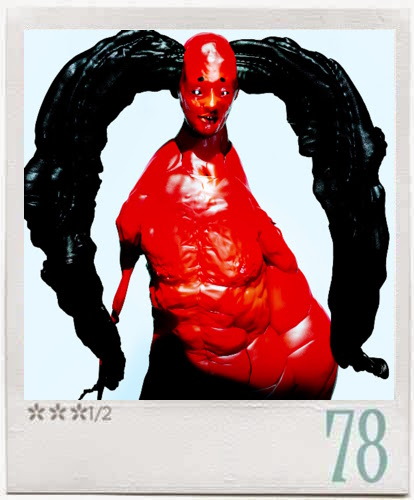
Arca - Mutant

Mutant, Arca
Mute, USA/Venezuela
Rating: 78
by Zé Garcia


Remember the nightbus trend that was first articulated in 2009-2010? It was cinematic twilight: arousing, dejected, and demented. Arca's latest is night bus, militarized. Mutant sounds like a nocturnal, imagined war zone. Nighthumvee. Or maybe even nightdrone. Mutant is not as transgressive to the sonic pallet as Xen, less extroverted than Xen's forays into dembow ("Sisters") or the dissimilar reggaeton of Arca's absolute exemplar,  "Thievery". Mutant does still feel like Arca is creating the most accurate soundtrack for a generation drowning in electronic excess and informational saturation, behaving and maneuvering erratically because of lived trauma, siphoned potential, and dreams deferred.

On "Alive" emergency response units resuscitate a dormant impulse towards capturing the emotions Arca portrays best: vastness and terror, awe and deep wounds. It sounds like a depersonalized aerial assault, flickering lights (or a flickering humanity). From on to off. For all its tragedy, there is a sense of hope in "Alive", one of the finest tracks of 2015. Like brief calms in a storm, "Mutant" pauses, the sonic walls dissolve & ripple, under siege by weaponry, the melancholy of a guitar like yearning gets codified into the fabric of sonic warfare. "Mutant"- the title track- gives "Alive" a run for the album's crowning achievement.

Alejandro Ghersi has a penchant for making the malformed sound erotic. "Vanity" sounds like something grotesque checking itself out in the mirror, feeling itself, unleashing a scathing wrath onto the listener in its self obsession. Album standout "Sinner" walks runways like "Bullet Chained", vogueing down an alley like a techno insect, sirens in the background, under a police state declared state of emergency. "Anger" almost sounds tropical in its first moments, filtered through a nightmare. "Snakes" is enigmatic, a ceremonial showdown in a cave near the sea at sunrise. A superlative version would feature FKA Twigs leading the ceremony, contorting, bizarre, making the serpents bow down. "Else" is the crystalline shattered pieces of "Held Apart" with added harpsichord. "Umbilical" first appeared on Sheep which I first described as sounding like Chancha Via Circuito purging his insides. "Hymn" and "En" are also taken from Sheep. "Hymn" is sonic anxiety, the cry of an elephant in crisis. "En" is luxurious, throttling, and sexy. "Front Load" and "Enveloped" are a return to Arca's shady, wayward hip-hop beats.  The percussive elements of "Enveloped" seem taken from a vignette where artificial intelligence plays table tennis.

"Gratitud" is disconcerting yet inessential at almost 4 minutes. "Faggot" points to an imagined Asia with faint traces of Fatima Al Qadiri's Asiatisch before Arca grabs the luminous machine gun of his sonic arsenal and takes down all the haters. Album closer "Peonies" is also forgettable, nothing close to the epic final moments of  Xen  or Sheep. The excellent "Soichiro" follows in the steps of this "imagined Asia", deploying that legendary elephantine trumpet. Not sure what "Soichiro" means in the context of Soichiro Honda and the fact that Arca is also the acronym for the Automobile Racing Club of America other than Alejandro Ghersi's music does make for some pretty visionary blunt cruises in fast cars.

I've always described Arca as colossal, an epic Arca de Noé of sound. And although Mutant lives in a similar sonic continuum as Xen (our #4 album of 2014) and the luminary Sheep, Arca will have to increase our sonic threshold soon. We have built a tolerance to Alejandro Ghersi's demented soundtracks. We need a stronger dose.

Video: Arca - "EN"


Arca is back. But somehow it feels like he never left. Our Club Fonograma staff picks usually take years to germinate between album cycles, so the fact that Mutant will drop a little more than a year after Xen feels…generous. Or maybe it's that Arca has been cornering the sensuous / disfigured R&B market in the interim, (mother) creeping up on FKA Twigs' M3L155X (an EP that is decidedly weirder than LP1, a respectable decision given that she’s since become a household name) and carrying Kelela down similar, if more reserved, tropes on the very good Hallucinogenic EP. And then there was Arca's majestic work on the dense Vulnicura alongside Björk.

Even I was tossing out descriptors such as the "Next Big Thing"and "The Future of Music" to conceptualize Arca’s music in 2014. Since then we have had ample time to assimilate Arca's tumultuous, wondrous soundscapes so the great "Vanity" did not feel as monumental. Then again, what can come close to the reggaeton-dembow structured masterpiece, “Thievery”? Arca's sonic continuum seems unchanged since Xen- our 4th best album of 2014. "EN" is also not necessarily new as most of it belongs to his commendable Sheep soundtrack.  Visually, Arca is contoured (or contorted) to a more decidedly human presentation, its own. The visuals for “EN” introduce a big ass yellow bota-tacón distrocionada, attached to Ghersi's slender frame which slowly descends into the picture, revealing some gratuitous booty shots, as it beautifully sways its arms around, does that thing with its shoulders, its black dress fluttering. Remezcla called “EN” 'next level' and 'a statement on gender' but "EN", like the visual treatment for “Soichiro", feels like something out of the local School of the Art Institute. And can wearing gendered clothing in 2015 really be seen as that much of a statement? Gender destruction has been the next frontier- notice the use of ‘it’ as a gender neutral pronoun. And that's what the trans(anti?)human gender-void of Xen was all about- the absence of gender, even though Xen preferred 'female' gender pronouns. We will be listening to Mutant with open ears, which arrives November 20th.

Arca - "Sheep"


Sheep begins with a looped dial tone coming from another parallel dimension. A barnyard cacophony of well, sheep, urban grunts and uhhs, then kicks into (fascinating) short circuiting overdrive—horns, a train? A woman moaning, throbbing and we're back where the S&M runway of Xen left off. A bathhouse, club thumps, dark elevators, a dial tone that can’t be reached. An Eastern flute calls inwards, a digital ping, a digital pong—walls transforming, we're back on the elevator. A woman sings in a language nearly obliterated by conquest, this mélange hints at Chancha Via Circuito, if Chancha were purging his electronic demons on ayahuasca. Maddening anxiety, phosphorescent, the clacking percussion of what sounds like an automatic handgun, the trumpet of a beast signals this transition, sloshing elephants thru an oasis amidst arid lands and a contaminated sunset in what could be Tokyo or Mexico City (really any giant metropolis where you’re bobbing your head right now) dodging traffic, checking your social network for your next high. That trumpet again—mad. The traces of Arca's haunted piano, obliterated into the nebula of his signature sound continuum. For the grand finale, we pray. A chorus of haunting tragedy unfolds, and post modern cathedrals collapse in the darkness of the second decade of our young century.


Arca - Xen

Xen, Arca
Mute, Venezuela
Rating: 90
by Zé Garcia

How does one find the words to articulate an album that is more akin to a film score from one of the most mesmerizing and visionary pop artists of our time? Everyone around the world is talking about Arca but lets get one thing straight, around here we first met Arca (aka Alejandro Ghersi) as Nuuro. Did we expect the laptop pop guy who made Reddest Ruby to go on to make the avant-garde Yeezus, the seductive nightmarish r&b of FKA twigs, and now, forthcoming, Bjork? Who will Arca work with next? Missy Elliott?

Xen, Arca’s debut LP, finds Arca at his most repulsive & introspective -it is a malformed triumph for queer electronica. Yes, Ghersi used to love the Spice Girls (I was more into the S Club 7 myself), yes Ghersi is queer, and yes, Ghersi looks great wearing only a jockstrap. But Xen isn’t Channel Orange, so Ghersi’s queerness is merely anecdotal. For this music journalist, it will be very difficult to separate Xen the album from “Xen,” the androgynous post human entity Arca described in his interview with The Fader earlier this year. “Xen” is always in the public limelight, at times grotesque, at times sensuous. Even though Xen is not a woman (or human?) she is more comfortable with female pronouns. Xen is a state of mind for Arca and I am drawn to something he said in the interview, talking about his childhood in Latin America: "I loved the idea I could let myself operate in openness to both science and superstition.” In many ways, this is the essence of Arca: the science of skilled music production and the superstition of allowing sonic spirits to operate through him. Arca is the conduit for the most intriguing & menacing music available right now both for perceived mainstream listeners and music connoisseurs alike. Ghersi is an "Arca de Noé” of sound if you will. Yes, it can be that monumental. 

Xen comes out when Arca smokes some weed and starts trying on different clothing- in similar ways Ghersi admits he used to cross dress as a child when his parents were out of the house. His father also worked as a transnational investment banker and Ghersi seems to have lived a rather privileged yet ominous life- the armed body guards, private music lessons, gated communities- this kid is elite. Is this maybe at what Arca is getting at in “Family Violence”? See Xen (The Album) is like an audio visual tour of the “experience” of being “Xen” - harsh electronic landscapes that take up fragments of pop / hip hop / r&b, unsettling movie scores, and just as easily deconstructs them to reveal the darker corners of the post human / (un)human? psyche. This is Arca’s least hip-hop reliant release to date- indeed it is mostly cinematic suspense throughout its 40 minute duration. What does the habitat of “Xen” look like? Visualize a time capsule (with all the hallucinatory sounds of music, ideas, and varying states of sanity, and epic human drama) being launched into the darkest recesses of unfathomable deep space and you're getting closer to being able to reach "Xen.". 

Arca rarely finishes the uncomfortable states of mind he creates, instead layering electromagnetic waves of bursting sounds into dreadful but always spectacular psychosis. First track is the continuum that Arca operates best in: creaks of light throbbing into consciousness -in the distance alien & avian sound calls- the language of “Xen”? "Now You Know" gives way to the somber piano madness of “Held Apart"- the sort of painful, heavenly pastiche that precedes the album's title track. “Xen" chatters, “ Xen” vogues: deep hollow breathing, grunts - Xen is flexing sensuously, now creepy. The track pulsates into becoming a stripper anthem in the same universe where Laura Palmer does dance routines to “Neverland" by The Knife. The mesmerizing nighttime antics of the title track are found only in two other tracks- “Thievery" and "Bullet Chained”. “Sisters” does sound like reggaeton (good one Pitchfork, but I was already going to DJ this one in between Don Omar and Ivy Queen long before your review came out) and “Lonely Thug” might be the only thing that sounds like Baron Libre on here, besides maybe  “Tongue." 

“Failed" sounds just as its title suggests- dejected, melancholy, “Fish” like your brain is an egg yolk being deep fried by the Sun which then gives way to the longing and mournful "Wound". Reminescent of Ghersi’s vocals on "Avila” but transhuman, Ghersi sounds like the discontent of a pack of space wolves roaming, howling, searching for solace in space tundra. It is in “Wound” where we breach the security levels of Xen. She is vulnerable. She goes on stealth mode and ejaculates into the sadomasochistic industrial techno of "Bullet Chained" (sounding a lot like "On Sight" here, but you know, better) as if Xen the androgynous android were on a runway dodging drone strikes- synthy dance cataclysm with an elegant finish. “Tongue" licks with low frequencies and frenetic wobble bass-the affair sounds like locusts slicing at the airspace of Xen. Xen can go no further. Xen must self destruct - her swan song, the closing number "Promise" sounds like an epic implosion of the sonic biosphere Arca created for her. 

So is “Xen” Arca’s best work to date? It is definitely his most antisocial undertaking- as if he was providing a soundtrack to a myriad of mental diseases being carved out of modern alienation. But Arca also does the same for crafting modern euphoria, sounding like our collective & disjointed projections of what future popular music might (and does) sound like. Xen is a record for listeners who enjoy exploring the nervous recesses of wayward (yet mischievous and playful) mental states. Call me weird, but if the euthanasia coasters of transhumanist potential futures become a reality, I might choose to go out to Arca’s music- it is that cerebral, cinematic, epic. Whether you would ride out to Stretch 2&&&&& Xen or any other Arca release is entirely up to taste and mood. Lately, I’ve been feeling pretty Xen

Arca - "Thievery"


While no one’s going to deny that Arca’s solo output so far -- the collection of three excellent EP’s which earned him the #2 spot in our 2012 Albums of the Year countdown, plus a mixtape that had its own film played at MOMA last year -- should be enough merit to justify the attention the Venezuelan producer has been enjoying lately, there will be few out there arguing against the fact that it’s his collaborations with Kanye West and FKA Twigs that gave him his biggest moment on the spotlight yet. Or at least, his more accessible. That could all change very soon as excitement seems to be everywhere for Arca’s upcoming debut album (called Xen, and to be released via Mute on November 3). The increase in attention that Arca’s material has been gathering isn't really due to an improvement or transition in his production (the new track could fit in either Barón Libre or &&&&& and actually not even stand out), but rather to the fact that, thanks to Yeezy and Twigs, he’s no longer one of the best kept secrets in off-kilter electronic music. His aesthetic might be even less-inviting than before: the cover art finds new levels for the post-human imagery of Jesse Kanda, and the music is much more focused on mood rather than movement, although the breakbeat might finally earn the producer a spot on a few dancefloors. But if there’s anything that “Thievery” makes clear, it’s just how much Arca’s prints are all over the work of his recent collaborators: the screechy synths could make for a beat for Twigs to sing over, and with the grim piano melody, also carries all the chagrin and fuzziness that made Yeezus such a distinctively produced rap record. For most of these last couple of years, the whole world has been listening to Arca via the footprints he’s left in his collaborators output. But with Xen the whole world is finally going to be listening to what Arca can do on his own. It’s his chance to take the spotlight for himself.

Arca - &&&&&

&&&&&, Arca
Hippos In Tanks, Venezuela
Rating: 83
by Carlos Reyes

Pierre Lestruhaut was the first critic to write a proper album review for Arca. Within hours of its publication, the mastermind behind it (Alejandro Ghersi, formerly known around these parts as Nuuro) reached out to us hoping we could adjust our review for Baron Libre. The Venezuelan producer explained that he envisioned this project as something coming out of a black canvas, hoping to pull off an anonymous contour a la Burial. To which we agreed (with very little enthusiasm) to remove his name (and a whole introductory paragraph) from the review. Such request seems silly now. Little did Ghersi know that just one year later, his name would appear on every publication out there as he became exposed to world acknowledgment as one of the producers of Yeezus, the most mystifying album by Kanye West.

Since we never really got to properly introduce Ghersi’s incarnation as Arca, we might as well do so now. Despite earning a glorious emancipation with The Reddest Ruby, Nuuro never seemed to escape the description of being a prodigy producer. I’m sure I’m not the only that still carries “Safe Safe Safe” and “256 MB of Love” on my ipod. The idea of letting them go doesn’t sit well with me. But it’s only a transitory feeling. Because whenever I find myself trapped in the world of Arca, there really isn’t any other music I’d rather be listening to. Ghersi got bold and serious with Arca. And as the very brave Lestruhaut pointed out on his second time reviewing him (Stretch 2), Arca also became a very difficult act to articulate about. Perhaps I’m taking the easy route to approach his music, but dissecting an artist’s past, and making good terms with it, makes the journalistic duty less intimidating.

Much like reviewing Baron Libre and the two volumes of Stretch, Arca’s sole release this year is a challenge. Conceptually, &&&&& could be read as either Arca’s most selective release yet, or as its less official work yet. Considering he had three releases last year, we could make the case this is his most collected reference yet. In the other hand, this one has been structured as a mixtape, and thus, it doesn’t carry the essential assertion of an official release. Whichever way it was conceived, &&&& is far from a novelty. From the get-go, it’s best to make peace with the mixtape's dense inscrutability. Ghersi’s experimental endeavors here are interchangeably exciting, maddening, perverse, and terrifying.

The fact that the mixtape isn’t fragmented by individual tracks makes it hard to pinpoint to precise hotspots, and that actually makes things exciting. Of course, there are defined choices made by Ghersi that stand out: the whimsical fairies on minute four, the unconsoling piano on minute twelve, the terrifying howl on minute seventeen, and the verbalization of a post-everything society at the twenty-one minute mark. At 25min. long, &&&& is ever-peeling but not superfluous. There’s an emotional restraint/awakening in its genetics that resonates well with the human condition. Like its artwork, &&&&& is cacophonic, broken and grotesque. Arca provokes and dislocates, but also provides shelter under his umbrella. It’s like imagining Werner Herzog and David Lynch sharing a seesaw –like taking a peek into a future that’s already here.

Arca - Stretch 2

Stretch 2, Arca
UNO NYC, Venezuela
Rating: 87
by Pierre Lestruhaut

At this point, it’s understandable why it seems so hard for anyone at CF to write about Arca. Carlos Reyes himself told me he found his music deeply fascinating but had the hardest trouble articulating why after I announced I was going to battle my neurons and exhaust my own serotonin trying to review Stretch 2, Arca's third release of the year. The fairly wide exposure and assorted display of reviews he’s been getting since releasing it has proven to be a worthy guide into How to Review Arca, if only to spare myself from surrendering to the gushing critical cop-out of “words could not describe how great this is” I sort of fell into while reviewing his debut EP Barón Libre. Except perhaps this time we won’t oblige ourselves in hiding the artist's identity to protect his anonymous status, considering how it’s just been made widely public who Arca really is.

But fuck that. If Burial has been earning continuous critical accolades for half a decade without anyone giving a fuck about William Bevan, then why couldn't we discuss Arca's work without the unnecessary delving into the author’s conspicuously divergent past musical work? Detaching the oeuvre from the identity of its authorship is itself a respectable artistic statement too, though at this point it’s probably just going to get you a lot of needless comparisons with aforementioned uber shy beat maker. Yet considering the similarities they both sport in their sonic palette–the use of negative space, the highly processed vocals, and the dreary-club-at-2-am atmosphere–they’re in fact working within a very similar set of moods and sensitivities.

Looking closer, though, one starts to discover some fluctuations within Arca's own palette, revealing a shape-shifting aesthetic that eludes all possible shelving of it under a satisfyingly similar pre-existing umbrella. And that’s when writers like us end up staring at our screen for hours, helplessly thinking how to write about stuff like this. Because we can’t really figure out what the fuck this is, even though we've got a clear feeling it seems to be landing somewhere at the intersection of dubstep, southern rap, Salem and trip-hop. It’s as if Arca’s taken the old Groucho Marx quote of not wanting to belong to any club that would have you as a member a bit too seriously, shrugging off any possibility that there might be someday a term that could satisfyingly describe his music on his upcoming AllMusic page. Not that he’s showing off in genre-hopping presumptuousness; he’s just applying such elusiveness into tailoring his own aesthetic.

Although Arca has certainly found his place among the family of young label UNO NYC–sporting a fine roster that usually works within the frames of ghoulishly distressing forward-thinking electronica–he also seems to stand out from it by the sheer breadth of the work he has done in less than a year of releasing material. Consider just how much Stretch 2 elicits such a wide array of moods and feelings: a record that starts with shape-shifting drums inducing a sense of claustrophobia and lack of space (“Self Defense” and “Fortune”), quickly evolves into codeine-infused stoney numbers (“2 Blunted” and “Tapped In”), and just as we move through the rave synth-driven hook of “Broke Up” (at which point Arca’s alien vocals find their funkiest incarnation), closers “Meditation” and “Manners” dismiss vocals and eeriness altogether, instead patiently building a steady beat around angelic chords and soft vocal harmonies.

It would be natural to think that such a wide array of sounds would place him at the heart of eclectic trend-setter coolness, yet it’s his constantly shifting set of moods and the roller-coaster of emotions he elicits that actually responds to the more primal and visceral feelings we seek while listening to music. It’s fair to talk about Swans’ The Seer, a record so uninterested in the current musical landscape people can only talk about it in terms of the whole experience of listening to it, how it focuses solely in getting us to the visceral, the impulsive, and the anxious. Arca gets us there too, yet his M.O. is so broadly absorbent and referential (while also being so damn elusive of trends) that it works so well as both an emotional and a cerebral experience. As his palette continues to gracefully stretch in unexpected directions, it’s safe to say that the whole narrative behind Arca is essentially the expansion of his own aesthetic.

Video: Arca - "Ass Swung Low"


With the release of the Stretch 1 EP, the producer behind Arca seems determined to keep his identity on a black canvas–perhaps his way to attain absolute freedom in an electronic field where entity seems to be more about wit than accommodation. After a mesmerizing initiation of space-less and loose-cannon minutes in Barón Libre (released earlier this year), and a pound-to-the-guts remix for Korallreven, the Venezuelan producer has released yet another dose of segmental hip hop. “Ass Swung Low” is the promotional cut off Arca’s latest EP, and it comes with a disturbing and sense-abducting clip by Jesse Kanda. All the cultivated mystery of the act works as Arca takes the role of a sinister ventriloquist (not to say demon right away). These are by far the scariest looking and acting kids since Jesus Camp.

Korallreven - "Sa Sa Samoa" (Arca remix)


If you happen to frequently read any of the same influential online publications that we do, then chances are you’ve already run into a few pieces about some of the remixes for Swedish bedroom pop duo Korallreven’s “Sa Sa Samoa,” particularly Elite Gymnastics’ BNMed jungle-y remix. Mysterious Venezuela-via-New York producer Arca, whose debut EP, Barón Libre, seriously impressed us a couple of months ago, was part of the handful of artists who participated in the remixes that were included in the official “Sa Sa Samoa” single release on Acéphale Records.

While being an anonymous electronic producer will immediately have people misjudging you as inconsequentially trying to walk under Burial’s shadow, Arca’s remix of “Sa Sa Samoa” has enough crackle and ghostly voices in its first minute and a half that he’s going to be inevitably shelved as Burial-esque. But as the track later welcomes a drowned out uptempo breakbeat and some really heart-wrenching piano notes, Arca reveals himself again as the all-encompassing descriptor-elusive producer that he’s been so far. Here, he’s made, in less than five minutes, a tune that will haunt the night bus loners as much as the bedroom daydreamers.

Arca - Barón Libre

Barón Libre, Arca
UNO NYC, Venezuela
Rating: 84
by Pierre Lestruhaut

Arca, is the 'black canvas' new project of a Venezuelan prodigy. Although not a complicated record to get into, Barón Libre’s immediate references are hard to pin down, and the most difficult thing about it is precisely attempting to categorize it. When I asked the CF staff what they thought of Arca’s debut record and how they’d classify it, CF’s electronic music go-to guy, Andrew Casillas, described it as “kind of like Timbaland meets James Blake but BRASHER, which is exactly what regular people wanted out of James Blake before he revealed his desire to be Joni Mitchell.” The rest of the staff was probably still too busy loving the Talabot record when I asked for their opinion on this.

In describing Arca’s choice of sacrificing pop structures for electronic ones (as opposed to what Blake did), I would have gone for something more like DJ Screw meets Burial, which is actually what you would generally employ to describe (prepare for collective eye-roll) “witch house.” And, more specifically, Salem. The stunning 7-minute closer, “Spira,” uses the chopped and screwed technique to create the same druggy atmosphere of Salem’s “Trapdoor,” while haunted choirs emerge suddenly to spook things up a little just like they do throughout Salem’s King Night. But Arca’s got a lot more versatility than that in his game and, while his sounds and moods are all directly associated to hip-hop, R&B, and many different kinds of electronic music, he still purposefully evades these genres’ traditional structures and operates under a tremendously conceived tension that comes from working between a customary framework and some brash experimentation.

The biggest critical cop-out a writer could ever fall for though, is saying words are not enough to describe the wide spectrum of feelings that a work of art can have in one person. Yet every single attempt of describing Arca as some sort of “X meets Y,” every witch house, Houston rap, dubstep reference I’ve been thinking of ever since starting to listen to Barón Libre feels like a terrible reduction of his work, one that even fails at being a clever display of musical knowledge. As a pop fan, listening to it is an absolutely satisfying experience, but as a music writer trying to dissect why Arca’s approach to electronic music is so appealing, it is something that is absolutely frustrating. There’s a reason why something like Rustie’s maximal approach to electronic music or 0PN’s sample-heavy digital retroism fell short in our end of year list to something like Nicolas Jaar’s highly textured, yet immediately hummable tracks.

After forty spins or so of this 15-minute EP, I think I finally came to find a way to formulate my admiration for it in a personally satisfying way. For some reason I’ve been having these highly hedonistic dreams, which are always about something that has absolutely no apparent reason to be, something like say having KRS-One DJing at your non-existing friend’s house by the beach where you end up making out with your high school crush (to cite the most innocent one of them). But the sheer pleasure of enjoying the moment never leaves any time for questioning the irrationality that lies behind it. That is, until you try to make some sense of it all the next day and end up chuckling about the insanity of the whole thing and how little we can ever really know about what really drives us into dreaming such things.

Arca has succeeded at blending the gap between the pop fan’s illogical hedonistic enjoyment of the record and the music writer’s indulgence in trying to grasp a logical understanding of his enjoyment of it through his own understanding of past and present music. The experience of traveling through Barón Libre’s 15 minutes of slowed down vocals, half-assed sampled raps, haunting choirs, and stabbing synths, leaves the pop kid ecstatic and filled with enjoyment for such a strange sonic feast. But when the music writer starts to make sense of what was really happening there, he begins drawing lines between Arca and other stuff like Burial, DJ Screw, or fucking Salem, thinking of ridiculous reasons for sampling an unimportant DMX track, it’s as difficult as trying to understand the reason that drives you into dreaming whatever it is you dream about. In your dreams you always feel like you absolutely know the characters and the sceneries, you understand the situations. But whatever is configuring those elements in your head, whatever is making you dream of that specifically, that’s something you’ll never be able to seize well, something a whole lot bigger than yourself. And, just like being stuck with Barón Libre on repeat, all you can do is get up the next day and admire just how fucked up the shit really is.


♫♫♫ "Spira" | Download EP