Showing posts with label lido pimienta. Show all posts

Lido Pimienta - LA ENTREVISTA: Part 2

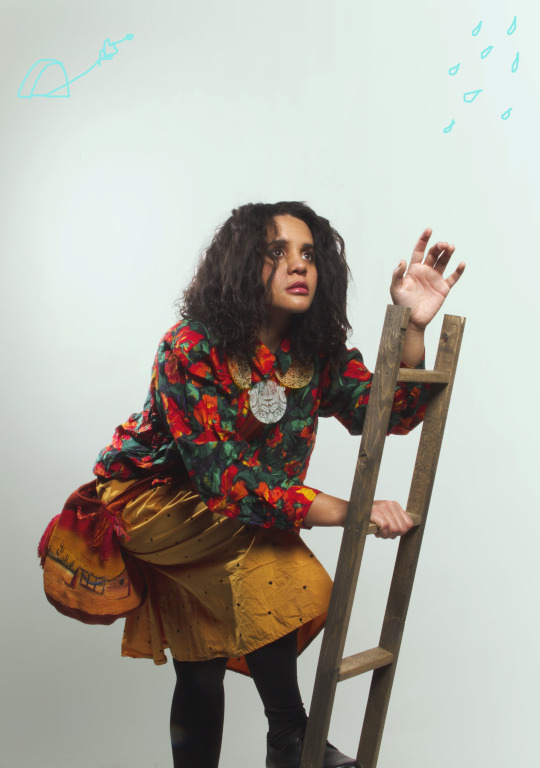
Photo by Ruthie Titus @ruthtitus

Part 2 of our conversion with Lido Pimienta. Click HERE to revisit the first part and stream her newest single, "Agua." 


***

Souad Martin-Saoudi: How’s the Toronto community and your creative crew? Could you tell us about your Bridges series?

Lido Pimienta: I have a big crew. From musicians, to visual artists, to fashion designers, to galleries, to festival organizers, to critical thinkers, to DJs. Toronto is an amazing place to be, and despite the inevitable hetero-patriarchy and racism one faces here on the daily, I mean, I am just another POC on colonized land… despite that stuff, Toronto is fertile, and wonderful people like David Dacks from The Music Gallery, Sergio Elmir aka DosMundosRadio, LAL aka UNIT 2, Xpace, and many other organizers have shown me incredible support, not just by liking my photo on facebook, but by actually putting money behind and providing a space for my ideas to flourish. Ideas like my arts/music festival Bridges, whose mandate is to bring artists from South American diaspora working in a similar ways as an artist in Canada. We’ve had Isa Gt, Conector (Aterciopelados), Zuzuka Poderosa, Tanya Tagaq, Boogat and many other performers grace our stage - I get support for the many workshops and curatorial projects I produce. I should also shout-out the Toronto Arts Council, Factor, Canada Council and the Ontario Arts Council for the support. It would be impossible to attempt half the things I have been able to do without the times they have supported my initiatives.

SMS: You also have been referencing to Gangster pop as one of your genres. I would like to know more about that label, and what it represents to you.

LP: I am interested in taking words with a negative connotation, and shift their meaning and apply to them my vernacular. The words slut, bitch and whore have hurt me so much in the past. Now I embrace and encourage all my bitches to slut it up and be all the hoe-self their heart desires, and this is a movement that Black Feminists lead, like anything good in the world of course. So, because I know people expect me to be this “cute,” or “child-like” singer, I like the idea of labeling myself as something I see fits more like, “satanic pop” or “gangster pop.” There is nothing that gives me and has given me more disgust than when I get labeled as “world music,” it is such a simplistic, racist and lazy label. No thank you. I am “Satánica” !

SMS: When you write, who do you write for? For yourself, or do you write with your audience in mind?

LP: I'm still trying to figure out who my audience is. I don’t write for anyone else but myself. My heart is wounded, so I know the feeling is familiar to the world. So my experience will resonate, no matter what I say, no matter what I do. I keep WOMXN in mind, I keep single mothers in mind, I keep youth in mind and womxn in South America who have no access to safe abortions, I keep Indigenous and Black womxn in all of the Diasporas who are fighting to stay alive. Color was about that too, but the person singing those chants was more hopeful. La Papessa is hurt. She is LOVE, but she is also PAIN. She is light, but she also is comfortable in darkness.

SMS: And when you collaborate with others?

LP: When I collaborate with others, Lido leaves the room. I enter the world of my collaborators completely. For instance, “Jardines” was a hymn inspired in the world of Chancha Via Circuito. I ask, “what is the vibe, what is the title, what mindstate were you in when you wrote the music?” and I go from there. “Un jardin, comienza con una semilla...” it is very hippie, very kind, very generous, like Chancha is. “Reza Por Mí” is a love song. I cannot write love songs for Lido Pimienta...I write songs about pain, about heartbreak, but in that song for Atropolis, the beat was so light, and beachy... I had to, I just had to.


The same for Capullo in “A Quién Amas En Realidad Es A Mí.” I understand Capullos' aesthetic, I knew their style could be complemented by something raw, but funny and witty, with Pop Culture AND colloquial lengua “todo lo que tenía puesto era de segunda, pero mi ropa interior si era nueva.” I mean... I feel I have written more songs for other people than I have in my own catalogue, but I step out and get inside the brain of whoever wants to collaborate. Sometimes it doesn't stick. On Javiera Mena' “Luz de Piedra de Luna,” I wrote a part: “navegando galaxias, por un camino estelar, con luz de piedra de luna, tu tienes el poder,” but she decided to just keep the harmonies, and that's totally fine. When you write something for someone else, you are just another instrument, I am lucky that 99% of the time, people let me be free.
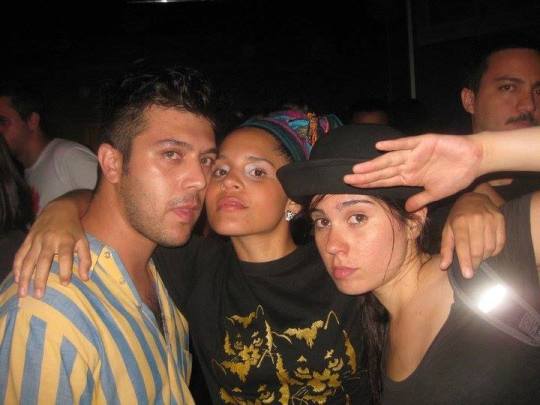
Lido with Gepe & Javiera Mena
Fun fact about “Agua” tho: I wrote the song after my first Mexico trip. Juan Manuel Torreblanca, the angel who brought me down there for the first time and introduced me to really awesome people, made it possible for me to meet and get contacted by Ximena Sarinana, we originally spoke about doing something together, so I did an acapella…”Los cabellos, de tu madre, acarician tu cara…” and I sent her the acapella thinking we would figure out the music as we went, but, i guess she wanted a full song, or who knows, those people are too famous! Perhaps her management were like “why are you clowning around with that Lido person, she is not famous,” but “Agua” kept growing and now it is the opening act to this tragi-comedia that is La Papessa.

SMS: In an interview you gave to Now in late January, you said that you felt like everything you could possibly do in Toronto, you had done, and that you were tired of having these conversations – conversations about what it’s like to make music as a racialized performer in a “multicultural Canada” where you are granted support and exposure at the expense of a token status – and seeing that things don’t change; you added that your next step was going back to South America, the States and Europe. I would like to hear more on that! I’m interested to know how you apprehend the international reception of your work. How do you tackle tokenism and deconstruct stereotypes?

LP: I would like to think that people book me and want me because I am damn good. But I also know that some bookers and promoters, get me in their bills because they got a government grant, and they can check one of many boxes when they book me. Woman: check. Minority: check, and so on. It is difficult as well, because it is in Canada and USA that I find the most support now, when it used to be in South America. Rarely I get emails from South America or Mexico anymore. But I also know that this is my fault, I have not dropped a new album, or song in a long time. I feel as though people have me in their collective/nostalgic memory. Also, music industry is one of the most competitive, depressing, problematic, desperate industries. The people who used to be “my friends” don't have a use for me anymore. I can't give them personal emails and phone numbers or facilitate contact avoiding management or music shows anymore. I am not culturally valuable anymore, and I am fine with that. It is all part of my plan, to disassociate myself with any scenes, I want to be my own movement. I do miss having talks with some of the people from my 15 minutes of fame, but, the real relationships I was left with afterwards are there for me and I am here for them. It has been a crazy roller-coaster, but now I am ready to go back to music, wiser, stronger and with a better sound. A sound that is mine and unique, not to be fucked around with.


Photo by Ruthie Titus @ruthtitus
SMS: Could you give me your thoughts on the failure of multiculturalism? How does it hurt racialized artists? Is decolonization a viable alternative? What does decolonization mean to you?

LP: The failure is evident when we look around and observe how media is still whitewashed. As Canadians, we live in a “multi-cultural” society, but we know this is wrong. The “better” term should be “pluri-cultural”, we do not mix. The latinx crew, hang with their own, although we are starting to be more aware and intersectional, the Korean with their crew, and so on. The white people, you know, they have their vanilla with white chocolate chip fest, and they come to our “world music” events with their sun cream and sandals with socks combos. To me, the one truly diverse groups or spaces are those who are led and organized by QTPOC folk. You go into those spaces or party with them, and you truly see, a sneak peak of what a multi-cultural society ought to look like.

It is utterly disturbing to me, when I look at the state of “pop” music in South America. The emulation of “white culture” makes me want to vomit. I mean, youth culture is global, I get it, but also, the magnificent element that we as Afro-Indigenx-Spanish carry, is that exactly, our mix, our multilayer influences and narratives. I love it when someone like Gepe goes ahead and gets Wendy Sulca to play, its so wild and whimsical! That is what music is all about.

There is this wrong impression that white people created “rock and roll”, Rock and Roll was pioneered by a Queer Black woman, her name was Sister Rosetta Tharpe. We look at rock-pop now, and most people in that genre idolize The Beatles or The Rolling Stones, who by the way, just stopped by Colombia, they probably filled an arena. I mean… It is really a pathetic affair when a dinosaur pays you a visit after they've been dead and irrelevant for centuries. All of this to say, that we are ignorant to HERstory, and it is this simple fact that makes me want to leave Canada and go back to my roots, be in Colombia and play with my sheroes, the real rocks stars, Petrona Martinez, Martina Camargo, Sexteto Tabala... I mean... the day that they fill an arena in Colombia… is the day I will have no sorrow in my heart.

SMS: I’m curious about your self-care rituals. Would you care sharing them with us? You’ve been posting some pictures of your tejido apprenticeship and work on Instagram. Is it part of your self-care ritual?

LP: Tejidos are in my blood. My family is Indigena Wayuu. Weaving is in our DNA, and I weave because it is relaxing, helps me think. I just broke up with a friend of 8 years, her leaving my life was painful, traumatic but necessary. Weaving helps me bury the bad memories and begin a new story.

Self Care by Lido Pimienta:

1. Hair: wash every two days, brush every night and put in a high bun to help it grow
2. Face: wash with warm water and dry with face cloth, not body towel
3. Skin: coconut/shea butter
4. Butt/thighs: mix coconut oil with coffee grind (avoids cellulite and energizes)
5. Sex with your partner or yourself regularly, orgasm always. DO NOT FAKE IT.

SMS: About your promo single “Agua,” water has always been full of symbolism: birth and death, women, mother, purity… many rites are attached to it. What is your relation to water?

LP: My obsession with water began in Colombia, I could swim before I could walk. I was always swimming back home. River water, ocean, lake, pool... Water. There is crisis in La Guajira. This song is about rescuing water, giving her a song - canto - al - agua - to protect her, so that she can protect us. I am starting my own campaign, by the way. Here is the promo:



***
Be sure to look for #LIDOTV on her Instagram, Twitter and other social networks. Lido Pimienta will be live streaming her Papessa set from the Great Hall at LONGWINTER TORONTO Festival - stream begins from 10pm (ET).


Lido Pimienta - LA ENTREVISTA: Part 1 + "Agua"

Photo by Ruthie Titus @ruthtitus

Lido Pimienta is back! Almost six years have passed since Color was first released and a lot has happened to our Colombian darling. Club Fonograma has been blessed with the best come back offering ever: an exclusive, in depth interview, along with “Agua”, the first single off highly anticipated second LP La Papessa.


***

Souad Martin-Saoudi: Color dates back to 2010 and the release of La Papessa has been rumored for some time… Here at CF, we’ve been anticipating it since 2012! Could your give us an insight into your life, and walk us through the evolving shape of La Papessa?

Lido Pimienta: Since the Color era, Ive been keeping to myself and my family. Color was a wonderful introduction to life outside of my naive/Utopian head. It all seems like a blur now. It is almost as if it never even happened. This question could be answered in many ways, and take several turns, but to keep a 6 year old story short (or at least try): I took a break from the music industry after realizing I was not fit for it, I was not prepared for the amount of ugly business that happens behind the scenes. I was the target of many social climbers, one label runner in particular used me to get his artists a European tour by using my name to do so (and almost succeeded at it), he claimed he was my booker, manager and lied to me and bookers down there...This episode in particular made me take several steps back and stop pursuing a career in music. Sometimes I wonder if perhaps some of the negative experiences I lived back then were some if not the same reasons why Rita Indiana decided to stop performing music live.

The first major change in my life after Color, was that my husband and I separated. Also known as Golden Death Music, my ex was not only my family, father of my kid, but also the genius co-creator, musician and producer behind the Color LP. The songs were made in our tiny home while breastfeeding, being young, dumb and excited creatives amongst a vibrant artistic and musical community in London, Ontario. Canada was also a new country to both of us. "Luces" was our goodbye song, the last one we worked on together. Still one of my favorites.


After our separation, I moved to Toronto, Ontario and decided to pursue a degree in Art Criticism and Curatorial Practice. I moved to the big city with my kid and dedicated my time to my studies while figuring out life as a single mother.

The first year was really rough and I was having panic and anxiety attacks regularly, I kept thinking there was no way I could do it on my own, without him. In one of those many insecurity stricken moments, music pal Ulises Hadjis read my Tarot (via Skype) and revealed to me the power of The High Priestess: La Papessa - A female figure, sitting on her throne with a book on her lap. The symbolism behind it opened my eyes to my own inner strength, as a womxn, mother, as a thinker, planner - I wrote the first song for it, "Ruleta", the song would help me go through the pain and fear I felt at the time. Sometimes being alone is the best, and accepting that reality proves impossible to accept at times, actually...much too often.

I started working on songs after my child would go to sleep. Back then I shared my bedroom with him. Toronto is really expensive so I shared my room to save up some cash. I built him a bed out of milk-crates and wood under my loft bed and I bought a refurbished desktop, speakers, a little mixer, and several “how to ableton” YouTube tutorials later I had me a little demo ready. No band, no friends (in music), no family, but a cute 4 song EP nonetheless.

One lucky night a curious white boy heard my solo set at some gallery show. He contacted me and asked if we could play together. I said something like, “yes, but only if you would do so dressed in a cute dress”, but obviously more than a “requirement”, my intent with such question was mainly to make sure this cis-white dude was not going to end up being some homo/trans-phobic asshole. I showed him my songs and we started working them in a tiny studio he had behind a gallery called Creatures. His name was Kvesche Bijons-Ebacher, he became my son instantly. We started playing shows and I started getting lots of attention, well, enough attention in the art/indie Toronto scene, enough to justify doing the crazy music thing again.

Another curious white boy approached me, he was friends and an old collaborator of Kvesche’s. His name was Blake Blakely, an intellectual and visionary who (of course) showed up at my door with a Moog under his arm: “Hi, I decided I don't want to do a remix for you anymore, I want to play with you instead”, and just like that, we started building the songs more, in my bedroom, we brought all of our gear together and started the machine.


I started getting booked for more shows, and we played with different brass people each time. Always different, trying new things, the stage was my playground. I would write these wild parts for woodwind and brass, but no one from that jazz, classical world would stick around to play with us, though. Those people in this city are way too busy! That was until Robert Drisdelle, composer and multi-instrumentalist, heard about me and how I liked to collaborate with different live musicians and approached me. He then showed up to my house...with a damn electric guitar. I was so confused...I told him “guitar is not going to cut it, I am against guitar, there’s too much of it in the world, I don’t want it in my album, what else you got?” He threw his guitar out the window and brought me his beautiful bass clarinet. And that was it, the band was formed.

We kept playing more shows, perfected them, wrote new tunes, experimented with visuals… One particular show caught the attention of long-time supporter of Lido Pimienta, who is also A Tribe Called Red’s manager, Guillaume Decouflet. He offered us the opportunity to tour with Tribe. We were so excited, we felt a new reviving energy, It was all forming, it was all working out. We went on tour with them, and we killed it. Guillaume and Tribe gave us a fantastic opportunity to perform my songs in front of thousands of people, perfect the live show, learn about contracts, royalties, booking events, essentially, an Industry of Music education, all the stuff I was too inexperienced and vulnerable to deal with first time around for Color Era. Touring with Tribe, gave me a healthy and safe place to educate and empower myself. Words cannot describe how much I love those men.


In September 2013, my younger brother, father of one, took his own life. A young beautiful life, gone. It was and still is the most shocking, painful and difficult thing my family and I have had to experience. Ever. It took me a long time to recover. I mean, I still have not recovered from it, and I might not ever recover from it. A part of you dies when your sibling dies. There are no words to explain. I had to put La Papessa and everything related to it on hold. This chunk of my life is also a blur for me, I keep waiting to wake up and have everything just turn out to be nothing more but a terrible nightmare.

School got really hard for me after this, there was no space for concentrating, I was putting on a front, a facade, pretended that everything was OK. I hurt myself by doing this. I also started working in arts organization more, I was worried about making money and providing emotional support for my mother, my sister, my brother’s girlfriend and their son. It took a while, a long while before I felt I was ready to play/record again. But eventually you know, art/music is what I do, so it became my safe heaven...singing...under the moon…

Slowly but surely it happened, seasons changed, time passed, and my heart was sewn up with the delicate yet strong silk thread of friends, chosen family, my sisterhood and collaborators in the city. I thank them deeply for their love. We played some shows and decided to go for it again, we made plans to go to the studio, we played a couple new shows, we were ready to lay the tracks down, we were on fire.

But then, life had yet another dark joke awaiting. My amazing friend and genius collaborator, Blake Blakely (who’s behind “Agua” beat/production) got seriously ill. My world came apart. The new-found stability was shaking, was fragile, got torn apart. We knew the road would be difficult, but we decided to continue working together. We figured out ways to make it work, around hospital visits - plotting world domination. I took a month off, I went to back to Colombia, to visit my brother’s grave for the first time since his passing, I stayed with my family, in the north coast of Colombia, my family is Indigena Wayuu, I needed to be home. The desert air, the ocean, the sun, fresh fruit and my aunties’ embrace filled my soul.

Photo Credit: Nic Pouliot / rockphoto.ca
Upon returning to Canada, and after seeing with my own eyes all the damage done to the indigenous population there, by the racist experiment the Colombian government, on purpose and in collaboration with Canadian, US and European mining corporation, I knew it was time to go back to it. I knew that the pain and struggle experienced by that little girl who once posted a song to her Myspace and Julieta Venegas really liked, had to get her shit together and use her voice for something good. So I am back with “Agua”. In retrospect, this album, La Papessa, is the narrative of a girl who was living in a dream world, but then life made sure she got shaken, woken - and I am now at last, more than ever: Woke.

Stay tuned. Part 2 of our interview with Lido Pimienta will be published tomorrow. 

Boogat - El Dorado Sunset/El gran baile de las identidades

El Dorado Sunset / 
El gran baile de las identidades, Boogat
Maisonette, Canada
Rating: 71
by Souad Martin-Saoudi

The question of identity has never been more relevant. Neither modernity nor globalization has been enough to wear down cultural or ethnic affiliations, and it seems that they have actually enabled more individualized forms of belonging to arise. Music being a necessity and a medium of expression of identity, we should look at the musician as being placed at the center of a dialect on the global/local, the universal/particular.

Born in Quebec City, Canada to a Mexican mother and a Paraguayan father, Daniel Russo Garrido cut his hip-hop teeth while attending university. He then relocated to Montreal in 2001 to pursue his ambitions. Going by “Boogat,” Russo Garrido earned a good reputation and garnered some local media attention, yet there was still something missing. After three albums, his solo concept was just not received the way he wanted, and let’s face it: the hip-hop scene in Quebec is very limited, almost sectarian (though primarily the product of immigrants). It was time to look elsewhere, to dig deeper, to reinvent.

Identity is no longer merely a question of inheritance or customs, but the subject of individual choice. And Boogat chose wisely when he decided, back in 2010, to collaborate with Montreal-based electronic producer DJ Poirier (Ninja Tune) on a dark, industrial, glitchy reggaeton track in honor of the priest in “Indiana Jones and the Temple of Doom.” Released through ZZK Records, “Kalima Shop Titi” was his turning point, as it pushed him to rethink his mode of interaction with the world. The MC’s transition towards more tropical bass sounds also led him to feature on El Remolon’s Pangeatico EP. Armed with this new knowledge and ability, Boogat dropped El Dorado Sunset/El gran baile de las identidades earlier this month. Choosing to now rap strictly in Spanish, Boogat uses language as a mediator for the construction of his own identity. Sure, the lyrics are less brainy than when he rapped in the language of Moliere, and his approach still needs to be refined, but to me, by mixing his hip-hop roots with the urban bass, electro tropical sounds of DJ/producer Poirier, Boogat may have struck gold, or at least something really pretty and gilded.

The opening number, “Eres hecha para mí,” with its excellent production, courtesy of Munich's electro/dancehall dons Schlachthofbronx, displays how dance-driven music can become a provider of cultural identity in a multiethnic Canadian society. However, on “Llévame pallá,” Boogat’s flirting with Latin music archetypes comes dangerously close to cheesy world fusion. So here I am, torn between my desire to praise his efforts to foster interculturality in a multicultural Quebec and my discomfort with the one too many cross-cultural shortcuts. Boogat’s “great ball of identities,” if any, is one where we do not know which foot to dance on. At times, it seems like Boogat has found the strength to redefine and reassert his art in the music, at others, it’s like he is struggling to sustain his self-imposed pace. Then, among the dozen richly arranged and orchestrated songs seamed with love, migration, identity and nightlife, there’s a true gem: “Único.” In collaboration with Club Fonograma favorite, Lido Pimienta, the track discusses how strangely the foreigner lives within us as the hidden face of our identity. The ease with which Boogat and Lido Pimienta tackle complex issues—like the absorption of foreignness by our Western societies and the possible coexistence of these foreigners that we all recognize to be ourselves—is truly disarming. The foreign begins when consciousness of one’s own difference emerges, but ends when we all recognize ourselves as foreign.

Part of El Dorado Sunset’s strength lies in its ability to make us reluctant to dwell on its flaws or even want to answer whether the LP is intended for Quebec or Latin America. Boogat’s music reflects his roots and his journey, as well as expressing his humanity both in its unity and its diversity—and for that, I say Merci!


69 Presents: Serge Gainsbourg Degenerado


Womanizer, alcoholic, child exploiter, provocateur. There’s so much scandal attached to the legacy of France's favorite sleazeball/pop star/sex symbol Serge Gainsbourg, it’s easy to let the exploits outshine the musical prowess. But twenty years after his passing he continues to inspire, as made quite clear in this collection of covers from the folks at Peruvian blog 69

Ranging from almost literal note-for-note renditions (nice) to creative jumping-off points (incredible), the participating artists dabble in a range of musical styles that would have made Gainsbourg proud. Highlights include La Familia del Arbol’s melancholic translation of “La Chanson de Prévert,” Algodón Egipcio’s beautifully layered “Color Café,” and Odio París’s shoegaze badassification of France Gall’s naive “Poupée de Cire, Poupée de Son.” Lido Pimienta’s eerie echoing take on the controversial “Les Sucettes” will give you goosebumps.

The attitude and spirit of Serge haunt all twelve tracks, but perhaps what's most telling is that you don’t even need to be a Gainsbourg conoisseur to appreciate this—the songs stand very much on their own: sexy, classic, and somehow so current. Hardly a degeneration, I’d call this a veneration of the highest order.


Video: Lido Pimienta - "Rouletta"


When we first fell in love with Lido Pimienta, she was singing about moving through good vibrations, about healing the soul with music, and about designing life as one would please. Time changes us in unexpected ways. The release of “Luces” last year unveiled a Lido Pimienta that had been in and out of the road to redemption, granting us access to a nuanced depth of her persona. Toronto-based music collective StudioFeed has documented the transition of the Colombian virtuoso in this gorgeously shot clip in which Pimienta goes fully confessional about the changes in her life that have consequently changed her composition. Her story is painfully familiar but, as Lido confesses, it’s the event that has pushed her to find the most honest of grounds. As she preps her bound-to-go-darker sophomore album, Lido is giving us a little taste of it in the new track “Rouletta.” Lido’s performance is ethereal and, at least for a couple of minutes, the world aches alongside her. As two of her closest friends in the biz (Gepe and Javiera Mena) would say, “es una tristeza tan linda.”

Video: Lido Pimienta - "La Rata"


“Quiero matar, quiero matar,” sings Lido Pimienta in the menacing entrance of “La Rata.” That vocal sequence finds the Colombian virtuoso lamenting a world of disappointment as she adjusts her emotional canvas to confront her political discourse. “A strong, dissident and beautiful piece for the global pop avalanche in search of reformation.” Under the directing lens of Guillermo Restrepo Cervantes and featuring gorgeous masks crafted by the singer herself, this video dignifies the monumental song quite remarkably. Lido’s confrontation with the camera comments on individual and national identity while keeping things seductive and a bit gangster (which would explain the song’s inclusion on the soundtrack of HBO’s TV series Capadocia). “La Rata” is part of Lido Pimienta’s debut LP Color, recently published on vinyl by LA-based art community collective KU DE TA. And, no joke, this vinyl has to be the most gorgeous acquisition in our entire record collection.

Featured: Lido Pimienta - "Buena Persona"


Featured: Lido Pimienta - "Buena Persona"
Color, Ku De Ta

We’re used to the light-hearted, optimistic Lido Pimienta spreading the love, telling us that music is a calming and healing agent and that we are all beautifully human. We love her for being such a positive presence, but we’re also glad that we get to see a darker side with “Buena Persona,” from her Color LP (soon to be released on vinyl). Unlike the multi-colored warm tones of her other songs, “Buena Persona” is all cold shades of grey.

The beginning of the song feels like standing nervously in the middle of an empty church, soft sunlight shining through stained glass. Pimienta’s voice sounds like it’s echoing from the high, arched ceilings of a sacred temple and the cadence of the percussion evokes a solemn procession. Considering the often religious undertones of a phrase like “good person,” the holy space setting of the song’s introduction is perfect. It makes you think back to all the not-so-great things you may have done recently and puts you in the repenting mood. I guess Catholic guilt doesn’t ever completely go away, no matter how long it’s been since you’ve parted with the Church. But, however uneasy it might make you feel, the song is so eerily beautiful that you’ll be spellbound.

Featured: Los Espíritus– “Besito”


Feature: Los Espíritus– “Besito”
Unsigned


Los Espíritus, the charming new duo act by Lido Pimienta and Antonio Jiménez (María y José) couldn’t be more exciting. You know they’re two of our favorite artists in the world and we can’t even imagine how good their album will be. They are taking baby steps towards the release of their first EP Aprendiendo a Amar con Los Espíritus, which probably won’t be out until late this year or early 2011. “Pacifico-Atlantico” took our #1 spot on our Midyear Best Songs of 2010 playlist and we still can’t stay away from it. Their less elaborated song “Besito” has been circulating around some corners of the web, we figured it was time to feature it considering how good it is.

“Besito” is inconsistent, raw and sweaty, just like puberty should be. And in fact, Los Espiritus’ main premise is that of sexual awakening, and the romanticism of first love. Adolescence might be the backbone of “Besito”, but it goes further in detail by complementing the novelty of a first experience through religious rebellion, “nunca voy a la Iglesia aunque sea pecado, solo quiero mi besito pequeñito en mi ombliguito.” Another knockout by these two visionaries, by far, one of the best new 'bands' out there.

♫♫♫ "Besito"

New Single: Lido Pimienta - "Caminos"

The always sparkling, triangular visionary Lido Pimienta has unveiled a new single titled “Caminos,” one of three new songs to be added to her stunning Color EP, which will redefine its form into a full-length release. The album will get a vinyl release later this year by Los Angeles-based indie label Ku De Ta, who has also announced exclusive vinyl releases for Pilar Diaz and Jovenes y Sexys. A lot has happened to Lido’s young career since that Club Fonograma feature of “Mueve,” but she’s still that charismatic infectious girl we fell in love with. “Caminos” is a risky future-pop song; a challenge in both its rhythms and themes. Finding your own trail in life is complicated; it’s a series of self-contained challenges one must learn to overcome, find your rhythm.

Stream: El Remolón - Pangeatico EP


It’s no secret El Remolon (Andres Schteingart) is our favorite crewmember from ZZK Records, his chromatic vision makes distinct catchy beats and that’s how we like our cumbia. We described his last release Pibe Cosmo as “a journey throughout the American continent” and have deeply enjoyed his B-Sides and Mixtapes, but it’s time for a new proper release, the much-anticipated Pangeatico EP. From one spin alone, this sounds as bouncy as one would expect, and energetic enough to correlate it with these mornings of futbol. The 6-track EP features Fantasma and Boogat, and Fonograma favorite Lido Pimienta, who’s been teaming up with many talented people lately, from his work with Los Espiritus, to Pernett and El Hijo de la Cumbia, to having a small guest appearance on one of the tracks in Javiera’s Mena. We’ll get into Pangeatico in depth later, but so far, we’re loving the artwork, its guests, and the intercontinental vibe in this, looks like a nice EP to follow his stellar debut.

Pernett feat. Lido Pimienta & Quantic Cover New Order's "Blue Monday"


This is a very special version of New Order’s “Blue Monday” by the always charming and full of layers Pernett in collaboration with fellow Colombian Lido Pimienta and Quantic. The dancehall anthem gets a twist on the hands of this Colombian genius, who keeps expanding his horizon so extraordinarily that he might just be the most creative guy in Tropical music today. Just like the dazzling Fonograma-featured “Perikitus!” Pernett continues to make “watery delicious fireworks.” This time it’s 7 minutes of steamy landscape accompanied by Lido’s emblematic soothing voice.

Antonio Jiménez and Lido Pimienta son Los Espíritus


This is very romantic; Antonio Jimenez (María y José) and Lido Pimienta are teaming up to create the new duo Los Espíritus. Yes, our staff is drooling; after all, these are the two people responsible for crafting our two favorite albums of the year so far, Espiritu Invisible and Color EP. Last year, Antonio ‘discovered’ Lido Pimienta’s MySpace and introduced her to this new flaming window of Latin Pop. Needless to say they have become siblings, supporting each other unconditionally and now, collaborating together. And yet, they have not met each other personally. Los Espíritus has been giving life through Skype sessions, chat scripts and their collective, almost telepathically driven musical vision.

Lido and Antonio will meet in a couple of weeks, as she will travel to the always-mystical land of Tijuana. I can’t even imagine the kind of emotional ride that would be, but I’ll bet there would be a magical scene of colorful triangles connecting both personas and sanctifying Los Espíritus. Their EP will be titled Aprendiendo a Amar Con Los Espíritus, out in a couple of months. The first cut is titled “Pacifico-Atlantico” and has been taking over our iPods for a couple of months; it’s the most numinous Reggaeton track ever. The song reminds me of some of the late 90s Reggaeton coming out of Central America, very adolescent and innocent on its lyrics, and kind of sweaty on its unsettlingly pubescent beats.

“Sabes bien que no le gusta a mi mama, yo se bien que no le gusta a tu papa, no les gusta porque tenemos el mismo sexo.” The haunting song is kind of an extension of Selena’s “Amor Prohibido”, but defending same-sex love by swimming the oceans. The plan is to release a couple of volumes following love’s distressing phases, we can’t wait to hear all of them.

Color EP, Lido Pimienta


Color EP, Lido Pimienta
Independiente, Colombia
Rating: 89
By Carlos Reyes


Colombian darling Lido Pimienta would qualify as one of those true shining definitions of artistic truism. Her artiste qualities as a singer, writer and illustrator not only speak for themselves, they outshine their own spectrum. Lido currently resides in Canada, where she studies Art Criticism-Curation and forms part of the Tiny Box collective, in short, she’s surrounded by color and to everyone’s luck, she’s aware of it. Color EP marks her first official release, an incredibly confident breakthrough album that's already on the shortlist for best EP of the year.

The structure of the EP is simple, eight delightful songs divinely connected to Lido’s vivid persona, all envisioned and executed for the senses. The album’s first single “Mueve” is bombastic in a supreme league (you know, up there with T.I.’s “What You Know”). Her gifted vocals direct to a very ambitious song on cosmopolitanism and inner strength/choice. “La vibracion te guiara... y la musica te calma y sana”, it goes beyond its words to literally loop music from one state to another, and from one purpose to another. It’s that endless sense of possibilities that make “Mueve” such a comforting piece, that ability of connecting to any of its layers.

While listening to the culturally unifying intro “Humano”, one can’t help but to feel a certain healing process through the vocal’s smooth pacing and its occasional encounters with desperation. “Aqui Conmigo” serves great as a pastiche of pop music, resembling Javiera Mena’s “Perlas” and even Jay Z’s “Empire state of the mind” in the way it spills into space and comes back as she sings “explosiones de besos te voy a dar.”

Color EP goes from suggestive to a strong rampage of political concern; luckily, it stays on its premise of placing color as the main negotiator of its topics. This explains why the political reflecting songs are enclosed with Colombian folklore. “La Minga” and “La Rata” are particularly attached to Colombia's tropical bravura. “La Minga” forefronts the campesino anxiety to keep its land, confronting the 21st century cubicle worker along the way. "La Rata" is a heart punch to corruption and our participation with 'the system.'

The rock edge and march-stream in “Progreso” is in a whole new league, a touching chant for Colombia’s progression towards peace, “viviendo en tinieblas, no mas… es nuestro progreso lleno de bondad, llegando hacia la cima, todo el amor ya sin sufrimiento, Colombia vendra hacia la paz." Later, it cheers "no fallara! no fallara! Colombia vendra hacia la paz!" The closing English-language track “Freedom” is a crystallized and delicate, “defend your freedom.” Lido understands composition and art as an ongoing stimulating medium (‘the triangular prism’). Having said that, her songs display as much personality as musicality. A stunning debut whether in chops or its entirety.
♫♫♫ "Aqui Conmigo"

Video: Lido Pimienta - "Mueve"


Lido Pimienta’s Color EP is out on sale through her MySpace, she’s already one of the year’s breakthroughs but we can tell you the new songs are as thrilling as “La Rata” and “Mueve.” While she doesn't have a label to rely on, nothing is holding her back, she’s applying her many talents into the release of her album; like hand-making the album's gorgeous artwork and improvising a video. Her webcam videos have revealed her energetic personality; when she’s not exposing her son Lucian to wonderful music (here), she’s making a bunch of Canadian hipsters dance to Rita Indiana’s “La Hora de Volve" (here).

It doesn’t come as a surprise that the video for her first single “Mueve” is the bubbliest thing we’ve seen this year. It was directed by Los Edisons, two Colombian directors who also reside in Canada. The video is pretty simple, but engaging from beginning to end. While watching this I can only ask myself why I’ve never shown such vivacity, she is alive! “Solo tu alma te salva, y la musica te calma y te sana.”

Feature: Lido Pimienta - "La Rata"


Here is another great song from Colombian visionary artist Lido Pimienta. We fell in love with her from day one and promised to feature more stuff from her, this time is the astounding “La Rata.” This is certainly a surprise; we have seen her as a sweetheart singing “Humano” or “Mueve”, but it’s like she got tougher on this one. From the gritty lyrics to the mystifying music, this is a great sign of her true multi-dimensional talent.” Quiero matar a la rata”, it sounds like something coming out of Martin Scorsese’s The Departed. Actually, the song is not too far away from such a criminal-charged poignant film, “La Rata” is quite a statement. It’s politically-charged and probably Lido’s most personal piece so far.

The song is a critique on Colombia’s government, or at least a judgment on the negative actions surrounding it. She refers to “la rata” as that unavoidable feeling of becoming part of the system (“ahora soy la rata también”), the sense of letting such negativity get into your aura, or even worst, caging you. A strong, dissident, and beautiful piece for the global pop avalanche in search of reformation. “La Rata” is above all, a poisonous affair between the artist and its surrounding, unlike most protest songs, this doesn’t scream for attention nor it buries itself from it, it’s precise and emotionally charged as any great political song should be.

Feature: Lido Pimienta - "Mueve"


Lido Pimienta has the vision; it’s only a matter of a few songs to recognize when a new artist has it, and she definitely does. Profiling as one of 2010s most promising artists, Lido’s wonderful progressive sound has sparked a good number of fans that go from El Remolón, María y José and Julieta Venegas (all house favorites) to the international critic’s darling Micachu (and the shapes). So who exactly is she? She’s a Colombian singer/illustrator/painter/mother… you know, one of those individuals who were blessed with the full artiste package. She’s currently residing in Canada, which has brought her a broader picture of the arts, but most importantly it has solidified a need for her art to reverence her roots. In her own words, “quiero volver a mi país y poder vivir ahí, es complicada mi vida… pero la música me calma y me sana.”

My head had a bit of a dislocating incident listening to “Mueve,” it’s a jaw-dropping track about self-control, disobedience, form, direction, metaphysics, envisioning things, if you’ve learned anything about my musical taste you know this is one is a special treat for me. This is actually gigantic for me, getting to listen to the principles I’m always chasing, I’m surprised so many people were surprised by us picking Javiera Mena’s “Al Siguiente Nivel” as our favorite song of the decade; it was pretty obvious from our point of view. So yeah, I made my point, I’m really digging Lido Pimienta and it should be obvious as well. In fact, Andrew Casillas already pointed it out: “Oh man, if I were to construct a female musician that I KNEW you would like, I would have created her, todo estilo Reyes.”

“Mueve tu esqueleto y no eches pa’ tras, muchos han querido no dejarnos pasar, tu sabes que tienes la oportunidad, diseña tu vida a tu antojo mira,” you should be convinced by now, but just in case, “siente la vibración ción ción ción." Music as escapism, it doesn’t get better than that. And that amazingly charming voice! I’ll leave her other songs aside just because “Mueve” deserves all the attention it can get (plus there’s an upcoming video for it). We’ll most likely feature other songs by her really soon, she is currently setting up the release of an EP that she will sell through MySpace, handmade individual artwork for every CD, made of recycled material, how cool is that! By far, one of our favorite new artists, obviously, a must-download.

♫♫♫ "Mueve"
MySpace